Teeth whitening can help make the natural color of your teeth appear brighter, but the results can vary from person to person. The outcome depends on your original tooth color, the cause of discoloration, and how your teeth respond to the whitening agent. Teeth whitening may also cause temporary tooth sensitivity or gum irritation, and it does not change the color of restorations such as veneers, crowns, or fillings. For this reason, it is recommended to have your oral health checked before choosing the most suitable whitening method.
Want a brighter smile but still wondering, “Is teeth whitening worth it? Will it make my teeth thinner? Will it cause a lot of sensitivity?” You may also be curious about how much whiter your teeth can become. These are some of the most common questions people have before deciding to whiten their teeth.
Teeth Whitening is a treatment designed to make the natural color of teeth appear brighter. It uses peroxide-based whitening agents to break down or alter pigments within the tooth structure. However, results vary because they depend on the starting tooth shade, the cause of discoloration, and each person’s dental and oral health condition.
Some types of tooth discoloration may respond well to whitening, while discoloration caused by certain medications, dental trauma, or restorations such as crowns and veneers may not change in the same way as natural teeth.
Table of Contents
ToggleIs Teeth Whitening Worth It? What Should You Know Before Treatment?
For people with dull or discolored teeth who want a brighter smile, teeth whitening is one option that can help lighten the natural color of the teeth without changing their shape.
However, “yellow teeth” can have many different causes.
Tooth color may change because of factors such as:
- Natural tooth color
- Aging
- Stains from tea, coffee, food, or colored beverages
- Smoking
- Certain medications
- Dental trauma
- Non-vital teeth
- Existing dental restorations
Different types of discoloration may respond differently to whitening, so another person’s result should not be used to predict exactly how much your own teeth will whiten.
If you want to know whether teeth whitening is suitable for you, the best starting point is to have your oral health examined and identify the cause of the discoloration before treatment.
Does Teeth Whitening Make Teeth Thinner or Damage Enamel?
One of the most common questions is, “Does teeth whitening make your teeth thinner?”
Teeth whitening does not work by grinding or removing tooth structure. Instead, whitening agents such as hydrogen peroxide or carbamide peroxide interact with pigments within the tooth structure, making the color appear lighter and brighter.
For this reason, teeth whitening is different from physically removing tooth enamel.
However, this does not mean that whitening products can be used in unlimited amounts or as frequently as desired. The concentration of the whitening agent, the length of time it remains in contact with the teeth, and the method of application can all affect comfort and safety.
Improper use of whitening products or the use of highly concentrated agents without appropriate supervision may increase the risk of tooth sensitivity and gum irritation.
The whitening method should therefore be selected according to your dental condition, and instructions from your dentist or the whitening product should be followed carefully.
Does Teeth Whitening Cause Sensitivity? How Long Does It Last?
Tooth sensitivity can occur after teeth whitening and is one of the more common side effects.
Sensitivity varies from person to person. Some people may experience almost no discomfort, while others may feel short, sharp sensations when exposed to cold drinks or cool air after whitening.
Factors that may influence sensitivity include:
- The concentration of the whitening agent
- How long the whitening agent remains in contact with the teeth
- The whitening method used
- Pre-existing tooth sensitivity
- Gum recession or exposed tooth roots
- Cracked or fractured teeth
- Cavities or other existing dental problems
In many cases, whitening-related sensitivity is temporary and gradually improves after exposure to the whitening agent stops.
If you already have sensitive teeth, it is important to tell your dentist before whitening so they can assess whether whitening is appropriate or whether the cause of sensitivity should be treated first.
If you experience severe pain, persistent pain, or symptoms that do not improve after whitening, these should not automatically be considered normal. A dental examination is recommended to identify the cause.
H2: How Much Whiter Can Your Teeth Get After Whitening?
The answer is: it varies from person to person.
It is not possible to guarantee that everyone will become the same number of shades whiter because the result depends on factors such as:
- Your starting tooth shade
- The type of staining
- The cause of discoloration
- Age
- Tooth structure
- The whitening method used
- How your teeth respond to the whitening agent
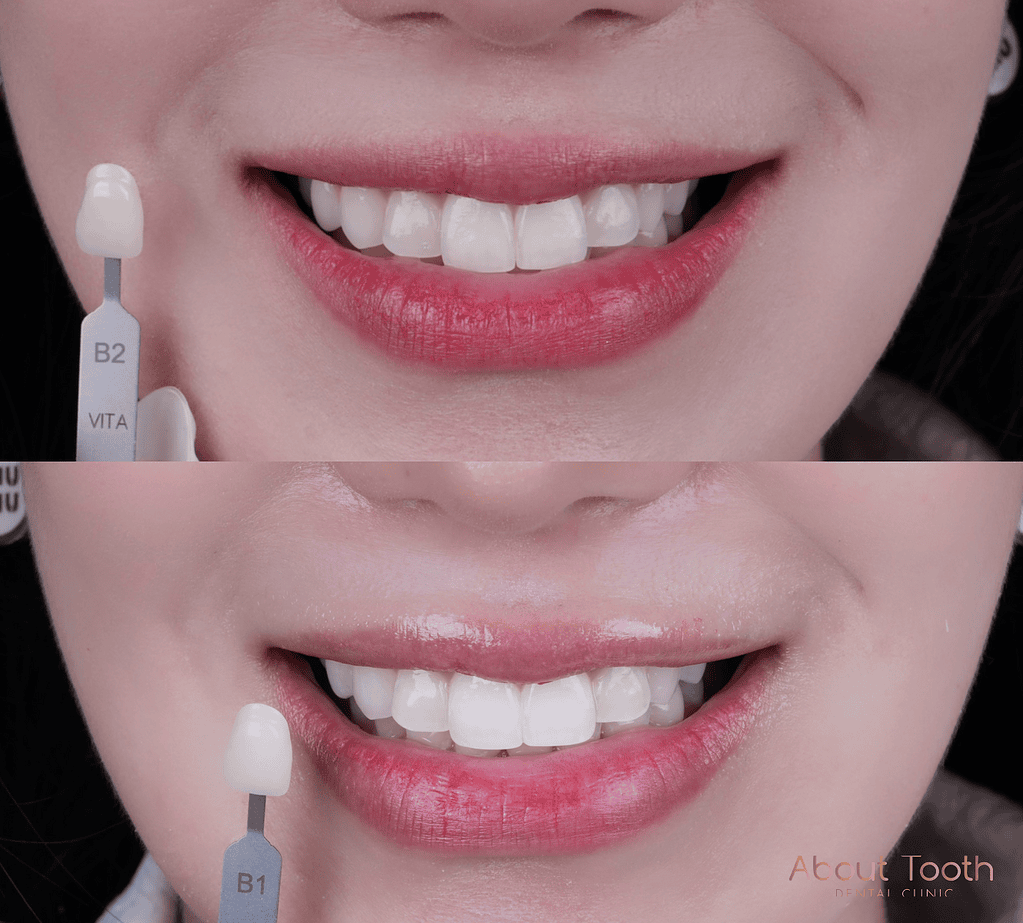
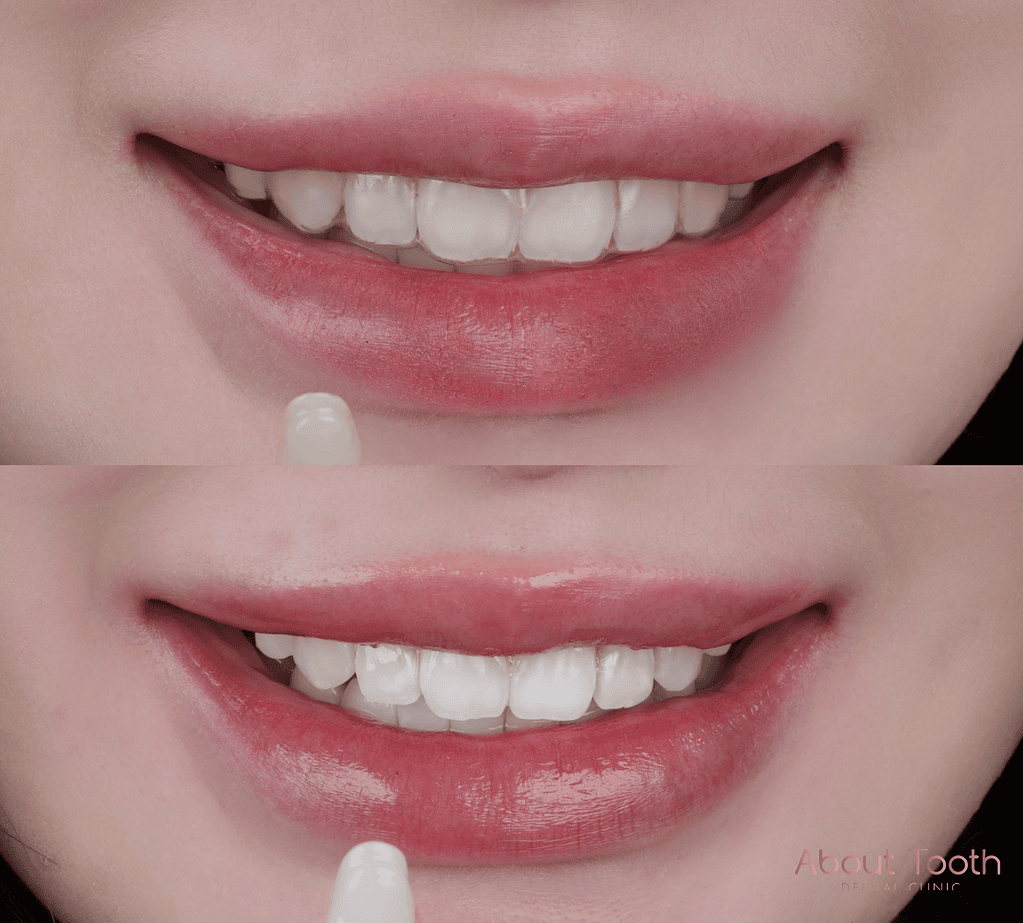
The main goal of teeth whitening is to make your natural tooth color appear brighter than before. It does not allow you to freely select a completely new tooth shade in the same way that ceramic veneers can.
If you are still unsure how white you would like your teeth to look, About Tooth provides examples of teeth whitening cases that can be used as references before treatment. A dentist can also help assess what level of whitening may be appropriate for your individual teeth.
Can Everyone Whiten Their Teeth? Who Should Have a Dental Check-Up First?
Before teeth whitening, it is recommended to have your teeth and gums checked, especially if you already have oral health problems.
Examples include:
- Tooth decay
- Cracked or fractured teeth
- Severe tooth sensitivity
- Gum recession
- Gingivitis or easily bleeding gums
- Exposed tooth roots
- Unexplained tooth pain
- Crowns, veneers, or fillings on the front teeth
The purpose of a dental examination is not only to determine whether whitening is suitable, but also to identify why the teeth have changed color.
Some cases may not be best treated with conventional teeth whitening. For example, a single tooth that has become dark after trauma or root canal treatment may require a different treatment approach.
Can You Whiten Teeth If You Have Crowns, Veneers, or Fillings?
You can whiten your natural teeth, but there is one important point to understand:
Whitening agents do not change the color of crowns, veneers, or fillings in the same way they whiten natural teeth.
For example, if you have a crown on one front tooth and the surrounding natural teeth become whiter after treatment, the existing crown may appear darker than the neighboring teeth.
If you have any of the following, it is important to tell your dentist before whitening:
- Ceramic veneers
- Composite veneers
- Crowns
- Dental bridges
- Composite fillings on the front teeth
This can help the dentist plan the treatment sequence and evaluate how the new tooth shade may blend with existing restorations.
In some cases, if new veneers or crowns are being planned, the natural teeth may be whitened first before the final shade of the new restorations is selected.
H2: In-Office vs. At-Home Teeth Whitening: What’s the Difference?
There are several types of teeth whitening, ranging from in-office teeth whitening performed under a dentist’s supervision to whitening systems designed for use at home.
The main differences include:
Teeth Whitening Method | Characteristics |
In-Office Teeth Whitening | Uses whitening agents under professional supervision and is suitable for people who want to see a faster change in tooth color |
Dentist-Supervised At-Home Whitening | Used consistently according to a recommended schedule, with results developing more gradually |
Over-the-Counter Whitening Products | Available in different forms and concentrations; products should be selected carefully and used according to the instructions |
In-office whitening systems can also vary. Examples include Zoom teeth whitening and Pola teeth whitening, which may differ in their whitening agents, application methods, and treatment protocols.
If you are still wondering which teeth whitening method is best, you can learn more about the differences between Pola, Zoom, and other teeth whitening methods before deciding which option may suit your needs.
How Long Does Teeth Whitening Last? Is It Permanent?
Teeth whitening does not make teeth permanently white.
After whitening, tooth color can gradually change over time depending on lifestyle habits and individual factors.
Factors that may cause teeth to become stained or darker again more quickly include:
- Regular tea or coffee consumption
- Foods and drinks that cause staining
- Smoking
- Oral hygiene habits
- Natural tooth color and age
- Individual lifestyle habits
For this reason, it is difficult to say that whitening results will last a specific number of “months” or “years” for everyone.
Some people may maintain a brighter tooth color for longer, while others may want a touch-up sooner depending on their habits and the whitening method used.
How to Keep Your Teeth Whiter After Teeth Whitening
After whitening, the most important steps are maintaining good oral hygiene and reducing factors that contribute to new stains.
You can help maintain the results by:
- Brushing your teeth regularly
- Cleaning between your teeth
- Reducing the frequency of tea, coffee, and dark-colored drinks
- Drinking water after consuming foods or drinks that may stain the teeth
- Avoiding smoking
- Having professional scaling and dental check-ups as appropriate
- Having whitening touch-ups when recommended by your dentist
You do not need to worry that drinking coffee once will immediately make your teeth yellow again. However, repeated habits over time can affect both tooth color and surface staining.
hy Didn’t My Teeth Get as White as I Expected?
If your teeth do not become as white as expected, it does not necessarily mean that the whitening treatment “did not work.”
Some types of discoloration respond less strongly to whitening agents than others.
Possible reasons include:
Different Starting Tooth Shades
Different tooth shades may respond differently to whitening, so not everyone will achieve the same final shade.
Discoloration Caused by Medication or Specific Conditions
Some types of discoloration caused by medication during tooth development or abnormalities in tooth structure may respond differently from common surface staining.
A Single Dark Tooth Caused by Trauma or an Internal Dental Problem
If only one tooth is noticeably darker than the others, the underlying cause should be examined first.
Whitening the entire mouth may not be the appropriate way to treat a single discolored tooth without first identifying why the tooth has changed color.
The Visible Color Comes from a Dental Restoration
Crowns, veneers, and fillings do not respond to whitening agents in the same way as natural teeth.
Therefore, if there is noticeable discoloration or the whitening result is different from what you expected, identifying the cause can help determine a more suitable treatment rather than simply increasing the frequency of whitening.
How Often Should You Whiten Your Teeth?
There is no fixed rule that says “you should whiten your teeth every few months.”
How often whitening may be appropriate depends on factors such as:
- Your tooth color after the previous whitening treatment
- How much time has passed
- Your food and drink habits
- Tooth sensitivity
- Gum health
- The whitening method and concentration used
If you want to whiten your teeth again, you should not increase the frequency, concentration, or application time on your own simply to make your teeth whiten faster. Doing so may increase the risk of tooth sensitivity and gum irritation.
Your dental condition should be evaluated first, and whitening should be performed according to the recommended protocol for the system being used.
Is Teeth Whitening Worth It? Where Should You Start?
Teeth whitening is one option for people who want their natural teeth to look brighter and whiter without grinding down or changing the shape of the teeth.
However, results vary from person to person, and whitening cannot change the color of crowns, veneers, or fillings in the same way that it changes natural tooth color.
If you would like a brighter smile but are still unsure which teeth whitening method is right for you, or whether your teeth are suitable for whitening, you can consult a dentist at About Tooth Dental Clinic.
The dentist can evaluate your tooth shade, teeth and gum health, and recommend a whitening approach that is appropriate for your individual needs.
You can book an appointment with a dentist for consultation and an oral health assessment at About Tooth Dental Clinic. We are open at both our Siam and Punnawithi branches, conveniently located right next to the BTS stations at each location. For more information or to schedule an appointment in advance, please call 087-555-4665 or 080-481-5555, or add us on LINE Official Account at @abouttooth to chat with our team.

References
Whitening Accessed August 25, 2026. from: https://www.ada.org/resources/ada-library/oral-health-topics/whitening?utm_source=chatgpt.com
Frequently Asked Questions About Teeth Whitening (FAQs)
Q: Does teeth whitening make your teeth thinner?
Teeth whitening does not work by removing or grinding away tooth structure. Instead, peroxide-based whitening agents help change pigments within the tooth structure. However, whitening products should be used at an appropriate concentration and for the recommended amount of time, as improper use may increase the risk of tooth sensitivity or gum irritation.
Q: Is tooth sensitivity after whitening normal?
Temporary tooth sensitivity can occur during or after teeth whitening, and the severity varies from person to person. If the pain is unusually severe or does not improve, you should have your teeth examined by a dentist.
Q: Does one teeth whitening treatment make teeth permanently white?
No. Teeth whitening results are not permanent. Tooth color can gradually change over time due to aging, food and drinks, smoking, and individual oral care habits.
Q: How many shades whiter can teeth become after whitening?
There is no fixed number of shades that applies to everyone. The result depends on your starting tooth color, the cause of discoloration, the whitening method used, and how your teeth respond to the whitening agent.
Q: Can I whiten my teeth if I have veneers?
You can whiten your natural teeth, but whitening agents do not change the color of veneers in the same way. This may result in a color difference between the veneers and the newly whitened natural teeth.
Q: Can dental crowns be whitened?
In general, whitening agents do not change the color of dental crowns. If the surrounding natural teeth become whiter after treatment while the crown remains the same shade, a dentist may need to evaluate the overall color match.
Q: What is the difference between Zoom and Pola teeth whitening?
Both are professional teeth whitening systems that can be used in a dental clinic, but their products and treatment protocols differ. For example, Philips Zoom WhiteSpeed uses hydrogen peroxide whitening gel together with a light system, while Pola Office+ uses hydrogen peroxide and does not require light activation. The most suitable option should be selected based on your dental condition, goals, and your dentist’s evaluation.
Q: Can I whiten my teeth if I already have sensitive teeth?
It is recommended to have the cause of your sensitivity checked before whitening. Tooth sensitivity may be related to gum recession, tooth decay, cracks, or other dental problems. Whitening may temporarily increase sensitivity in some people.
Q: Can all types of yellow teeth be whitened?
Not always. Discoloration caused by certain medications, dental trauma, or internal tooth conditions may respond differently from common tooth staining. A dental examination can help identify the cause before choosing a whitening treatment.
Q: How often should I whiten my teeth?
There is no single recommended interval for everyone. The appropriate frequency depends on the whitening method, your dental condition, previous results, tooth sensitivity, and lifestyle habits. If you want to whiten again, follow your dentist’s advice rather than increasing the frequency or concentration on your own.
Q: Do I need scaling before teeth whitening?
It depends on your oral health. If you have tartar buildup, significant plaque, or gum inflammation, your dentist may recommend treating these issues before whitening so your teeth and gums are in a suitable condition for treatment.
Q: Is in-office or at-home teeth whitening better?
There is no single method that is best for everyone. In-office whitening may be suitable for people who want professional supervision and a faster visible change, while dentist-supervised at-home whitening gradually lightens the teeth over a prescribed period. The best choice depends on your dental condition, lifestyle, and whitening goals.

