
What are ceramic veneers and how do they compare to composite? Dental veneers are one of the fastest ways to correct chipped, stained, gapped, or uneven teeth and transform a smile.
At About Tooth Dental Clinic in Bangkok, two veneer options dominate patient consultations: composite and ceramic. Each material delivers very different results in terms of cost, durability, and appearance. This guide breaks down both options so you can decide which one fits your smile goals, timeline, and budget.
Quick Comparison at a Glance
| Feature | Composite Veneers | Ceramic Veneers |
| Material | Composite resin | Porcelain / ceramic |
| Lifespan | 5–7 years | 10–15+ years |
| Price in Bangkok (per tooth) | 6,000–9,000 THB | 14,000–19,000 THB |
| Procedure time | 1 visit (2–3 hrs) | 2–3 visits over 7–14 days |
| Stain resistance | Low to moderate | High |
| Repairable | Yes | No (full replacement) |
| Best for | Budget, quick fixes | Long-lasting smile makeovers |
What Is Composite Veneers?
What is composite veneers? Composite veneers are tooth-colored shells made from composite resin, the same material used for white fillings. Your dentist applies the resin directly to the front surface of your teeth and sculpts it by hand into the desired shape. A curing light hardens the material, and the veneer is polished to a natural finish.
The entire treatment is completed in a single visit of roughly two to three hours, making composite an appealing option for patients who want fast results.
Key features of composite veneers:
- Applied directly to the tooth in one visit
- Minimal to no enamel removal required
- Fully customizable in color and shape
- Repairable if chipped or damaged
- More affordable than ceramic
Composite veneers before and after results depend heavily on the dentist’s artistic skill. Because the resin is shaped by hand, the final appearance varies from one clinician to another. Well-executed cases close small gaps, brighten stained teeth, and reshape chipped edges with no downtime.
Limitations to consider:
- Prone to staining from coffee, tea, wine, and curry
- Shorter lifespan than ceramic (typically 5–7 years)
- Less translucent than natural enamel
- May lose polish over time and need re-polishing
What Are Ceramic Veneers?
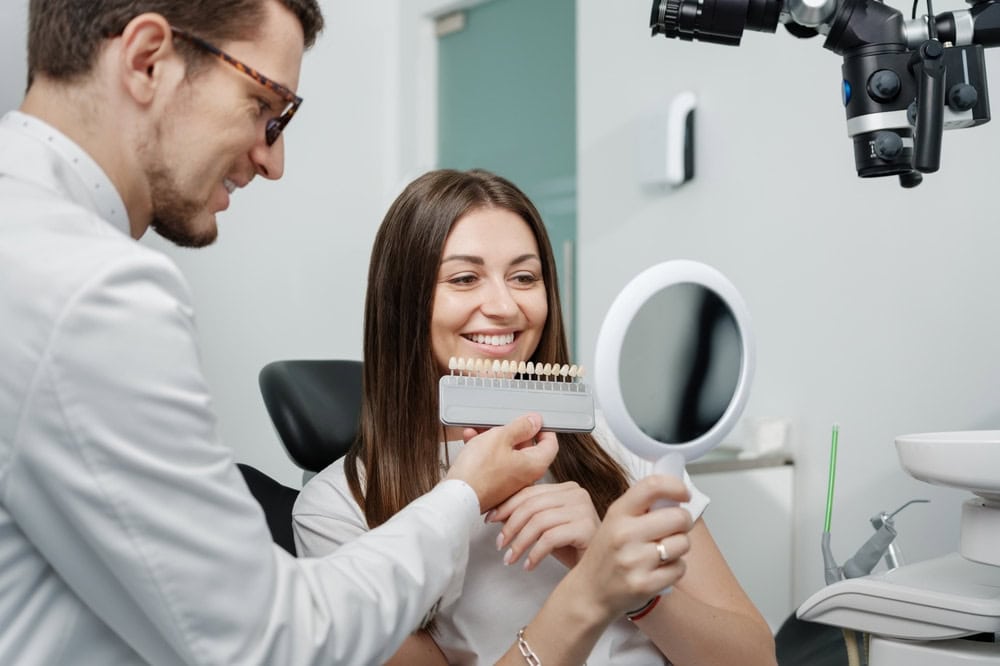
What are ceramic veneers? Ceramic veneers are thin, custom-made shells crafted from porcelain or ceramic materials in a dental laboratory. Your dentist takes a precise impression of your teeth, and a ceramist fabricates each veneer to match your natural color, shape, and translucency. The finished veneers are bonded to the tooth surface using specialized dental adhesive.
Ceramic veneers are the gold standard for smile makeovers because they mimic the light-reflecting properties of real enamel.
Key features of ceramic veneers:
- Fabricated in a dental lab over 7–14 days
- Highly resistant to stains and discoloration
- Multiple shade levels for customized whiteness
- Long lifespan of 10–15 years or more
- Natural translucency that matches real teeth
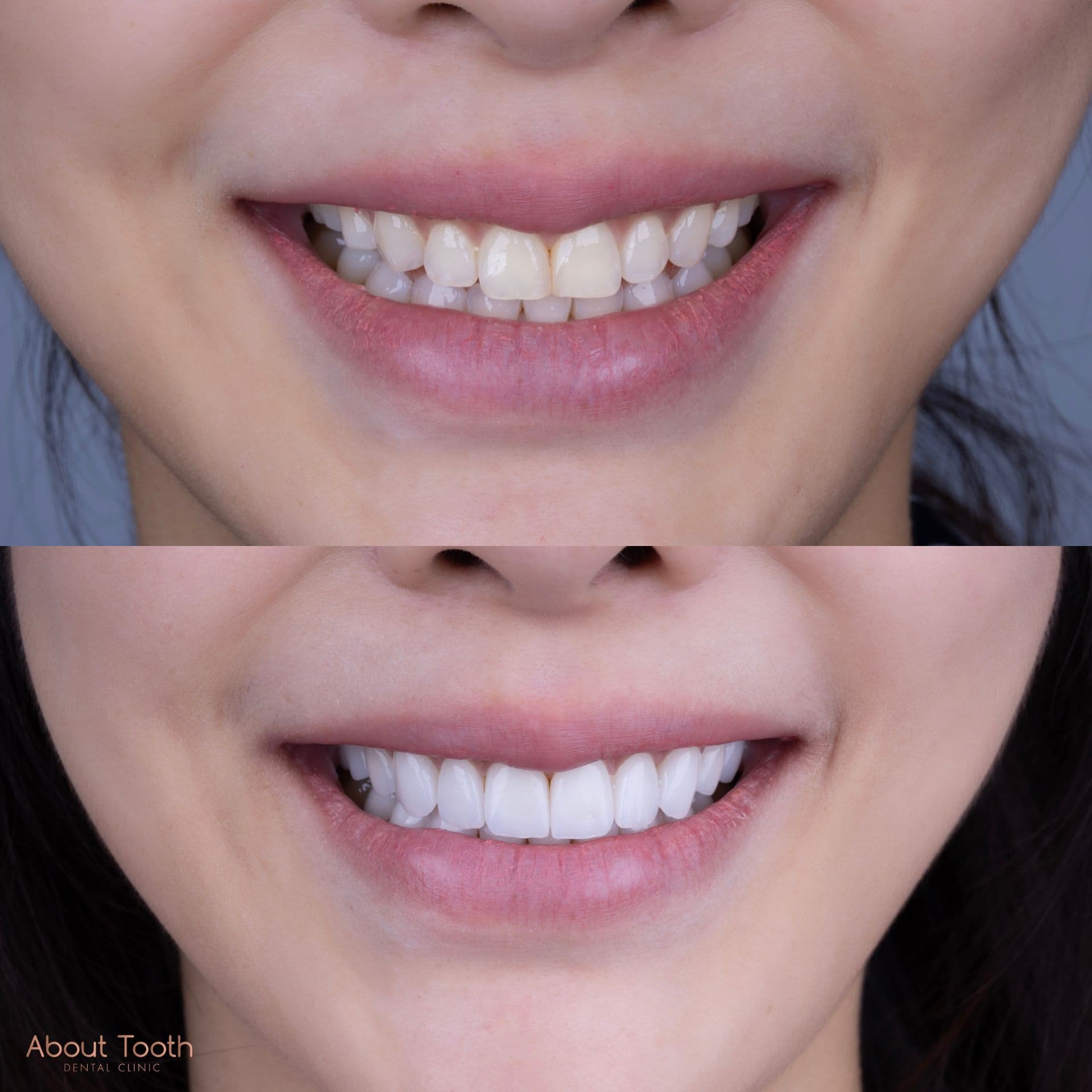
Ceramic veneers before and after transformations are typically more dramatic and long-lasting. Because the veneers are made off-site with digital design tools and precise lab work, the result is highly predictable. Patients with darkened teeth, fluorosis stains, or multiple cosmetic issues often see the biggest visual change with ceramic.
Limitations to consider:
- Higher upfront cost
- Requires 2–3 visits across 1–2 weeks
- A thin layer of enamel (around 0.3–0.5 mm) is permanently removed
- Cannot be repaired if cracked; full replacement is needed
Cost of Veneers in Thailand
Thailand is one of the most affordable destinations for quality veneer treatment, which is why so many international patients combine dental work with a holiday in Bangkok. Dental veneer prices in Bangkok typically fall within the following ranges:
- Composite veneers: 6,000–9,000 THB per tooth
- Porcelain or ceramic veneers: 14,000–19,000 THB per tooth
- Premium ceramic (IPS e.max, super-thin): up to 25,000 THB per tooth
Compared to the United States, where porcelain veneers often cost USD 1,200–2,400 per tooth, patients can save up to 80% by choosing a reputable Bangkok dental clinic like About Tooth Dental. A full smile makeover of 8–10 teeth costs significantly less in Thailand while delivering comparable clinical quality, especially at clinics using digital smile design and on-site or partnered dental labs. Final pricing depends on the veneer material, the number of teeth treated, the complexity of the case, and any preparatory work like cleaning or whitening.
Which Veneer Is Right for You?
Choose composite veneers if you:
- Want results in a single visit
- Are working within a tighter budget
- Need a small chip, gap, or minor cosmetic fix
- Prefer a reversible, enamel-preserving option
Choose ceramic veneers if you:
- Want a long-lasting smile transformation
- Are treating multiple front teeth
- Have darkened or heavily stained teeth
- Value natural translucency and stain resistance
For many patients, a consultation reveals that a combination of veneers and other treatments, such as teeth whitening or orthodontics, delivers the best overall result.
Why Choose About Tooth Dental Clinic
About Tooth Dental Clinic is a trusted cosmetic dental clinic in Bangkok with two convenient locations: Siam Square Branch inside SIAMSCAPE Tower and BTS Punnawithi Branch at True Digital Park. Our team of experienced cosmetic dentists specializes in composite and ceramic veneer treatments, combining advanced digital smile design with high-grade materials to deliver natural-looking results. Every case begins with a personal consultation, detailed shade matching, and a treatment plan customized to your facial features and smile goals.
With thousands of successful veneer cases and consistently strong patient reviews, About Tooth is a reliable choice for both local and international patients seeking quality cosmetic dentistry at competitive Bangkok prices.’
Book Your Veneer Consultation in Bangkok
Ready to plan your new smile? Book a consultation at About Tooth Dental Clinic and speak with an experienced cosmetic dentist about the best veneer option for you.
- Siam Square Branch: +66 87 555 4665
- BTS Punnawithi Branch: +66 80 481 5555

Frequently Asked Questions About All-on-4
Q1: Can I eat normally after getting veneers?
A: Yes, but avoid biting hard foods like ice, bones, or hard candy, especially in the first 24 hours. These can crack either veneer type.
Q2: Will the veneers look obviously fake?
A: No, not when properly designed. A skilled cosmetic dentist matches shade, shape, and translucency so your veneers blend with your natural teeth.
Q3: Do I need to whiten my teeth before veneers?
A: Often yes. Because veneers do not respond to whitening gel, your dentist may recommend whitening your natural teeth first to create a uniform shade.
Q4: Can I get veneers if I grind my teeth?
A: Grinding can crack or dislodge veneers. If you grind at night, your dentist will likely recommend a custom nightguard before treatment.
Q5: How do I care for my veneers daily?
A: Brush twice a day with a non-abrasive toothpaste, floss gently around each veneer, and visit your dentist every six months for cleaning and checkups.
Q6: Can veneers fix crooked teeth?
A: Minor alignment issues, yes. For significantly crooked teeth, orthodontics or Invisalign is usually recommended before or instead of veneers.
Q7: Are veneers covered by insurance?
A: Usually not. Veneers are considered cosmetic dentistry, so most insurance plans do not cover them. Check your specific policy for exceptions.