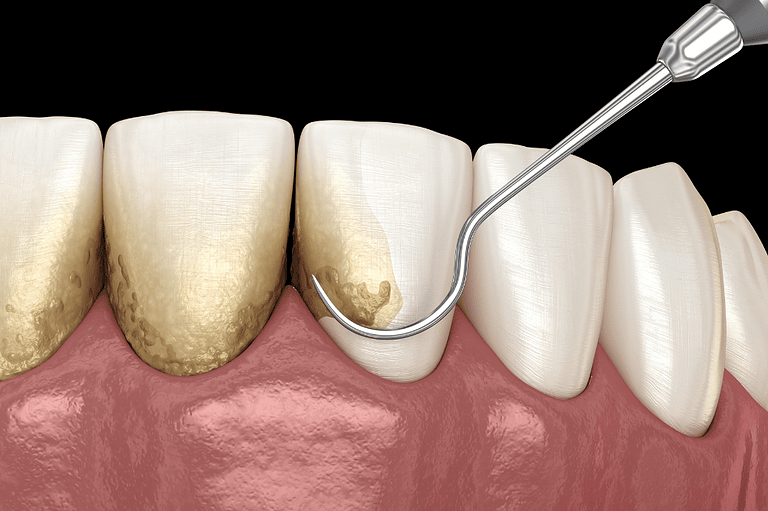
What is tartar and how is it different from plaque?
- Plaque is a soft, sticky film of bacteria that forms on the tooth surface. If you do not remove it thoroughly with toothbrushing and flossing, it can absorb minerals from your saliva and harden into calculus or tartar, which cannot be removed by brushing at home.
- Tartar commonly builds up along and underneath the gumline, making those areas rough and easier for new plaque to stick to again. Over time, this becomes a chronic reservoir of bacteria that constantly irritates the gums and promotes ongoing inflammation.
How tartar buildup on the gums leads to loose and gapped teeth
- Tartar itself does not physically push your teeth loose, but the bacteria and toxins in the plaque that sticks to tartar irritate the gums and cause gingivitis, making them red, swollen, and prone to bleeding. If the tartar is not removed and the gums are not treated, this inflammation can progress to periodontitis, a deeper infection that affects the supporting tissues around the teeth.
- As periodontitis advances, the bone and ligaments that support the tooth roots are gradually destroyed, and the gums recede. When this structural support is lost, the teeth can begin to loosen, shift position, or develop wider gaps because the framework that once held them firmly in place is no longer intact.
Warning signs of early gum and bone problems (before teeth become very loose)
- Red, swollen gums that bleed easily when you brush your teeth, use dental floss, or bite on hard foods, together with persistent bad breath and clearly visible tartar deposits around the necks of the teeth, are important early warning signs.
- If your teeth start to feel less firm than before, with widening spaces between them and food getting stuck more easily – especially if the front teeth begin to spread apart or tilt slightly – this suggests that the supporting tissues (gums, bone, and periodontal ligaments) are being damaged. At this stage, you should see a dentist promptly for an examination and treatment before the teeth become so loose that they are much more difficult to save.
How scaling and root planing help, and how often you should have them
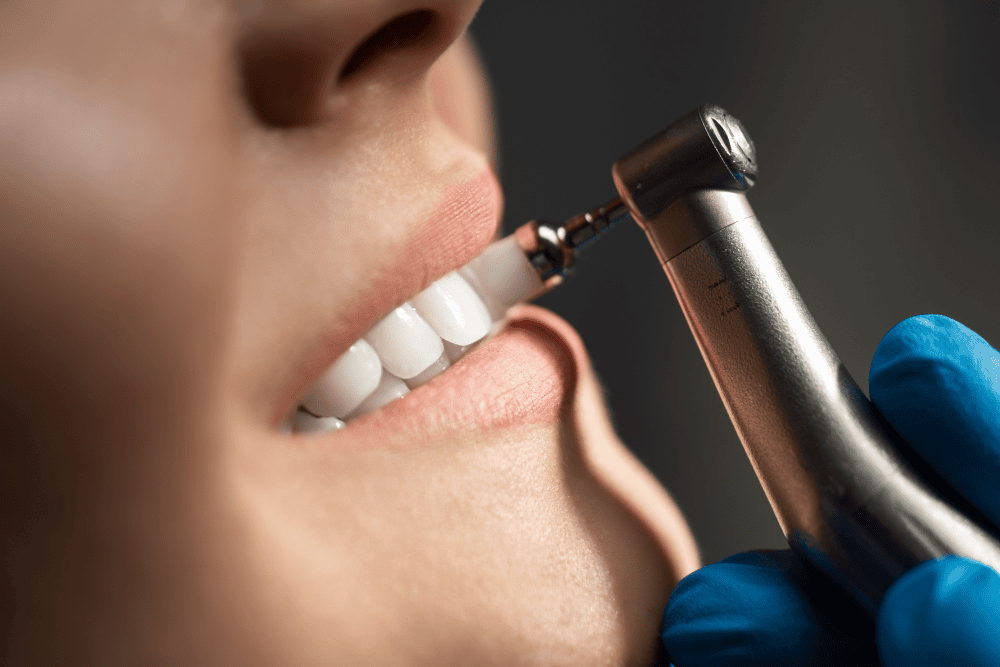
- Scaling and root planing is a deep cleaning procedure that removes tartar and plaque from both above and below the gumline and smooths the root surfaces to reduce bacterial buildup. It is considered the standard treatment for gum disease and periodontitis because it targets the main cause of ongoing inflammation around the teeth.
- Once deep tartar and plaque are removed, gum inflammation usually decreases, bleeding is reduced, and the gums can reattach and tighten around the teeth to some extent. This can improve the mobility of several teeth, especially when treatment is carried out while there is still enough bone support remaining.
- In general, most people need scaling every 6–12 months, depending on how quickly tartar builds up, whether they smoke, their medical conditions such as diabetes, and how well they maintain their oral hygiene at home.
How can loose teeth caused by tartar be treated?
- The first step in almost every case is scaling and root planing to remove tartar and plaque and stop the ongoing inflammation and bacterial infection. If this is done early, when there is only gingivitis or mild periodontitis, many slightly loose teeth can become firmer again as the gums heal and reattach.
- If the teeth are moderately to severely loose, additional treatment may be needed, such as periodontal or gum surgery to clean deep deposits, splinting the teeth together to stabilize them, or regenerative procedures to help restore lost bone in selected cases.
- When the bone and supporting ligaments have been severely destroyed and the tooth remains very loose or repeatedly infected despite treatment, extraction may be necessary, followed by a replacement plan such as a denture, bridge, or dental implant to restore function and avoid overloading the remaining teeth.
How to prevent tartar from building up again
- Brush your teeth at least twice a day and use dental floss or interdental brushes every day to remove plaque before it hardens into tartar, and make fluoride toothpaste part of your routine.
- Avoid smoking, keep blood sugar well controlled if you have diabetes, and visit your dentist regularly for oral check‑ups and professional scaling. These habits help lower the risk of periodontitis, loose teeth, and tooth gaps caused by long‑standing tartar buildup.
If you feel that tartar has built up heavily, your gums are becoming red or swollen, they bleed easily, or your teeth no longer feel as firm as before, do not leave it untreated for too long. You can visit About Tooth Dental Clinic for a gum health check and professional scaling. Our team will assess the severity of your gum condition, recommend the most appropriate treatment, and create a care plan to help keep your teeth strong and comfortable for as long as possible.
You can book an appointment with a dentist for consultation and an oral health assessment at About Tooth Dental Clinic. We are open at both our Siam and Punnawithi branches, conveniently located right next to the BTS stations at each location. For more information or to schedule an appointment in advance, please call 087-555-4665 or 080-481-5555, or add us on LINE Official Account at @abouttooth to chat with our team.

References:
1. What is tartar and how is it different from plaque?. Accessed May 28, 2026. from: https://calistogadentalgroup.com/understanding-tartar-silent-threat-to-dental-health/

Dr. Nisara Tanarerkchai, D.D.S. is a dentist specializing in dental implants, orthodontics, and veneers. She graduated from the Faculty of Dentistry at Thammasat University. With extensive professional experience, she holds multiple certificates in various dental fields, including Advanced General Dentistry, Dental Implants, Advanced Orthodontics, as well as certificates in the Veneer Bootcamp and the Veneer Masterclass. Additionally, she is certified as a Platinum Provider of Invisalign for 2021 and achieved Zenyum Star Tier status in 2023.
Currently, Dr. Thanaruksachai is the founder of About Tooth Dental Clinic, which received the World Class Award 2021 in the category of The Best of International Healthy Business. She is also serves as a member of the Thai Association of Dental Implants (TADI).