All-on-4 Dental Implants Step by Step: A Full Guide
In the past, patients with extensive tooth loss had limited options, such as dentures or traditional implants. However, a new technique called “All-on-4” has emerged in recent years, offering a more advanced solution.
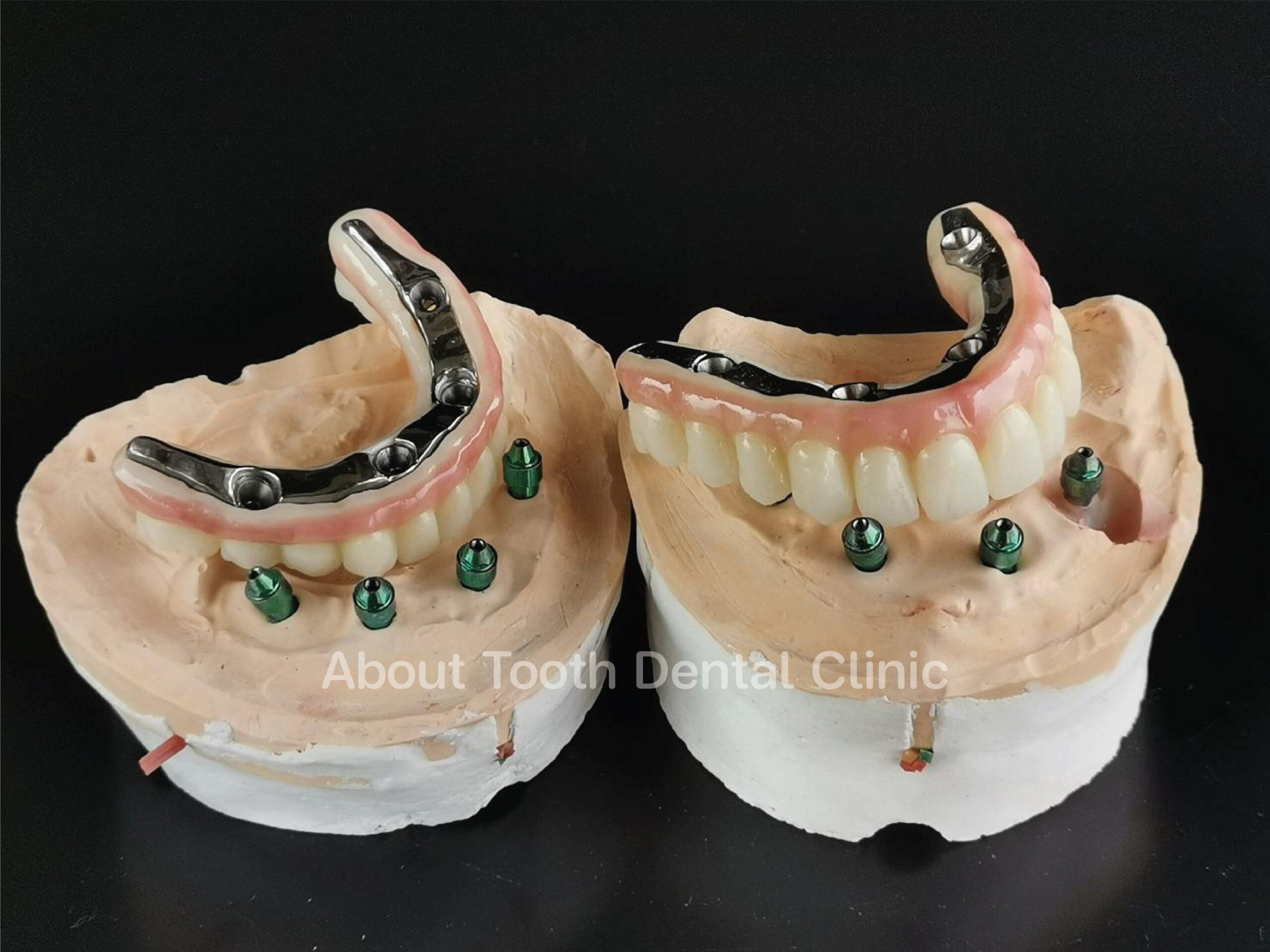
Looking at a smile before and after all-on-4 dental implants transformations is often what convinces patients that full-arch restoration can truly change a life. All-on-4 is a proven dental implant technique that replaces an entire upper or lower arch of missing teeth using just four strategically placed titanium implants. Instead of one implant per tooth, the procedure uses angled posterior implants to anchor a full fixed bridge of prosthetic teeth, offering a permanent, natural-looking result in far less time than traditional methods.
This guide walks through the full all-on-4 dental implants step by step process, who qualifies, how to care for your new teeth, and what to expect in terms of cost in Bangkok.
Who Is a Suitable Candidate?
All-on-4 is designed for patients with extensive tooth loss or those with failing teeth that need to be removed. You may be a suitable candidate if you:
- Are missing most or all of your teeth in one or both arches
- Have ill-fitting or uncomfortable traditional dentures
- Have sufficient jawbone density (or can qualify with minor grafting)
- Are in generally good overall health
- Are a non-smoker or willing to stop during healing
- Do not have uncontrolled gum disease or diabetes
Patients with moderate bone loss are often still eligible because the posterior implants are tilted at roughly 45 degrees, reducing the need for bone grafting. A 3D CT scan during your consultation confirms candidacy.
All-on-4 Dental Implants Step-by-Step
At About Tooth Dental Clinic, we approach every All-on-4 case with compassion, transparency, and meticulous planning. Many patients who seek full-arch restoration have lived with missing teeth or uncomfortable dentures for years, and we take the time to understand each person’s concerns before proposing any treatment. Our implant specialists use advanced 3D imaging and digital smile design to map out your new smile before surgery ever begins.
- Step 1: Consultation and 3D Imaging Your implant journey starts with a detailed consultation. The dentist reviews your medical history, examines your teeth and gums, and discusses your smile goals. A 3D CT scan (also called a CBCT scan) is taken to measure your jawbone density, identify nerve and sinus locations, and confirm that All-on-4 is the right option for you. This imaging is what makes modern implant surgery so safe and predictable.
- Step 2: Personalized Treatment Plan Using the scan data, our team uses CAD/CAM software to digitally plan the exact position and angle of each implant. We also design a preview of your final bridge, including tooth shape, size, and color, so you can approve the look before surgery. This is also when we finalize pricing, discuss anesthesia options (local anesthesia with optional sedation), and confirm your surgery date.
- Step 3: Preparation Day Before surgery day, you may need a dental cleaning, treatment for any active gum disease, or pre-op blood tests depending on your health profile. We give you clear instructions on what to eat, what medications to pause, and what to bring on the day.
- Step 4: Tooth Extraction (if required) If any remaining teeth are damaged, loose, or unsalvageable, they are gently removed on the same day as implant surgery. This saves you a separate surgical visit and healing period.
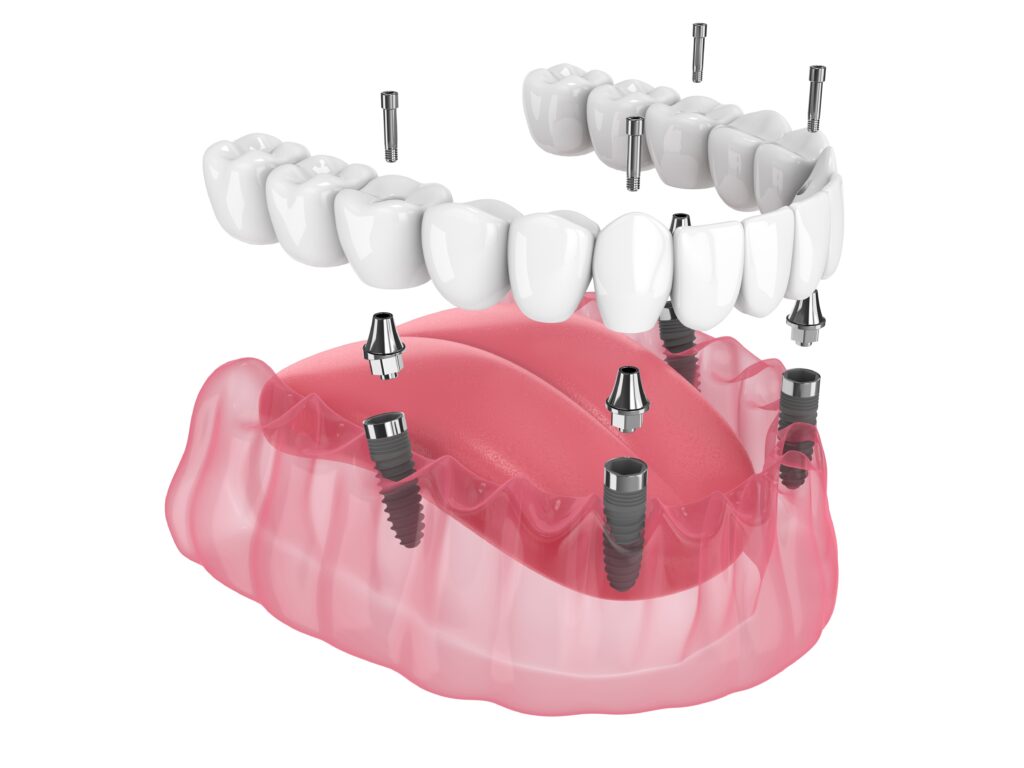
- Step 5: Implant Placement Surgery The surgery itself usually takes 2–4 hours per arch. Under local anesthesia, the implant specialist places four titanium implants into your jawbone. Two are positioned vertically at the front of the jaw, and two are angled at roughly 45 degrees at the back. This tilted positioning is the key innovation of All-on-4: it anchors the implants into the strongest part of the jawbone and often eliminates the need for bone grafting, even in patients with some bone loss.
- Step 6: Same-Day Temporary Fixed Bridge In most cases, a temporary fixed bridge is attached to the implants on the same day as surgery. You walk out of the clinic with a full set of functioning teeth. This temporary bridge is designed for comfort and aesthetics while your implants heal.
- Step 7: Post-Surgery Recovery The first few days involve mild swelling and soreness, managed with prescribed medication. You can return to most daily activities within 2–3 days. We provide detailed aftercare instructions, a soft-food diet plan for the first 1–2 weeks, and a follow-up schedule to monitor healing.
- Step 8: Osseointegration (Healing Phase) Over the next 3–6 months, your implants fuse with your jawbone through a natural process called osseointegration. This is what gives All-on-4 its long-term strength and stability. International patients often return home during this phase and come back to Bangkok for the final stage. We stay in touch remotely and schedule check-ins to monitor progress.
- Step 9: Final Prosthetic Bridge Fitting Once osseointegration is complete, we take new impressions and fabricate your final, permanent bridge. Material options include acrylic (most affordable), nanoceramic (balanced option), or zirconia (premium strength and aesthetics). The final bridge is color-matched, shape-adjusted, and securely fixed to the implants.
All-on-4 vs Traditional Dental Implants
Full-arch restoration can be approached in two main ways: All-on-4 or traditional individual implants. Both use titanium implants to permanently replace missing teeth, but they differ in how many implants are needed, how much surgery is involved, and how quickly you walk out with a complete smile. The table below breaks down the key differences to help you understand which approach may suit your case.
| Feature | All-on-4 | Traditional Implants |
| Number of implants | 4 per arch | 6–8 per arch (or 1 per tooth) |
| Bone grafting | Often avoided | Frequently required |
| Treatment time | 3–6 months | 6–12 months |
| Cost per arch | Lower | Higher |
| Surgery invasiveness | Less invasive | More invasive |
| Same-day teeth | Usually yes | Usually no |
All-on-4 is typically the better option for patients restoring a full arch. Traditional implants may still be recommended for patients with strong bone density who want maximum individual implant support.
Benefits and Long-Term Care
All-on-4 delivers benefits that extend well beyond aesthetics:
- Restored chewing function and ability to eat favorite foods
- Fixed, non-removable teeth that feel natural
- Prevents further bone loss in the jaw
- Improved speech and facial structure
- High success rate of around 95–98%
- Results that can last 20+ years with proper care
How to Clean All-on-4 Dental Implants
How to clean all-on-4 dental implants properly is what determines long-term success. Daily care is simple but non-negotiable.
Your daily cleaning routine:
- Brush twice a day with a soft-bristled or electric toothbrush
- Pay special attention to the gum line and under the bridge
- Use a water flosser (highly recommended for All-on-4)
- Clean with super floss or interdental brushes between implants
- Rinse with an alcohol-free antimicrobial mouthwash
Practical tips and tricks:
- A water flosser like Waterpik is the single most effective tool for cleaning under the prosthetic bridge
- Angle the water flosser tip toward the gum line, not straight at the implant
- Use a rubber-tipped gum stimulator once a day to keep gum tissue healthy
- Replace your toothbrush every 3 months
- Schedule professional cleaning every 6 months
What to avoid after your implant surgery:
- No smoking during healing (and ideally long-term)
- No hard foods like ice, hard candy, or bones for the first few weeks
- Avoid very hot foods for the first 48 hours
- No drinking through straws for the first week
- Avoid alcohol and spicy foods during initial healing
- No strenuous exercise for 2–3 days post-surgery
With disciplined daily care, seeing the before and after all-on-4 dental implants difference years later is one of the most rewarding experiences for both patient and dentist.
Cost of All-on-4 Dental Implants in Bangkok
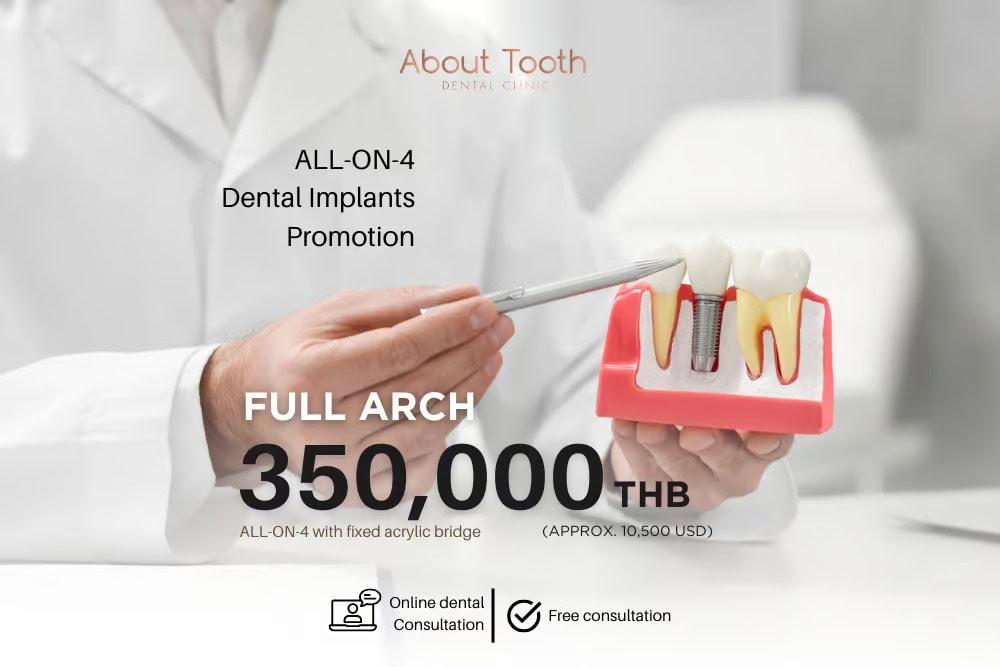
All-on-4 pricing in Bangkok typically ranges from 250,000 to 450,000 THB per arch, depending on the implant brand (Neodent, Nobel Biocare, Straumann), the bridge material (acrylic, nanoceramic, or zirconia), and whether bone grafting or extractions are needed. Most reputable clinics like About Tooth Dental Clinic in Bangkok include 3D CT scans, consultation, surgery, anesthesia, and temporary bridges in the package.
How Bangkok Compares to Western Costs
| Country | Cost Per Arch (USD) |
| Thailand (Bangkok) | $7,000–$12,000 |
| United States | $20,000–$30,000 |
| Australia | AUD $17,000–$30,000 |
| United Kingdom | £13,000–£18,000 |
International patients typically save 50–70% by choosing dental implant procedures in Bangkok, with no compromise on materials or clinical quality when working with a trusted, experienced clinic.
Why Choose About Tooth Dental Clinic
About Tooth Dental Clinic is a trusted implant provider in Bangkok with conveniently located branches at Siam Square (SIAMSCAPE Tower) and BTS Punnawithi (True Digital Park). Our implant specialists work with leading Swiss and global implant systems and use advanced 3D imaging and CAD/CAM technology to plan every case with precision.
What sets us apart is our compassionate, patient-first approach: every All-on-4 journey begins with an honest consultation, transparent pricing, and a treatment plan tailored to your bone structure, smile goals, and lifestyle. We welcome local and international patients, and our English-speaking team supports you through every stage, from initial assessment to long-term aftercare.
Book Your All-on-4 Consultation
Ready to explore a permanent solution for missing teeth? Book a consultation with an About Tooth implant specialist for a personalized assessment and transparent treatment plan.
- Siam Square Branch: +66 87 555 4665
- BTS Punnawithi Branch: +66 80 481 5555

Frequently Asked Questions About All-on-4
Q1: How long do All-on-4 dental implants last?
With good oral hygiene and regular professional maintenance, All-on-4 implants can last many years; studies show high success and prosthesis survival rates beyond 10 years.
Q2: Is the All-on-4 procedure painful?
The surgery is performed under local anaesthesia and often sedation, so you should feel minimal discomfort during treatment; post-operative soreness and swelling are typically managed with medication and home care instructions.
Q3: Can I eat normally with All-on-4 implants?
After the initial soft diet healing phase, most patients return to eating a wide variety of foods more comfortably than with dentures, thanks to the fixed, stable bridge.
Q4: What happens if I do not clean my All-on-4 implants properly?
Poor cleaning can lead to gum inflammation, peri-implant disease, bad breath, and even implant failure over time, which is why a consistent home routine and check-ups are essential.
Q5: How soon after extractions can I receive All-on-4?
In many full-arch cases, extractions and implant placement are done on the same day with an immediate fixed temporary bridge, if bone and health conditions are suitable.
Q6: Are All-on-4 implants suitable if I have been wearing dentures for years?
Many long-term denture wearers are good candidates, especially when they want a more stable, fixed option; your 3D scan will confirm whether bone volume is sufficient.
More dental implants articles :
How do you know dental implants is fit for you ?

Dr. Papatsara Veerapol, D.D.S. is a dentist specializing in orthodontics, dental implants, and prosthodontics (veneers, dentures). She graduated with honors (Second Class) from the Faculty of Dentistry at Chulalongkorn University. She later earned a Master’s degree in Prosthodontics from Srinakharinwirot University. With extensive work experience, she holds an Advanced General Dentistry Certificate and is certified as a Platinum Provider of Invisalign for 2021 and achieved Zenyum Star Tier status in 2023.
Currently, she is the founder of About Tooth Dental Clinic, which was honored with the World Class Award 2021 in the category of The Best of International Healthy Business. She also serves as a member of the Thai Association of Dental Implants (TADI) and the Thai Prosthodontics Association.