
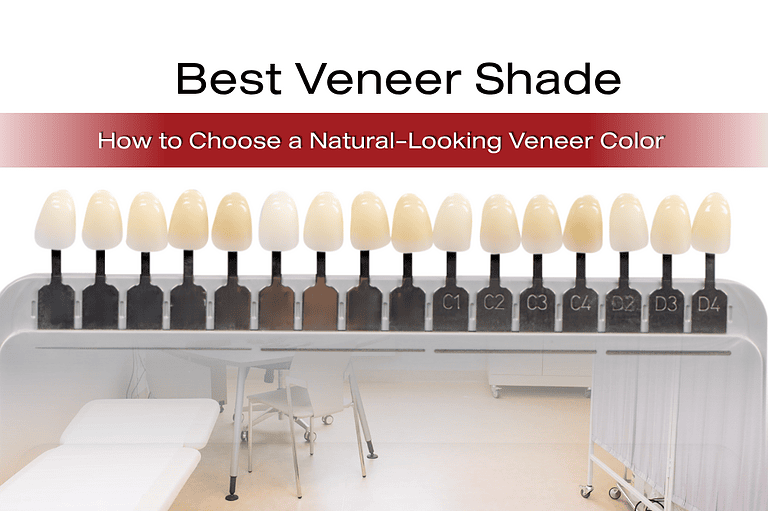
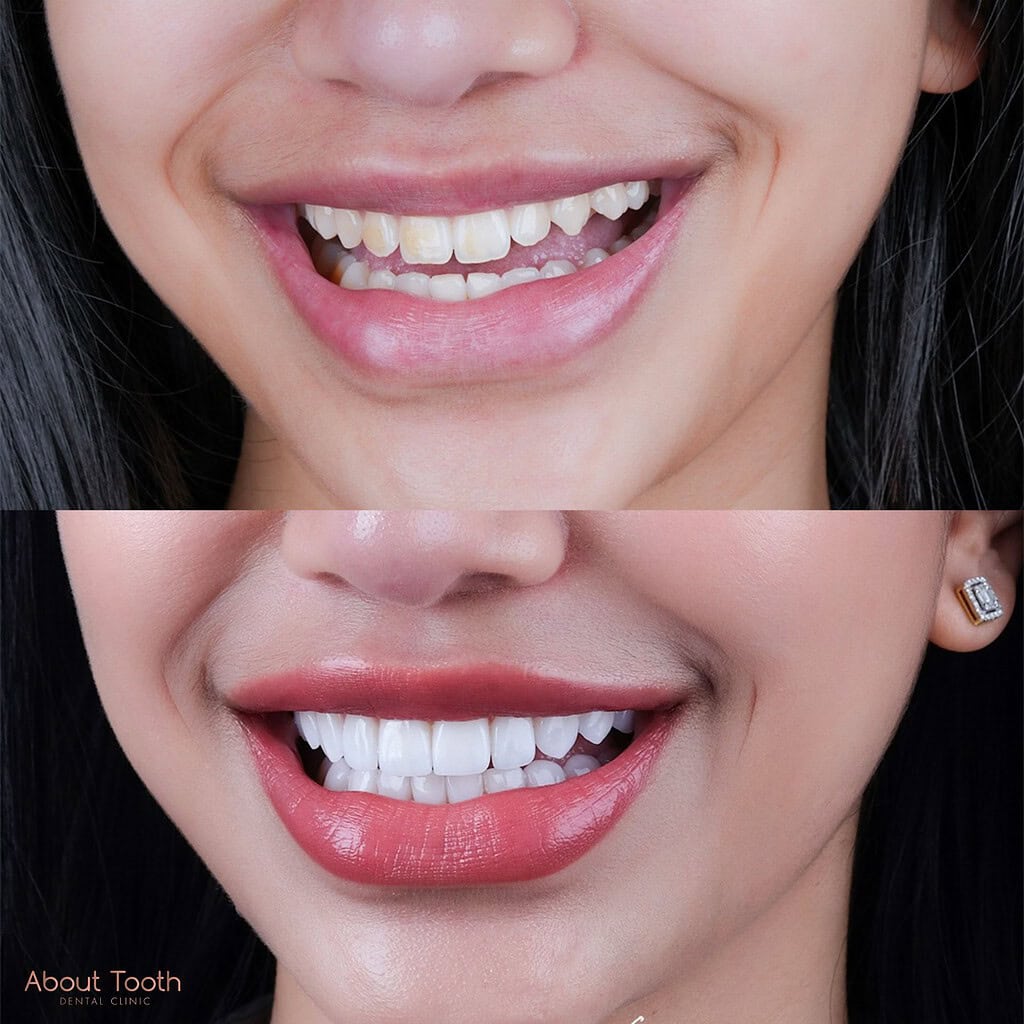
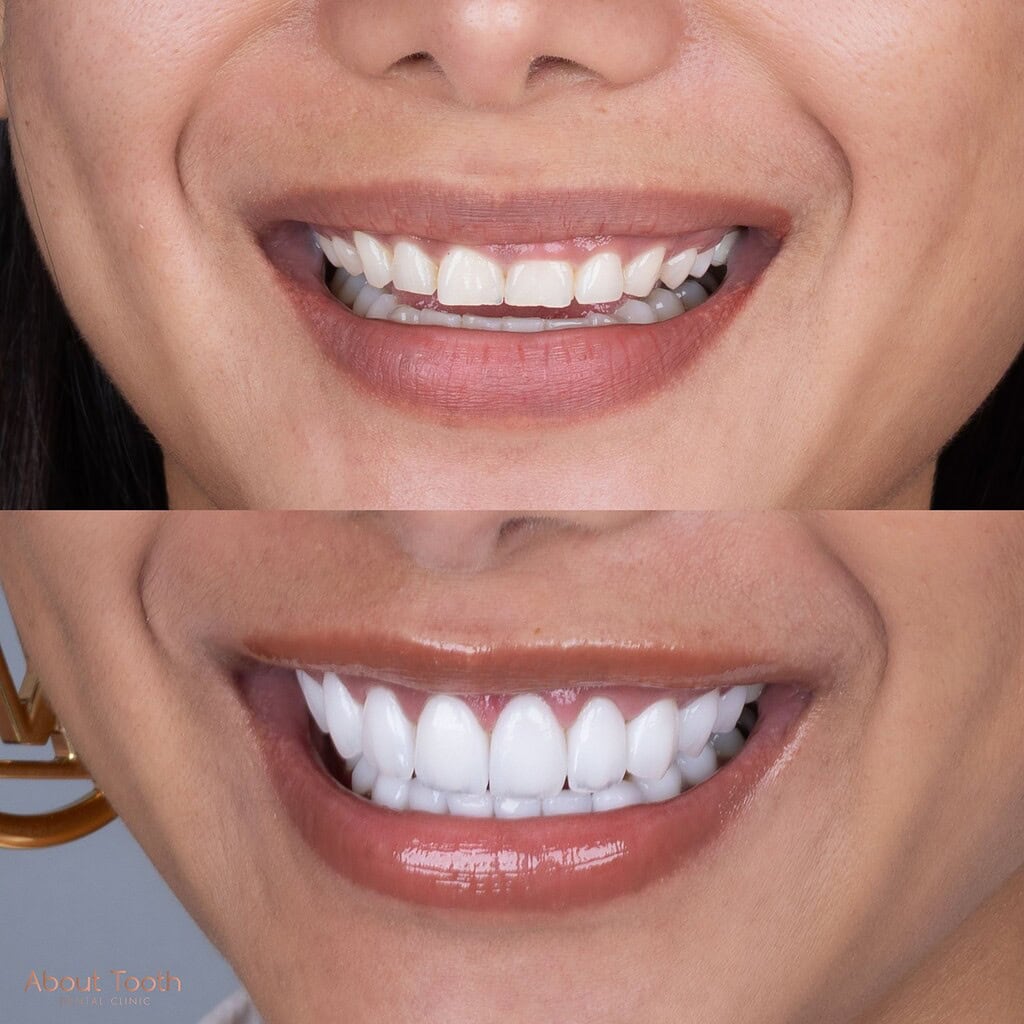
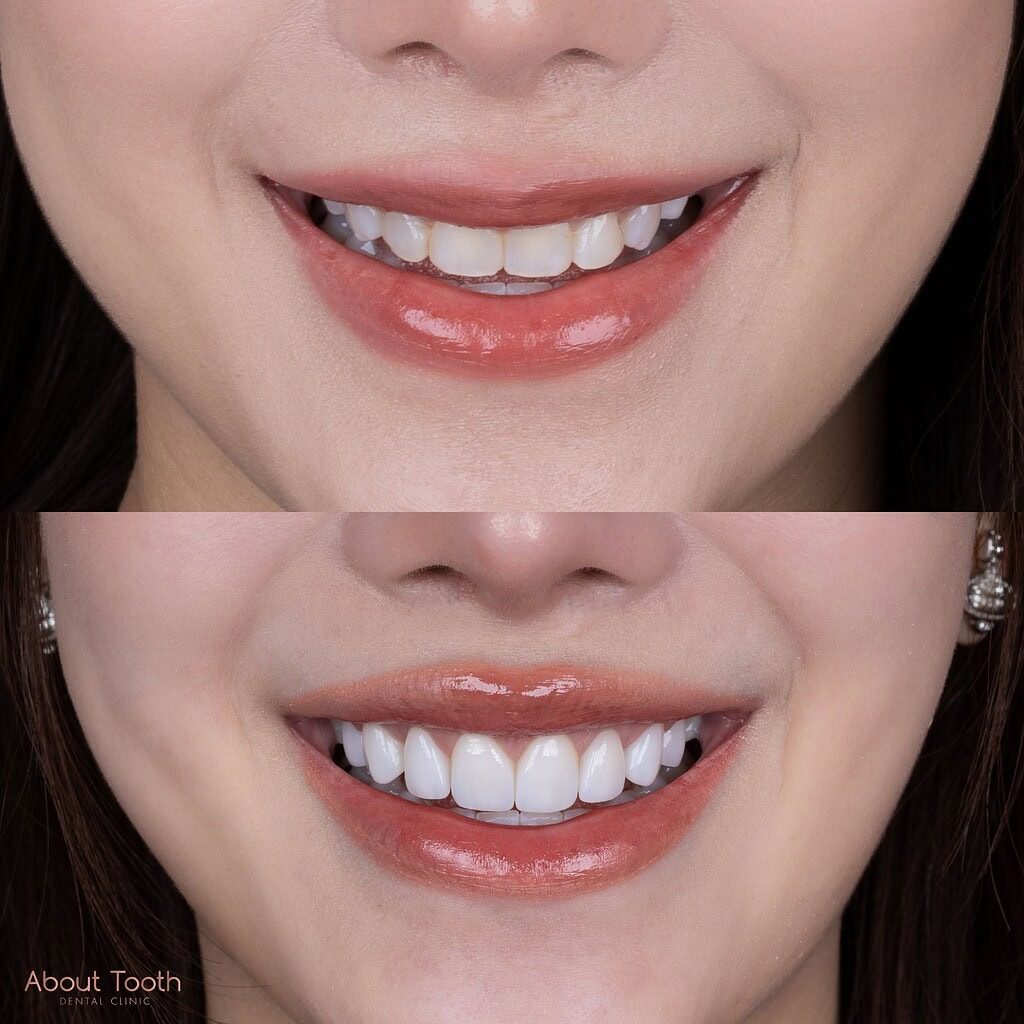
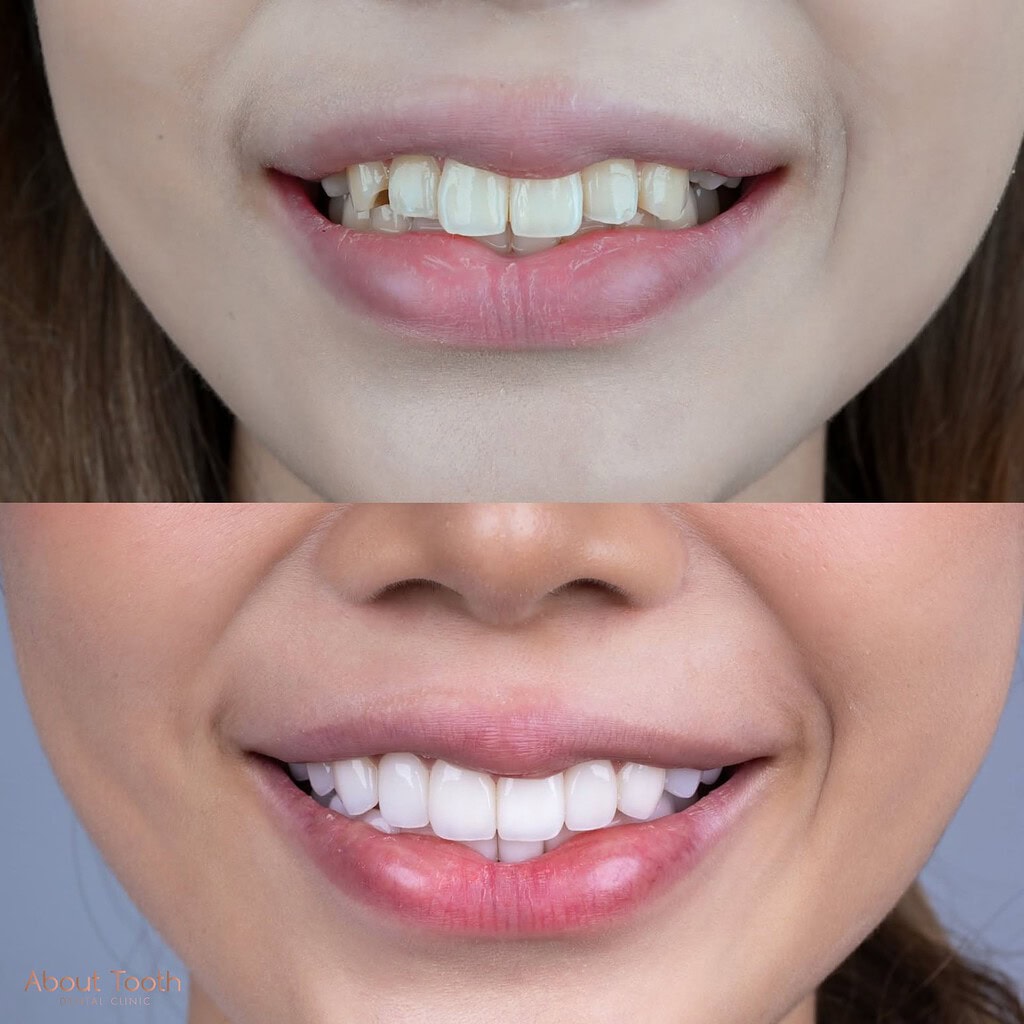
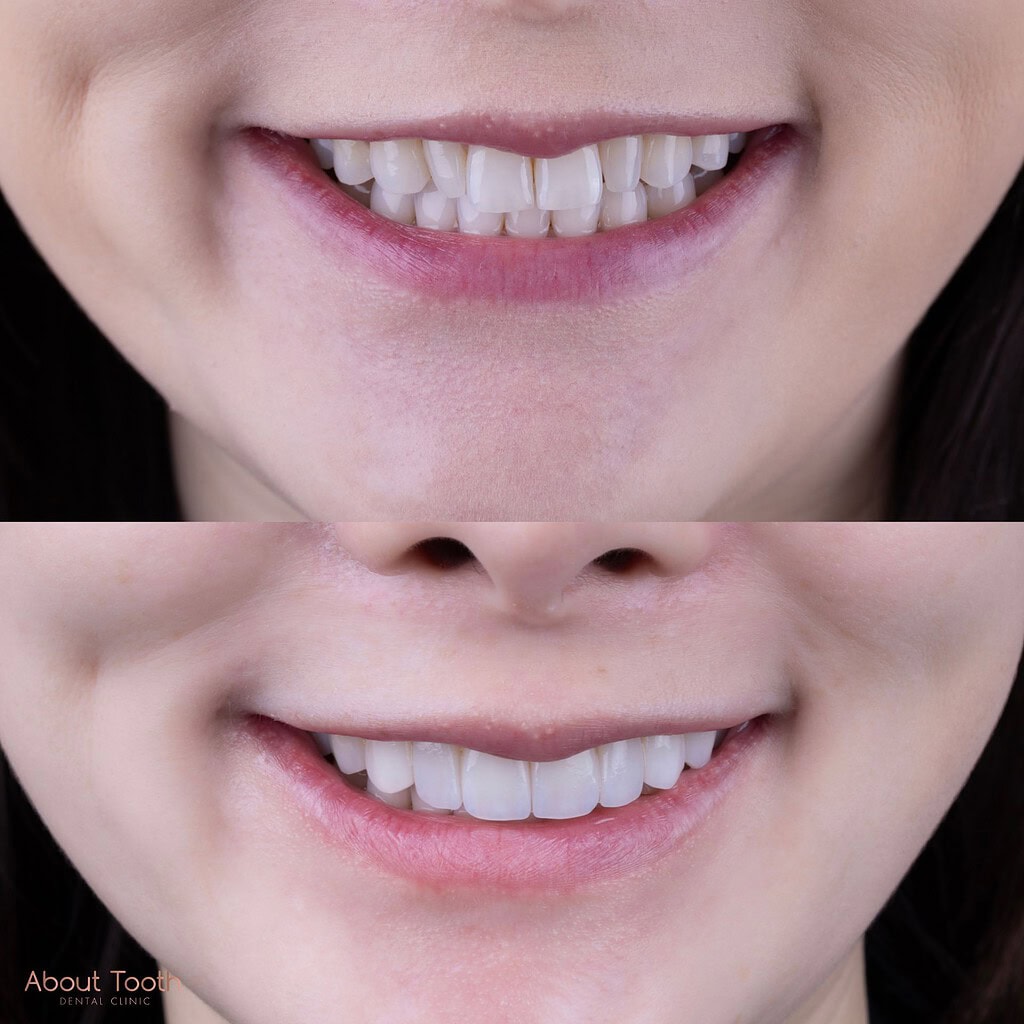
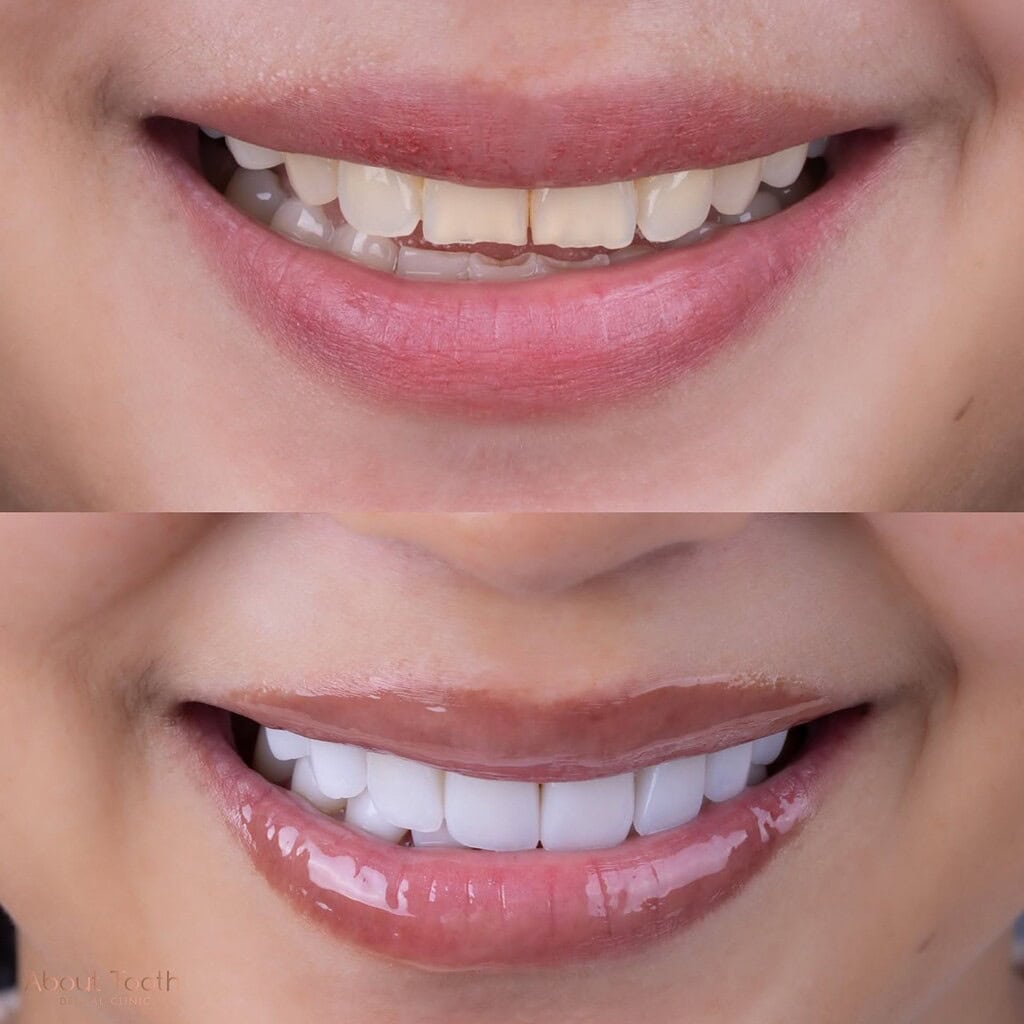
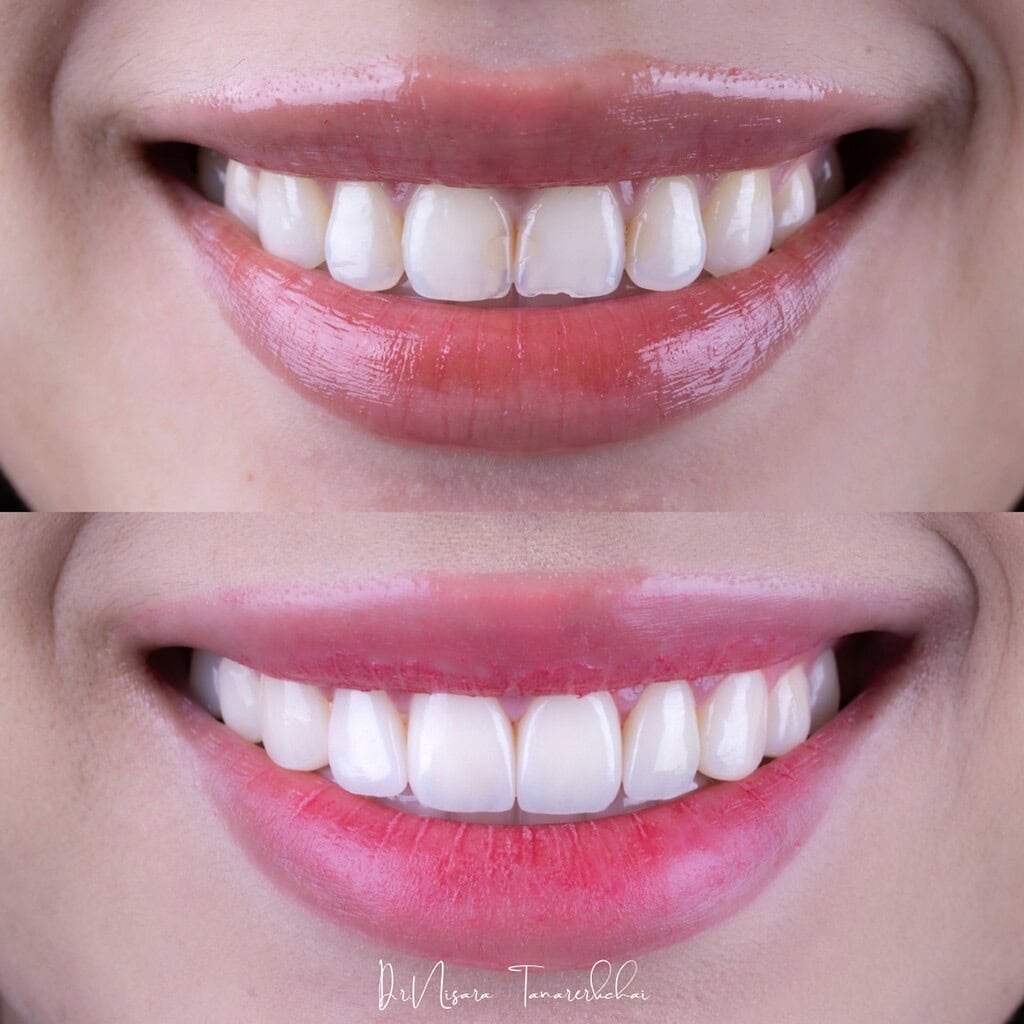
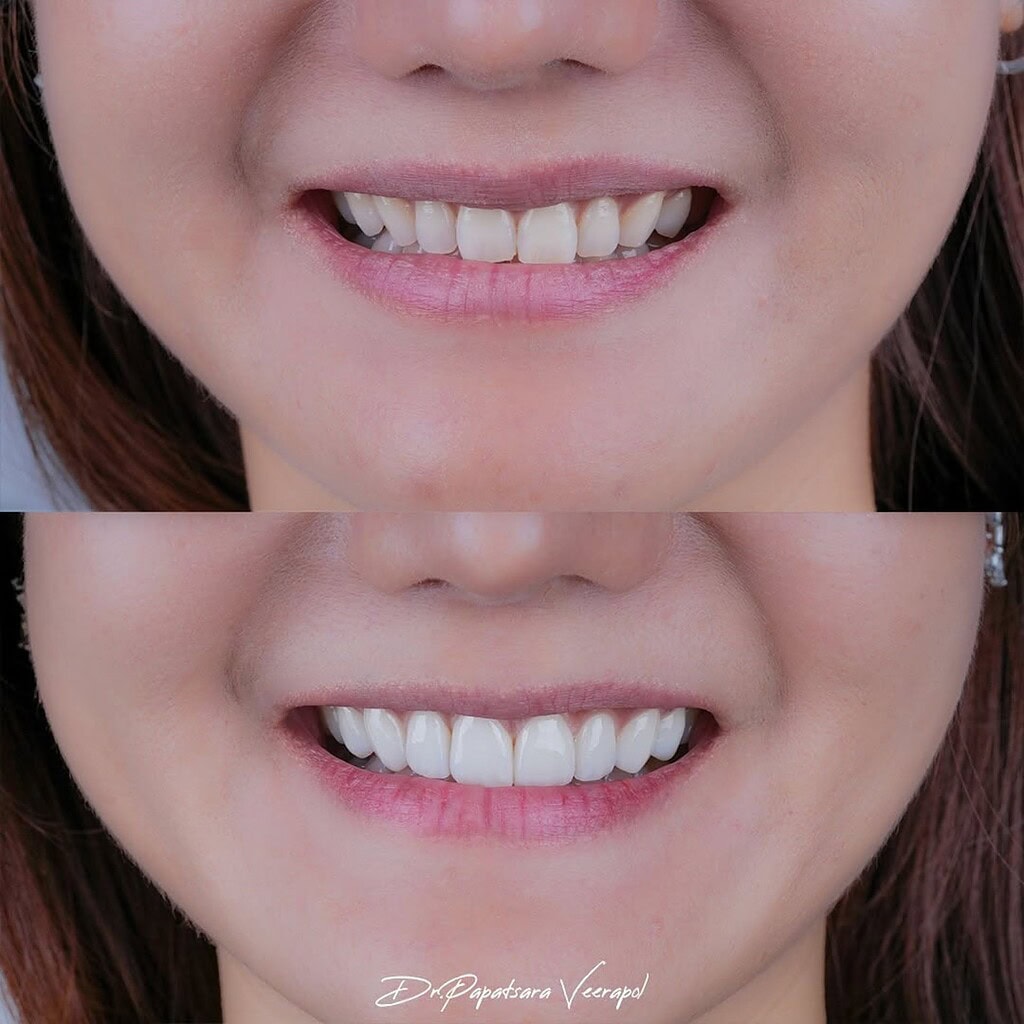
Which Veneer Shade Is Best for a Natural White Smile?
If your goal is to achieve a smile that is “whiter, but still looks like natural teeth,” you do not necessarily need to avoid bleached shades.
What matters more is how the overall smile is designed to create depth and dimension, including:
- Choosing a brightness level that complements the face
- Avoiding an overly opaque, flat white appearance
- Adding natural details around the incisal edges
- Designing the right level of translucency
- Avoiding tooth shapes that look too large or too uniform
- Making sure the shade and tooth shape work together harmoniously
Therefore, “natural” does not necessarily mean choosing a darker shade, and choosing a white shade does not automatically mean the result will look artificial.
H2: How to Choose the Right Veneer Shade for You
Before choosing a veneer shade, a dentist should consider several factors together rather than relying on the shade guide alone.
1. Your Original Tooth Color
The natural color of the underlying teeth plays an important role in veneer planning, especially when the teeth are significantly discolored, non-vital, or vary in color from one tooth to another.
With thin and translucent ceramic veneers, the underlying tooth color may influence the final appearance after treatment.
2. The Color of Teeth That Will Not Receive Veneers
If veneers are being placed only on certain teeth or only on the upper teeth, it is important to consider whether the new veneer shade will blend well with the remaining natural teeth.
In some cases, the dentist may discuss whitening the natural teeth before selecting the final veneer shade to create a more balanced overall smile.
3. Facial Features and Overall Tone
Skin tone, lip color, and overall facial features can be considered as part of the smile design process. However, they should not be treated as strict rules suggesting that a certain skin tone must be paired with a specific veneer shade.
The goal is to find a level of brightness that looks balanced with the whole face while creating the type of smile the patient wants.
4. Personality and Preferred Smile Style
Some people prefer a Natural Smile that looks soft and close to natural teeth, while others prefer a brighter and more noticeable Hollywood Smile.
Neither option is right or wrong. What matters most is communicating your preferences clearly with your dentist before treatment begins.
5. Tooth Shape
The same veneer shade can create a different overall impression depending on the shape of the teeth.
Teeth designed with natural proportions, surface texture, contours, and edge details may help even a bright shade appear dimensional and less artificial.
Does 0M1 Look Too White or Unnatural?
Not necessarily.
One common misconception is that choosing 0M1 will automatically make veneers look artificial.
In reality, whether veneers look natural depends on much more than the shade code alone.
0M1 is one of the bleached shades in the VITA shade system, but the final appearance of ceramic veneers also depends on factors such as:
- Ceramic translucency
- Veneer thickness
- Original tooth color
- Tooth shape
- Surface texture
- Incisal edge details
- The shade of the bonding material or resin cement
Therefore, 0M1 can create a noticeably bright smile while still maintaining depth and dimension when all of these elements are designed appropriately.
On the other hand, even a darker shade may look less natural if the tooth shape, surface texture, or ceramic appearance is overly opaque and lacks natural detail.
Why Can the Same Veneer Shade Look Different on Different People?
This is an important point to understand before choosing a veneer shade.
The shade code alone does not determine the final color of ceramic veneers.
Research on ceramic veneers has shown that factors such as the underlying tooth color, ceramic thickness, translucency, and the shade of the resin cement can influence the final appearance.
This is particularly important with thin or highly translucent veneers, where the color of the underlying tooth structure may have a greater influence on the final visible result.
That is why choosing a veneer shade based only on someone else’s before-and-after photos cannot guarantee that the same shade will look identical on your own teeth.
Why Veneer Translucency Is Just as Important as Shade
When discussing veneers, many people focus mainly on one question: “Which shade should I choose?”
However, another important factor that helps veneers look more lifelike and similar to natural teeth is translucency.
Natural teeth are not uniformly opaque or white from top to bottom. The incisal edges in particular may show varying levels of translucency and internal detail.
Research has shown that ceramic type, thickness, and translucency can all influence the optical appearance of ceramic restorations.
For this reason, veneer selection should not focus only on:
“Which shade?”
It may also be useful to consider:
“What level of translucency and detail should this shade have to complement my smile?”
Natural Smile vs. Hollywood Smile: What’s the Difference?
There is no single smile style that suits everyone. Veneer design can be customized based on personality and individual preferences.
Style | Overall Look |
Natural Smile | A soft, natural-looking white with dimension, translucency, and harmony with the face |
Bright Natural | A brighter smile while maintaining details that help the teeth look natural |
Hollywood Smile | A noticeably bright, striking, and more prominent white smile |
Someone who prefers a Natural Smile does not necessarily have to choose a darker veneer shade. Likewise, choosing a bleached shade does not automatically mean the final result will look like a Hollywood Smile.
The appearance can be adjusted through ceramic translucency, tooth shape, texture, and other design details.
How to Choose a Veneer Shade You Won’t Regret
Before deciding on your final veneer shade, consider these five steps.
1. Tell Your Dentist What Kind of Smile You Want
Instead of saying only, “I want 0M1,” try describing the overall look you want, for example:
- I want a natural white smile
- I want a noticeably brighter smile
- I do not want my veneers to look too opaque
- I like translucent incisal edges
- I want a Hollywood Smile
These details can help your dentist understand your expectations more clearly than communicating with a shade code alone.
2. Look at the Actual Shade Guide
Colors displayed on a smartphone screen, Instagram photos, or before-and-after images can vary depending on lighting, camera settings, editing, and screen calibration.
For this reason, digital images should not be used as the only reference when choosing the final veneer shade.
3. Consider the Whole Face
A shade that looks attractive when focusing only on the teeth may create a different impression when viewed together with the lips, skin tone, and overall facial features.
4. Do Not Choose Based Only on Someone Else’s Veneer Shade
Even if two people choose the same shade code, their final results may look different because of differences in natural tooth color, ceramic properties, veneer thickness, and other factors.
5. Choose the Shade Together with Smile Design
Veneer shade selection should ideally be considered together with tooth shape, size, proportions, and overall smile design, as all of these factors influence the final appearance.
How to Choose the Best Veneer Shade for Your Smile
The best veneer shade is not necessarily the whitest one. It should be the shade that best matches the type of smile you want to achieve.
0M1, 0M2, and 0M3 are bleached shades that can create different levels of brightness, while shades closer to natural tooth colors, such as 1M1, can be another option for those who prioritize a balanced and harmonious appearance.
However, the final result should never be judged by the shade code alone. The beauty and natural appearance of ceramic veneers also depend on the underlying tooth color, ceramic thickness and translucency, tooth shape, surface texture, and overall smile design.
If you are still unsure which veneer shade is right for you, you can consult a dentist at About Tooth Dental Clinic to evaluate your natural tooth color, tooth shape, and smile preferences, and to design a veneer shade that best suits your individual needs.
You can book an appointment with a dentist for consultation and an oral health assessment at About Tooth Dental Clinic. We are open at both our Siam and Punnawithi branches, conveniently located right next to the BTS stations at each location. For more information or to schedule an appointment in advance, please call 087-555-4665 or 080-481-5555, or add us on LINE Official Account at @abouttooth to chat with our team.

References
Abouttooth. Accessed August 24, 2026. from: https://www.abouttoothdental.com/ceramic-veneer-reviews/

Dr. Nisara Tanarerkchai, D.D.S. is a dentist specializing in dental implants, orthodontics, and veneers. She graduated from the Faculty of Dentistry at Thammasat University. With extensive professional experience, she holds multiple certificates in various dental fields, including Advanced General Dentistry, Dental Implants, Advanced Orthodontics, as well as certificates in the Veneer Bootcamp and the Veneer Masterclass. Additionally, she is certified as a Platinum Provider of Invisalign for 2021 and achieved Zenyum Star Tier status in 2023.
Currently, Dr. Thanaruksachai is the founder of About Tooth Dental Clinic, which received the World Class Award 2021 in the category of The Best of International Healthy Business. She is also serves as a member of the Thai Association of Dental Implants (TADI).