ทำไมวีเนียร์จึงเป็นการลงทุนในรอยยิ้มที่คุ้มค่า

The Cost of Veneers: Understanding the Investment and Long-Term Benefits

Veneers are a popular option for people who want to improve the appearance of their teeth. They can correct a variety of dental issues, including stains, chips, gaps, and misshapen teeth. But like any dental procedure, veneers come with a cost. In this article, we’ll explore the cost of veneers and the long-term benefits they offer. How Much Do Veneers Cost? The cost of veneers varies depending on several factors, including the number of veneers you need, the material used to make the veneers, and the location of the dental practice. In general, porcelain veneers are more expensive than composite resin veneers. However, this price can go up significantly if additional procedures, such as orthodontics or gum lifting, are needed. Investing in Your Smile While the cost of veneers may seem high, it’s important to consider the long-term benefits they offer. Veneers can last for many years, and in some cases, they can last for decades. They’re also stain-resistant, so you won’t have to worry about discoloration over time. By investing in your smile with veneers, you’re making a long-term investment in your overall well-being. Improved Self-Confidence One of the biggest benefits of veneers is the boost in self-confidence they provide. When you’re happy with your smile, you’re more likely to smile and engage with others. This can lead to improved relationships and a higher quality of life. Veneers can also improve your professional prospects by making you appear more confident and self-assured. Choosing the Specialized Dentist and Reputable Clinic When considering veneers, it’s important to choose the specialized dentist. Look for a dentist who has experience with veneers and who can provide examples of their work. You should also ask about the materials they use and their overall approach to veneers. A reputable dental practice will be transparent about

ดูแลสุขภาพช่องปากหลังทำวีเนียร์ได้ยังไงบ้าง - About Tooth Dental

Dental Veneers Aftercare Tips : Maintain your perfect smile

Dental Veneers Aftercare Tips Oral hygiene is an important thing that needs to be taken care of regularly. But for anyone who wishes to have white, clean teeth that look healthy. So, Veneer is another method that can naturally whiten your teeth as you wish. So, About Tooth Dental clinic has tips about dental veneers aftercare. How to take care of it to maintain a long-lasting white and clean smile. There are two kinds of Veneers. Composite Veneers Composite veneers are often made from a tooth-colored resin, the same type of material used with a tooth filling. The advantage of composite veneer is a shorter application process. It can be finished in a few hours. The composite can also be bonded directly to the surface without the need for drilling or filling, meaning we can improve smiles without preparing teeth. The disadvantages of composite veneers can lead to decay on the roots of the tooth, or more often, gum disease. Composite veneers will need to be replaced or repaired more frequently than porcelain veneers. Ceramic Veneers Ceramic veneers are thin porcelain shields that cover only the front surface of the teeth. They are permanently bonded to your teeth to change or improve the image of stained, chipped, broken, or unaesthetic teeth. Ceramic veneers are long-lasting (on average 10 to 15 years) and have great strength qualities. Veneers aftercare tips  Regularly brush your teeth for oral hygiene For dental health, the most important thing is to maintain regular oral hygiene, which includes brushing and flossing at least twice daily and immediately following dinner. As a result of routine mouth washing will lessen issues with dental decay. periodontitis to additional dental issues. Must select a toothbrush with soft brushes that is the appropriate size. dental floss should be chosen as well, with

วิธีดูแลรีเทนเนอร์ที่ถูกต้อง

How to properly care your retainer ?

Retainers are crucial for maintaining tooth alignment after orthodontic treatment, but their care is often overlooked, leading to bacteria buildup, odors, and damage. Here are key tips for effective retainer care: Clean your retainer daily: Just like you brush your teeth every day, it’s important to clean your retainer daily. Rinse it under cool water to remove any debris or food particles, and then gently brush it with a soft-bristled toothbrush and a mild soap or denture cleaner. Avoid using hot water or abrasive cleaners, as they can damage the retainer. Make sure to clean all surfaces of the retainer, including the wire and any plastic components.   Soak your retainer regularly: In addition to daily cleaning, it’s a good idea to soak your retainer in a cleaning solution once a week to remove any bacteria or buildup. There are several types of retainer cleaning solutions available, such as tablets or liquids. Follow the instructions on the product you choose, and avoid using homemade solutions, as they may be too harsh and can damage the retainer.   Store your retainer properly: When you’re not wearing your retainer, it’s important to store it properly to prevent damage or bacteria buildup. Use a retainer case, and avoid leaving it out in the open or wrapping it in a tissue or napkin. Keep it away from heat and direct sunlight, and make sure to replace the case periodically, as it can also harbor bacteria over time.   Avoid eating or drinking with your retainer: While it may be tempting to leave your retainer in while eating or drinking. Remove it during meals to prevent damage and food particle accumulation. Rinse it thoroughly with water if you must wear it while eating and clean it promptly.   Don’t adjust or bend your retainer: If

The Importance of Wearing a Retainer After Braces

Orthodontic treatment can be a long and expensive process, but it’s all worth it when you finally get those perfectly aligned teeth. However, many people make the mistake of thinking that once their braces or aligners come off, their orthodontic treatment is over. They may stop wearing their retainer as regularly as they should, which can cause a variety of problems. In this article, we will discuss the cons of not wearing a retainer regularly. Completing orthodontic treatment is a significant investment in time and money. However, many people underestimate the importance of wearing a retainer regularly after braces. Neglecting to do so can result in various problems: Teeth Shifting: Without regular retainer use, teeth may gradually shift back to their original positions, causing issues like overcrowding, bite problems, and jaw pain. Aesthetics: Failing to wear a retainer can affect the appearance of your smile, leading to self-consciousness and a decline in confidence. Costly Corrections: If teeth shift significantly, you might require additional orthodontic treatment to correct the problem. This can be expensive and time-consuming, potentially not covered by insurance. In conclusion, not wearing your retainer regularly can have serious consequences. Your teeth may shift, which can affect your ability to speak and eat, as well as the appearance of your smile. It can also lead to costly corrections and discomfort and pain. Therefore, it’s important to follow your orthodontist’s instructions and wear your retainer as prescribed. By doing so, you can maintain your beautiful smile and avoid the negative consequences of not wearing a retainer regularly. atbadmin

Types of retainer

A retainer keeps your teeth in place after your braces come off. Your orthodontist will help you decide the best type for you based on what you needed braces for any conditions you might have. What are the types of retainer? Clear Retainer   This type of retainer is made from clear plastic. They are virtually invisible because they are clear, they are hard to notice without looking for them. Your orthodontist will using the alginate impression material for printing. It will take 3-7 days to receive clear retainers. Advantages of clear retainers – Clear, so they are invisible – Fitted so that teeth stay in place better – Thinner and more comfortable – Convenient to have multiple copies made – Do not have to wait for a long time – Inexpensive Disadvantage of clear retainers – They can be easily damaged if left lying around Hawley Retainer A hawley retainer is made of a combination of acrylic and metal that is molded custom to fit your mouth. Using the alginate impression material for printing and you will get your retainers for 3-7 days. Hawley retainers have all the same procedures as clear retainers. Advantages of Hawley Retainers – can choose plastic color to personalize – Durable, can last for years – Do not have to wait for a long time – Inexpensive Disadvantages of Hawley Retainers – May cause difficulty speaking – metal wire visible in front of teeth Fixed retainer Fixed retainers are made of a metal wire that is along the back tongue side and glued to your teeth. It can’t be seen when you speak or smile. One of the biggest concerns for many patients, there is no chance of human error like forgetting to put it back in after every meal. Advantages of Fixed Retainers

ฟอกสีฟัน-en

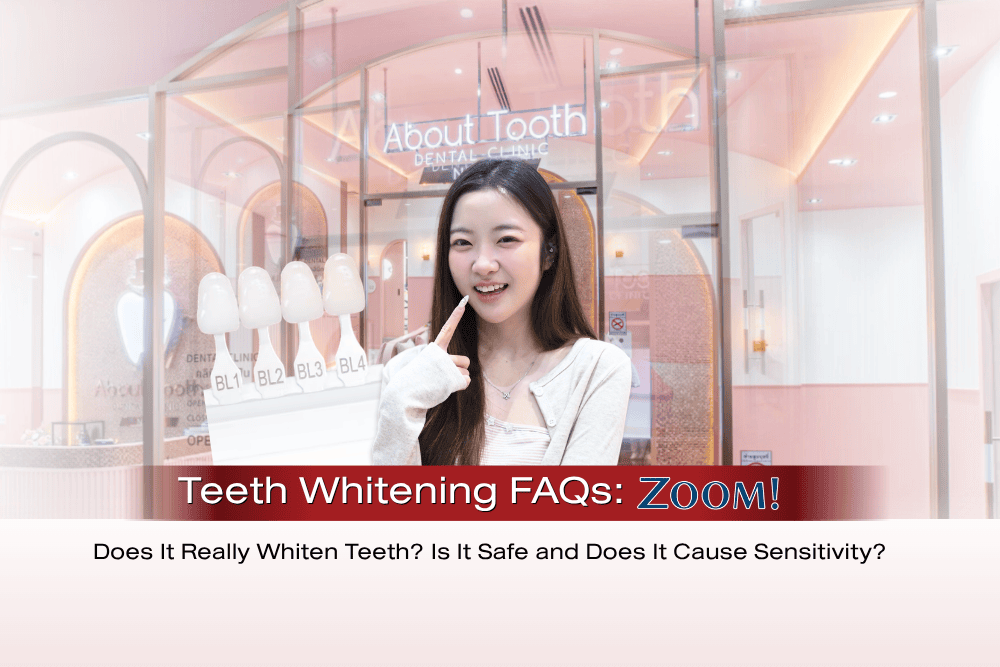
Teeth Whitening FAQs: Does It Really Whiten Teeth? Is It Safe and Does It Cause Sensitivity?

Teeth whitening can help make the natural color of your teeth appear brighter, but the results can vary from person to person. The outcome depends on your original tooth color, the cause of discoloration, and how your teeth respond to the whitening agent. Teeth whitening may also cause temporary tooth sensitivity or gum irritation, and it does not change the color of restorations such as veneers, crowns, or fillings. For this reason, it is recommended to have your oral health checked before choosing the most suitable whitening method. Want a brighter smile but still wondering, “Is teeth whitening worth it? Will it make my teeth thinner? Will it cause a lot of sensitivity?” You may also be curious about how much whiter your teeth can become. These are some of the most common questions people have before deciding to whiten their teeth. Teeth Whitening is a treatment designed to make the natural color of teeth appear brighter. It uses peroxide-based whitening agents to break down or alter pigments within the tooth structure. However, results vary because they depend on the starting tooth shade, the cause of discoloration, and each person’s dental and oral health condition. Some types of tooth discoloration may respond well to whitening, while discoloration caused by certain medications, dental trauma, or restorations such as crowns and veneers may not change in the same way as natural teeth.  Is Teeth Whitening Worth It? What Should You Know Before Treatment? For people with dull or discolored teeth who want a brighter smile, teeth whitening is one option that can help lighten the natural color of the teeth without changing their shape. However, “yellow teeth” can have many different causes. Tooth color may change because of factors such as: Natural tooth color Aging Stains from tea, coffee, food, or colored

Smile Makeover Veneer

What are Dental Veneers? Dental veneers are thin, custom-made shells of tooth colored materials designed to cover the front surface of teeth to improve your appearance. Those shells are bonded to the front of teeth changing their color, shape, size or length. Type of Dental Veneers? 1. Composite Veneers Composite veneers are often made from a tooth-colored resin, the same type of material used with a tooth filling. The advantage of composite veneer is a shorter application process. It can be finished in a few hours. The composite can also be bonded directly to the surface without the need for drilling or filling, meaning we can improve smiles without preparing teeth. The disadvantages of composite veneers can lead to decay on the roots of the tooth, or more often, and gum disease. Composite veneers will need to be replaced or repaired more frequently than porcelain veneers. 2. Ceramic Veneers Ceramic veneers are thin porcelain shields that cover only the front surface of the teeth. They are permanently bonded to your teeth to change or improve the image of stained, chipped, broken, or unaesthetic teeth. Ceramic veneers are long-lasting (on average 10 to 15 years) and have great strength qualities. The main purpose of dental veneers are the beauty and durability of the material. The patients who want to have permanent white teeth, lead to teeth discoloration by medications or unhappiness with your teeth. Dental veneers can fix any number of esthetic problems in your mouth. Ceramic veneers are much recommended by Prosthodontist. In fact, the highest quality solution available in terms of beauty, function, and longevity for conservatives. There are a variety of options for dental veneers depending on your needs, the type of look you want, and your budget. Prosthodontist will discuss your desires and preference and any limitation

About Tooth Dental Clinic’s Invisalign invisible braces

About Tooth Dental Clinic’s Invisalign Invisible Braces in Bangkok

Invisalign invisible braces are a popular teeth-straightening treatment available at About Tooth Dental Clinic. The desire for a stunning smile with perfectly aligned teeth is a strong motivation for individuals who seek corrective treatments such as braces. With Invisalign invisible braces, metal braces are no longer the only option for those seeking dental improvement. In Bangkok, Invisalign is the preferred teeth straightening treatment, as the near-invisible retainers are virtually undetectable. How Does Invisalign Work? Unlike traditional metal braces, Invisalign uses a series of corrective acrylic aligners to straighten teeth. Every few weeks, our patients meet with About Tooth Dental’s expert dentists and receive a new set of aligners until the treatment is complete. During the first visit, we will take a 3D scan of your mouth to create your Invisalign treatment plan. Before beginning, your dentist will explain the strategy they will implement to fix the alignment of your teeth. We will make the first set of Invisalign corrective aligners, which you will wear all day except when eating or cleaning your teeth. Depending on the extent of correction your teeth need, the process may involve around 20 different sets of retainers and take up to one year to complete. What can Invisalign Treat? Invisalign is a suitable treatment for various dental issues, including overcrowding, crooked teeth, and gaps between teeth. However, it is important to note that while Invisalign is commonly preferred over metal braces, your dentist may recommend a different corrective treatment for your teeth if needed. If you are interested to see if Invisalign invisible braces are the right teeth-straightening treatment for you, consult the dentists at About Tooth Dental Clinic. Contact our clinic for more information about the cost of Invisalign and find out more about our Invisalign packages. Pros and Cons of Invisalign Many people

Types of Treatable Cases

           There are so many questions about Why you might need braces? About Tooth Dental Clinic will be explain what types of braces our orthodontics recommend 1. Overbite            An overbite is when the top jaw and teeth overlop the lower jaw and teeth. Dentist and Orthodontist refer to overbite as a type malocculsion. It can often by hereditary with some people being born with a jaw that is too big or too small for the teeth resulting in crowding or large spaces and overbite. Overbite can lead to several factors such as thumb sucking, extended pacifier use or pushing on teeth with their tongue. Braces are effective for treating most overbite people. In case of severe issue, which lead to stop growing to correct the relationship between the upper and lower jaws be also treated by Orthodontic Surgery. 2. Underbite           An underbite is a term for a dental condition characterized by lower teeth that extand outward further than the upper front teeth. This condition is also called prognathism. It can cause by genetically inherited. Teeth grow in such a way that upper teeth fit a little over the lower teeth. Other effects of an underbite including eating, chewing or teeth grinding. Underbite brace or clear aligners can also correct milder cases. Sometimes, surgery and clear aligners may be help together to repair and underbite. In extream cases underbite surgery is recommended. It reshapes and shortens the lower jaw. 3. Deep bite           Deep bite occurs when there is an abnormal vertical overlap between the upper and lower teeth. It can causes other long term issue such as difficulty biting and chewing. However, a deep bite can sometimes be a esthetic concern as