

What Is Root Canal Treatment?
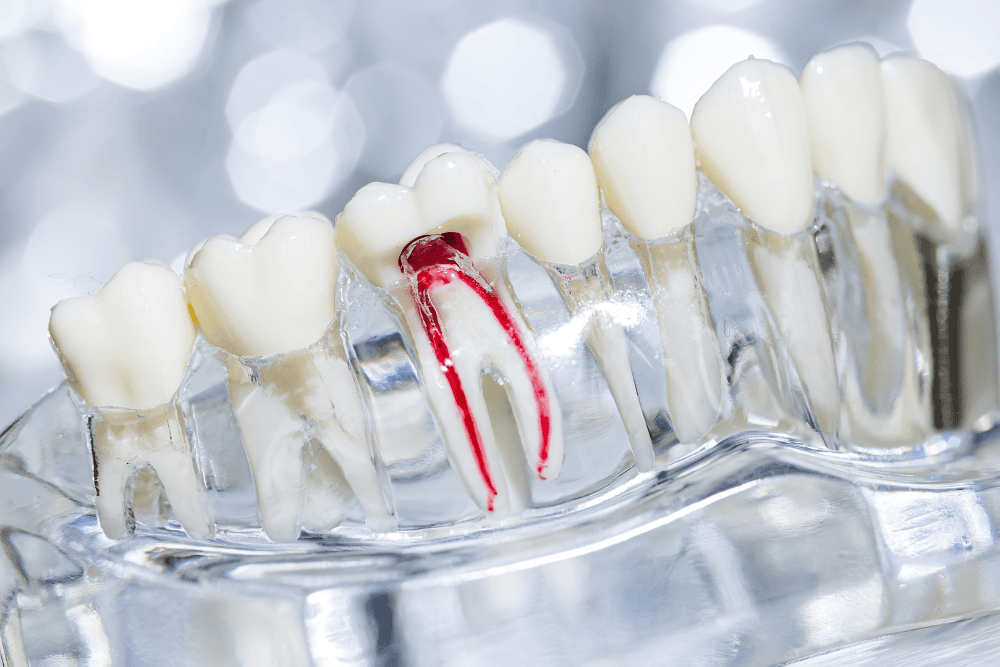
Root canal treatment is a dental procedure that removes inflamed or infected pulp tissue from inside the tooth. The root canals are then thoroughly cleaned and disinfected before being filled and sealed with specialized materials to help prevent reinfection. This treatment helps preserve the natural tooth so it can remain in the mouth and continue to function properly.
Steps of Root Canal Treatment
- Examination and X-ray
The dentist examines the tooth and takes an X-ray to assess the condition of the dental pulp, roots, and surrounding tissues. - Local Anesthesia
Local anesthesia is administered to numb the treatment area and help minimize discomfort during the procedure. - Accessing the Root Canals
An opening is made in the tooth to access the pulp chamber and remove inflamed or infected tissue from the root canals. - Cleaning the Root Canals
The canals are carefully cleaned and disinfected using specialized instruments and solutions. - Filling the Root Canals
Once cleaned, the root canals are filled and sealed with dental materials to help prevent reinfection. - Restoring the Tooth
The tooth is restored with a filling or dental crown, depending on its condition, to help restore strength and function.
Symptoms That May Indicate the Need for Root Canal Treatment
- Severe tooth pain, especially when chewing or when exposed to hot or cold temperatures
- Tooth discoloration, swollen gums, or pus around the root area
- Deep tooth decay that reaches the dental pulp and causes inflammation
- Persistent tooth pain that does not improve even after taking pain medication
If you experience any of these symptoms, it is important to see a dentist for an examination and diagnosis to determine whether root canal treatment is necessary.
Does Root Canal Treatment Hurt?
Many patients worry that root canal treatment may be very painful. However, dentists usually administer local anesthesia before the procedure to numb the tooth and surrounding tissues. During treatment, most patients feel pressure or movement from the dental instruments rather than significant pain.
In some cases, the pain experienced before treatment is caused by inflammation or infection inside the tooth. Root canal treatment is designed to remove the affected tissue, address the source of inflammation, and help relieve the pain.
After treatment, mild soreness or sensitivity may occur for a short period and should gradually improve.
How Many Visits Does Root Canal Treatment Take?
The number of appointments required for root canal treatment varies from person to person.
Many cases may be completed in approximately 1–2 visits, while some may require additional appointments if there is a significant infection or the root canal anatomy is complex.
The number of visits depends on several factors, including:
- The number of root canals
- The shape and complexity of the root canals
- The severity of inflammation or infection
- The location of the tooth
- The condition of the tooth before treatment
- Whether follow-up between appointments is necessary
The exact number of visits should therefore be determined by the dentist after evaluating the affected tooth.
How Long Does Each Root Canal Treatment Appointment Take?
In general, each root canal treatment appointment may take approximately 60–90 minutes, while some cases may require around 1–2 hours.
The treatment time depends on the complexity of the tooth. For example, a tooth with multiple root canals or a more significant infection may require more time for cleaning and treatment than a tooth with a simpler root canal structure.
It is therefore normal for treatment time to vary between patients.
Is It Painful After Root Canal Treatment?
After the local anesthesia wears off, some patients may experience mild soreness, sensitivity, or discomfort when biting during the first few days, especially if the tooth was already inflamed before treatment.
Mild discomfort should gradually improve.
You should return to your dentist if you experience:
- Pain that becomes more severe
- Severe throbbing pain
- Swelling of the gums or face
- Fever
- A temporary filling that becomes loose or falls out
- Persistent or unusual pain when biting
If any of these symptoms occur, your dentist should examine the tooth to determine the cause and whether additional treatment is needed.
Do You Need a Dental Crown After Root Canal Treatment?
Not every tooth requires a dental crown after root canal treatment.
After treatment, the dentist will evaluate whether the tooth should be restored with a filling or a dental crown based on factors such as:
- How much natural tooth structure remains
- Whether the tooth has cracks or fractures
- How much chewing force the tooth receives
- Whether it is a front tooth or a back tooth
- Whether there is a large existing dental filling
If a significant amount of tooth structure has been lost, particularly in back teeth that receive greater chewing forces, the dentist may recommend a dental crown to help protect the tooth and reduce the risk of fracture.
When Should You See a Dentist?
You should not wait until the tooth becomes severely painful before seeking treatment, as problems involving the dental pulp may sometimes develop without obvious symptoms in the early stages.
It is recommended to see a dentist if you experience:
- Persistent tooth pain
- Significant pain when chewing or biting
- Lingering sensitivity to hot or cold temperatures
- Swollen gums
- A bump or pus around the gums
- Tooth discoloration
- A cracked tooth or dental trauma
- Deep tooth decay
- Swelling of the face or jaw
These symptoms do not necessarily mean that root canal treatment is required in every case, but they are signs that the tooth should be examined to determine the cause and appropriate treatment.
Benefits of Root Canal Treatment
- Helps preserve the natural tooth for longer
- Helps reduce the risk of infection spreading
- May help avoid tooth extraction and tooth replacement
- Helps maintain chewing function and the appearance of the natural tooth
How to Care for Your Tooth After Root Canal Treatment
After root canal treatment, it is important to maintain good oral hygiene. Brush your teeth twice a day, floss regularly, and avoid chewing very hard foods with the treated tooth during the early stages of recovery.
You should also attend all scheduled follow-up appointments. If you experience unusual symptoms such as persistent pain, swelling, or a loose filling, contact your dentist as soon as possible.
Root canal treatment is an effective way to help preserve a natural tooth, reduce the risk of tooth loss, and allow the tooth to continue functioning. If you notice unusual symptoms or think you may need root canal treatment, it is best to see a dentist for an examination and an appropriate treatment plan.
If you are experiencing tooth pain, deep tooth decay, or think you may need root canal treatment, you can contact About Tooth Dental Clinic for an evaluation. Our dental team provides comprehensive care, from detailed diagnosis through the complete root canal treatment process.
Do not let tooth pain or inflammation affect your oral health and quality of life. Schedule a consultation to have your tooth assessed and receive a personalized treatment plan based on your individual needs.
You can book an appointment with a dentist for consultation and an oral health assessment at About Tooth Dental Clinic. We are open at both our Siam and Punnawithi branches, conveniently located right next to the BTS stations at each location. For more information or to schedule an appointment in advance, please call 087-555-4665 or 080-481-5555, or add us on LINE Official Account at @abouttooth to chat with our team.

References
Root Canal Explained. Accessed September 29, 2026. from: https://www.ada.org/resources/ada-library/oral-health-topics/dental-erosion/

Dr. Nisara Tanarerkchai, D.D.S. is a dentist specializing in dental implants, orthodontics, and veneers. She graduated from the Faculty of Dentistry at Thammasat University. With extensive professional experience, she holds multiple certificates in various dental fields, including Advanced General Dentistry, Dental Implants, Advanced Orthodontics, as well as certificates in the Veneer Bootcamp and the Veneer Masterclass. Additionally, she is certified as a Platinum Provider of Invisalign for 2021 and achieved Zenyum Star Tier status in 2023.
Currently, Dr. Thanaruksachai is the founder of About Tooth Dental Clinic, which received the World Class Award 2021 in the category of The Best of International Healthy Business. She is also serves as a member of the Thai Association of Dental Implants (TADI).