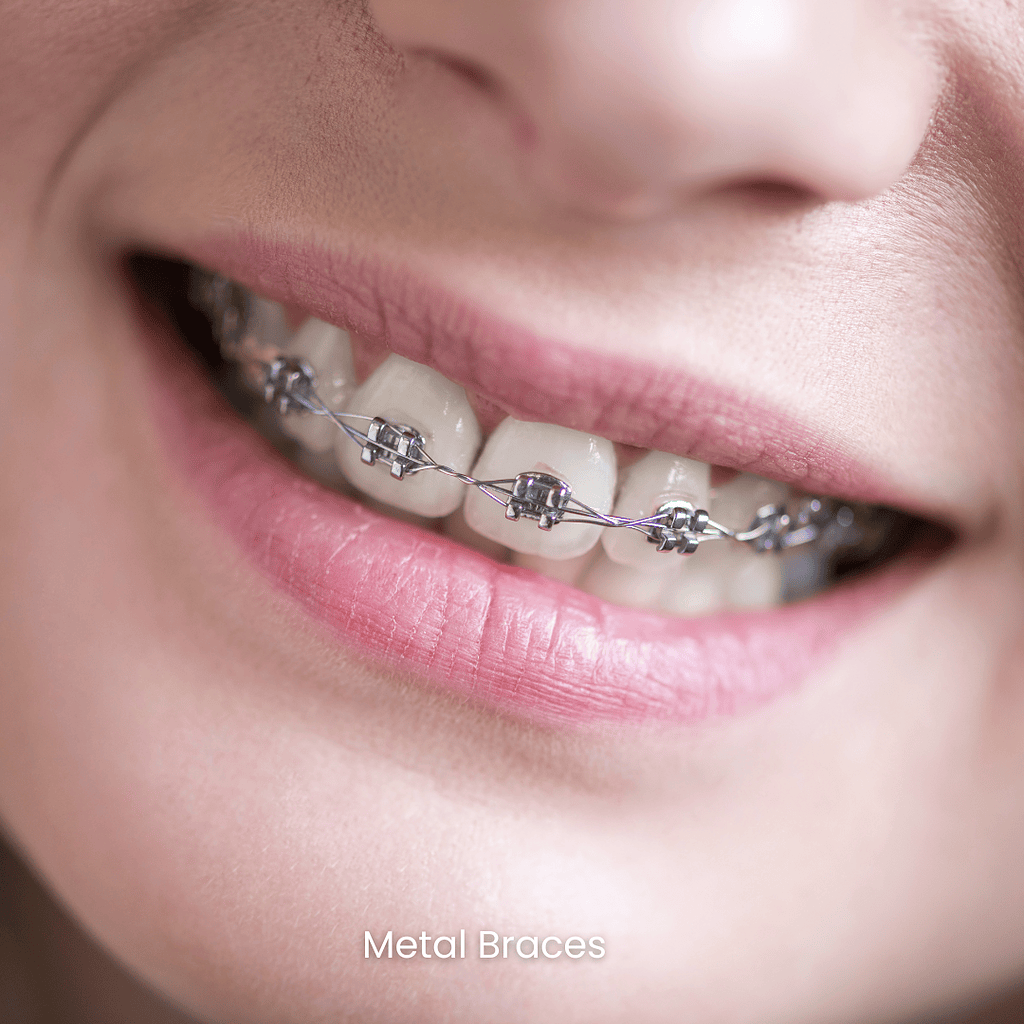
Types of Dental Braces 

Each type of orthodontic treatment has its own advantages and limitations, and no single option is suitable for everyone.

  • Invisalign is suitable for people who prefer a less noticeable appliance. The aligners can be removed for eating and oral hygiene, but they must be worn consistently as instructed.
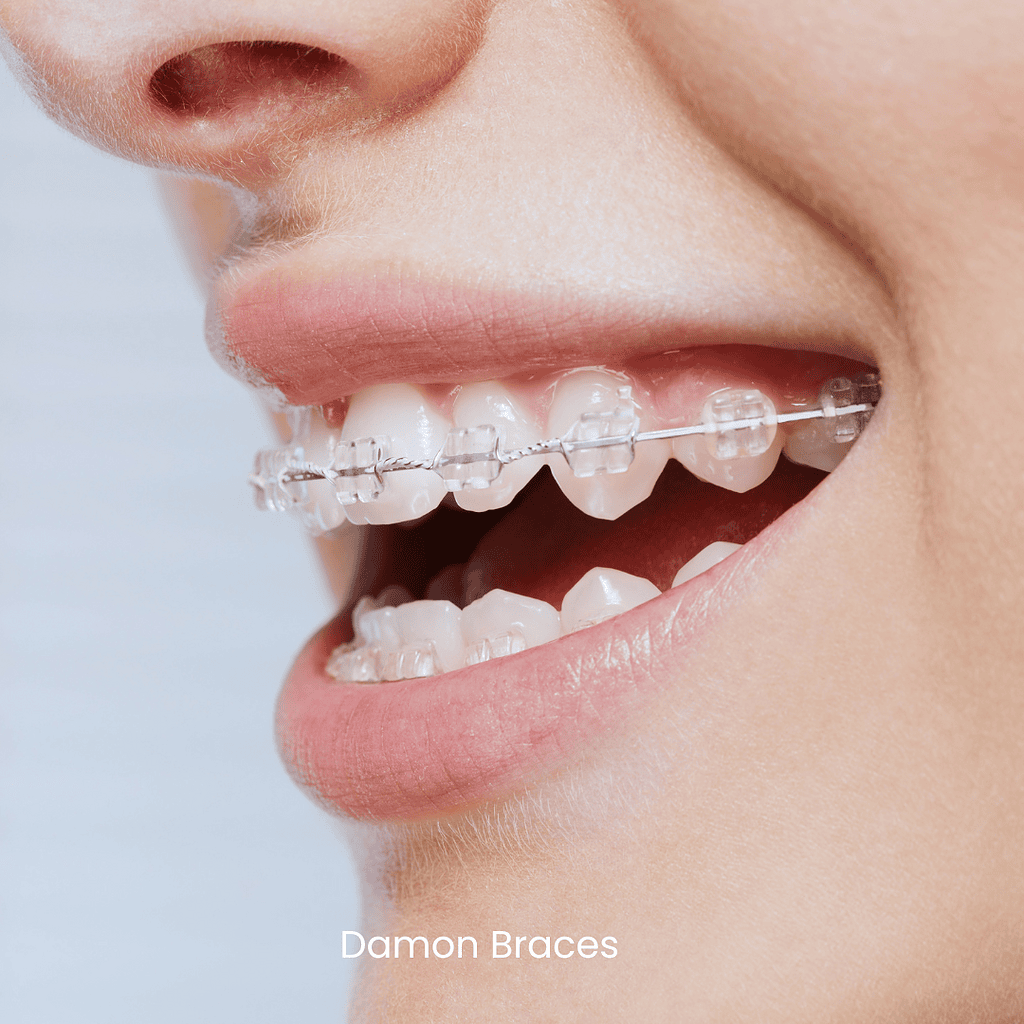
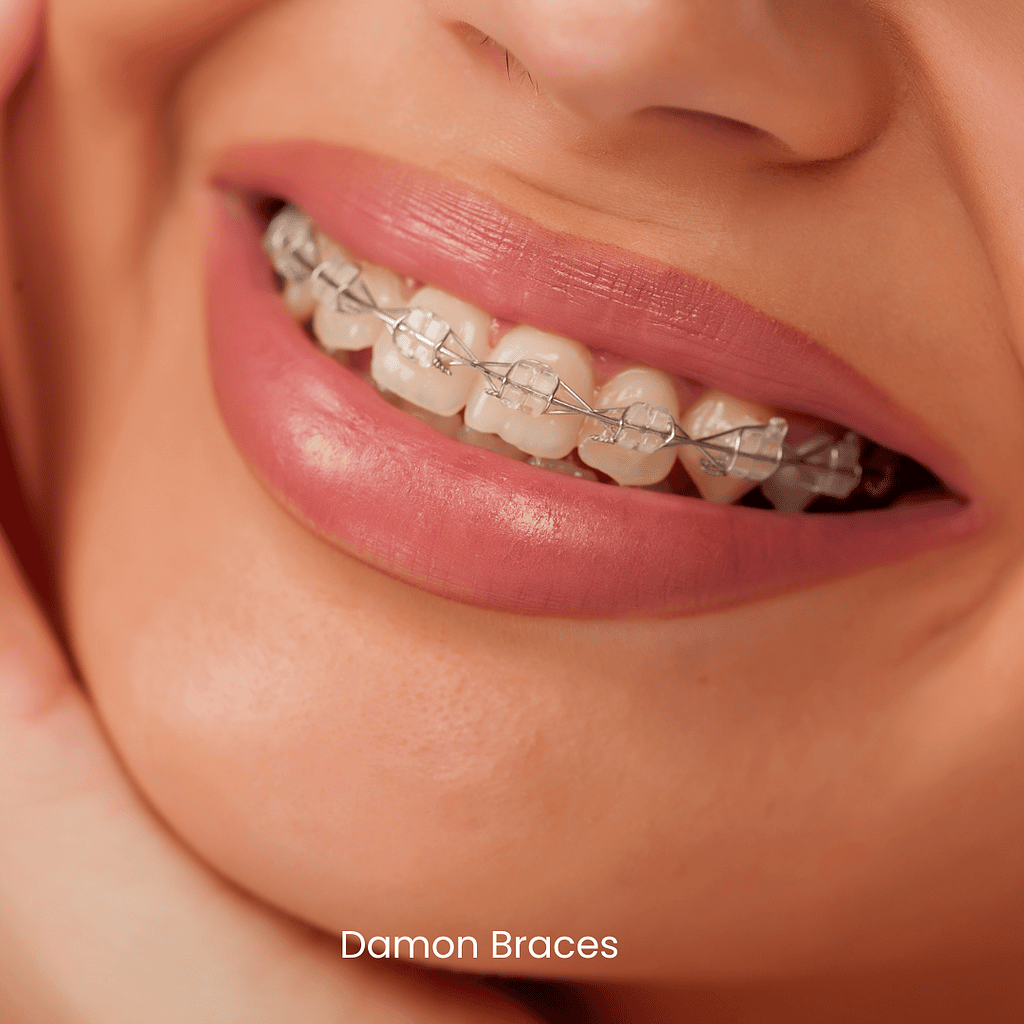
  • Damon Braces are fixed self-ligating braces. The brackets use a built-in mechanism to hold the archwire, so traditional O-rings are not required.
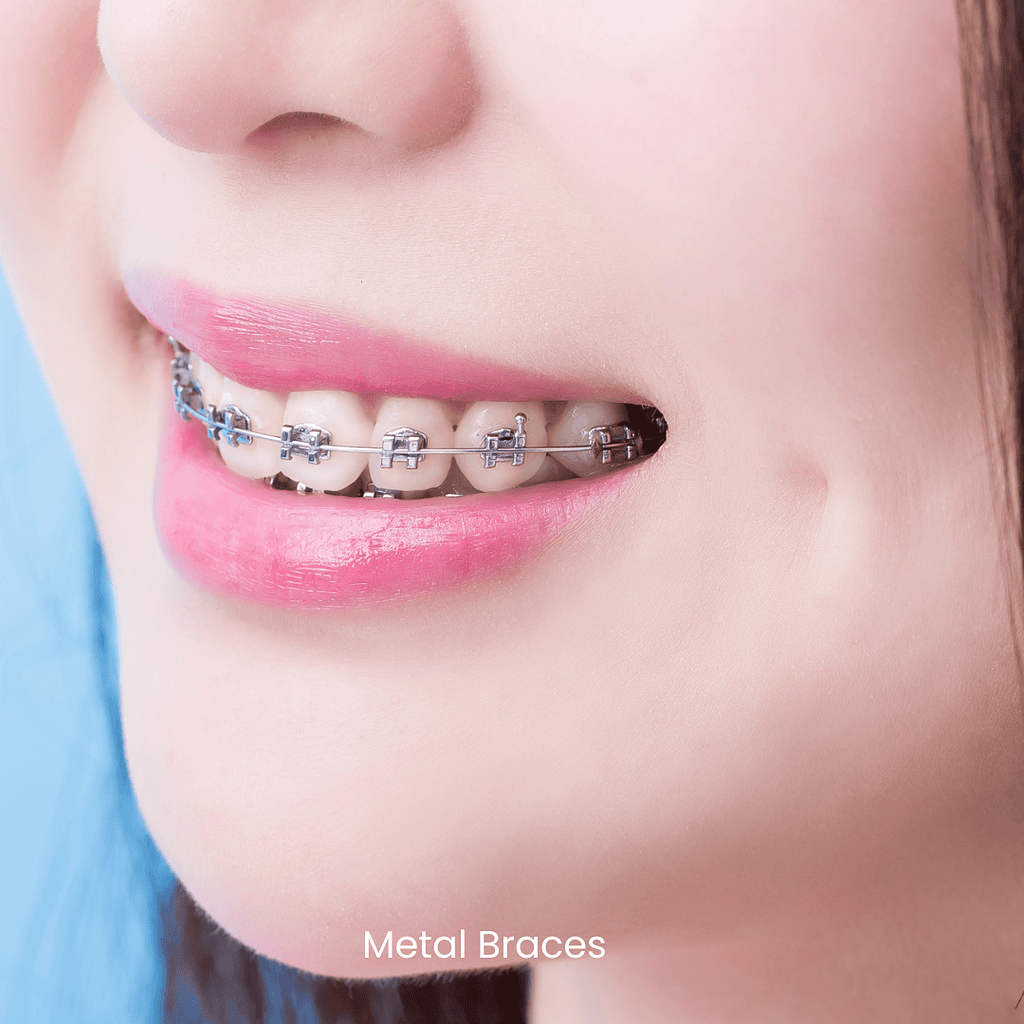
  • Metal Braces are traditional fixed braces and may be suitable for people who do not mind visible orthodontic appliances and prefer a familiar treatment option.

The most suitable option should be based on tooth alignment, bite, lifestyle, ability to care for the appliance, and the dentist’s treatment plan rather than price or appearance alone.

How Many Types of Braces Are There?

There are several types of orthodontic treatment available today, but the three options most commonly compared are Invisalign clear aligners, Damon Braces, and Metal Braces. Each option differs in terms of appliance design, visibility, whether it can be removed, oral hygiene, and convenience in daily life.

If you are deciding which type of braces is right for you, it is important not to choose based on popularity alone. The most suitable option should also take into account your tooth alignment, bite, lifestyle, and individual treatment plan.

For a simple comparison, orthodontic treatment can be divided into three main options:

What Is Invisalign?

Invisalign is an orthodontic treatment that uses a series of clear, removable aligners that are custom-made according to each patient’s treatment plan.

The aligners are changed in sequence to gradually move the teeth into their planned positions.

One of the main advantages of Invisalign is that the aligners are clear, making them less noticeable than fixed braces. They can also be removed when eating and when brushing or flossing.

Advantages of Invisalign

  • Clear aligners are less noticeable
  • Can be removed when eating
  • Easier to brush and floss
  • No brackets or wires attached to the teeth
  • Suitable for people who regularly meet clients, speak in public, or appear on camera
  • Treatment planning includes digital tooth movement planning

An important point is that patients need to wear the aligners consistently for the amount of time recommended by the dentist so that tooth movement can progress according to the treatment plan.

Who Is Invisalign Suitable For?

Invisalign may be suitable for people who:

  • Prefer a less noticeable orthodontic appliance

  • Regularly meet clients, speak with others, or give presentations

  • Want to remove the aligners when eating

  • Prefer easier access for brushing and flossing

  • Can wear the aligners consistently as instructed

  • Have had orthodontic treatment before and have experienced tooth movement afterward

However, Invisalign suitability should be assessed based on both tooth alignment and bite. It should not be chosen based on appearance alone.

pro-invisalign
pro-invisalign

What Are Damon Braces?

Damon Braces are a type of self-ligating fixed braces.

They are similar to traditional metal braces because brackets and archwires are attached to the teeth. The main difference is that self-ligating brackets use a built-in opening and closing mechanism to hold the archwire in place, so traditional elastic O-rings are not required.

Advantages of Damon Braces

  • Fixed orthodontic appliance, so there is no need to remove and reinsert it yourself

  • Brackets have a built-in mechanism to hold the archwire

  • No traditional elastic O-rings are required

  • Suitable for people who prefer fixed orthodontic treatment

  • Some Damon systems offer less noticeable bracket options

However, Damon Braces do not necessarily shorten treatment time compared with traditional metal braces in every case. Treatment duration depends on tooth alignment, bite, and the amount of tooth movement required for each individual.

Who Are Damon Braces Suitable For?

Damon Braces may be suitable for people who:

  • Prefer fixed orthodontic treatment

  • Do not want to remove and reinsert the appliance themselves

  • Prefer brackets that do not require elastic O-rings

  • Are interested in self-ligating braces

  • Have dental conditions that the dentist determines can be treated with this type of orthodontic appliance

Damon Braces should be chosen based on the suitability of the treatment plan rather than treatment duration alone.

damon

What Are Metal Braces?

Metal Braces are a type of fixed orthodontic treatment that uses metal brackets attached to the teeth and an archwire to gradually move the teeth according to the treatment plan.

Elastic O-rings or ligatures are commonly used to hold the archwire in place within the brackets. Patients can also choose different elastic colors based on their preference.

Advantages of Metal Braces

  • Fixed orthodontic appliance, so there is no need to remove and reinsert it yourself

  • Can be used to treat a wide range of tooth alignment and bite problems

  • Patients can choose and change the colors of their orthodontic elastics

  • No need to worry about forgetting to wear the appliance

  • A widely used type of orthodontic treatment

An important consideration is keeping the areas around the brackets and archwire clean, as food debris and plaque can accumulate more easily in these areas.

Who Are Metal Braces Suitable For?

Metal braces may be suitable for people who:

  • Do not mind having visible orthodontic appliances

  • Prefer fixed orthodontic treatment

  • Do not want to manage removable aligners

  • Enjoy choosing and changing the colors of orthodontic elastics

  • Need an option that can be used for a wide range of tooth alignment problems

Braces
Braces

How Are Invisalign, Damon Braces, and Metal Braces Different?

Comparison

Invisalign

Damon Braces

Metal Braces

Appliance

Clear Aligners

Self-Ligating Brackets

Metal Brackets

Visibility

Less noticeable

Brackets are visible

Brackets are clearly visible

Removable

Yes

No

No

When Eating

Remove before eating

Appliance remains fixed to the teeth

Appliance remains fixed to the teeth

Cleaning

Can be removed for brushing and flossing

Requires cleaning around the brackets

Requires cleaning around the brackets

O-rings

No

Not required with the self-ligating system

Commonly used

Wearing Discipline

Very important

No need to remove and reinsert

No need to remove and reinsert

Key Feature

Clear and removable

Self-ligating system

Traditional fixed braces

This table compares the characteristics of each orthodontic appliance. It does not mean that one option always provides better treatment results than another, as the most suitable choice depends on the individual case. 

Invisalign vs Metal Braces: What Is the Difference?

The most noticeable difference is that Invisalign is removable, while metal braces are fixed to the teeth.

Invisalign may be suitable for people who prefer a less visible orthodontic appliance and want more flexibility when eating or cleaning their teeth.

However, patients need to wear the aligners consistently as instructed.

Metal braces, on the other hand, do not require patients to remember to wear the appliance, but extra attention is needed when brushing and cleaning around the brackets and archwire.

Damon Braces vs Metal Braces: What Is the Difference? 

Damon Braces and metal braces are both fixed orthodontic appliances, but they differ in how the archwire is held within the brackets.

Damon Braces

The brackets have a built-in opening and closing mechanism that holds the archwire in place, so traditional elastic O-rings are not required.

Metal Braces

Traditional brackets commonly use elastic O-rings or ligatures to help secure the archwire to the brackets.

Treatment time should not be determined by bracket type alone, as it also depends on the complexity of the dental problem and the individual treatment plan.

Which Type of Braces Is Easier to Clean? 

When comparing brushing and flossing, Invisalign is generally more convenient than fixed braces because the aligners can be removed before cleaning your teeth.

However, both your teeth and the aligners need to be cleaned regularly.

With Damon Braces and metal braces, extra attention is needed when brushing around the brackets, under the archwire, and between the teeth to help reduce plaque and food buildup during orthodontic treatment.

Which Type of Braces Best Fits Your Lifestyle? 

If You Prefer a Less Noticeable Appliance

Invisalign may be a better fit because it uses clear aligners and does not have metal brackets attached to the teeth.

If You Do Not Want to Remove and Reinsert an Appliance Every Day

Damon Braces or metal braces may be more convenient because they are fixed appliances.

If You Like Changing the Colors of Your Orthodontic Elastics

Metal braces may be a good option because you can choose different O-ring colors.

If You Regularly Meet People or Appear on Camera

If the visibility of the appliance is a concern, Invisalign may fit your lifestyle better.

If You Are Not Sure Which Type Is Suitable for Your Case

It is best to have your tooth alignment and bite evaluated first. Some cases may be suitable for several treatment options, while others may have certain limitations or require additional orthodontic appliances as part of the treatment plan.

What Should You Consider Before Choosing a Type of Braces?

Before deciding which type of braces is right for you, it is important not to focus only on appearance or price. Several factors should be considered together, including:

  • Tooth alignment problems

  • Crowding or spacing

  • Bite problems

  • Jaw position and relationship

  • Dental and gum health

  • Lifestyle

  • Ability to care for the appliance

  • Orthodontic treatment goals

  • Budget

After a complete evaluation, the dentist can compare the advantages and limitations of each treatment option and recommend an approach that is suitable for the individual case.

What Should Be Checked Before Starting Orthodontic Treatment?

Before starting orthodontic treatment, your oral health should be evaluated and a treatment plan should be prepared. The dentist may assess:

  • Tooth alignment

  • Bite

  • Crowding or spacing

  • Gum health

  • Tooth decay

  • Impacted teeth or other relevant teeth

  • X-rays

  • Other information needed for orthodontic treatment planning

If there is tooth decay, gum inflammation, or another oral health problem, it should be appropriately treated before orthodontic treatment begins.

Summary: How Many Types of Braces Are There, and Which One Is Right for You?

If you are comparing Invisalign, Damon Braces, and Metal Braces, the main differences can be summarized as follows:

Invisalign
Clear, removable aligners that may be suitable for people who prefer a less noticeable orthodontic appliance and can wear their aligners consistently as instructed.

Damon Braces
Fixed self-ligating braces with a built-in mechanism inside the brackets to hold the archwire, so traditional elastic O-rings are not required.

Metal Braces
Traditional fixed braces that use brackets and archwires and may be suitable for people who do not mind having visible orthodontic appliances.

The key is not to choose which type of braces is “the best,” but to choose the option that best suits your tooth alignment, bite, and lifestyle.

 If you are considering orthodontic treatment but are still unsure whether Invisalign, Damon Braces, or Metal Braces is right for you, you can schedule a consultation with the dental team at About Tooth Dental Clinic.

The dentist will evaluate your tooth alignment, bite, and overall oral health before planning your treatment. They will also explain the differences between each option to help you choose the orthodontic appliance that best suits your dental needs and lifestyle.

You can book an appointment with a dentist for consultation and an oral health assessment at About Tooth Dental Clinic. We are open at both our Siam and Punnawithi branches, conveniently located right next to the BTS stations at each location. For more information or to schedule an appointment in advance, please call 087-555-4665 or 080-481-5555, or add us on LINE Official Account at @abouttooth to chat with our team. 

booking

References

  1. Dental Braces Type Accessed July 29, 2026. From: https://www.abouttoothdental.com/different-of-teeth-alignment-method/    


Frequently Asked Questions About Orthodontic Treatment (FAQs)

Q: How many types of braces are there?


There are several types of orthodontic treatment. Common options include Invisalign clear aligners, self-ligating braces such as Damon Braces, and fixed metal braces. Each type differs in appliance design and care requirements.

Q: Which is better, Invisalign or metal braces?


There is no single option that is better for everyone. Invisalign may suit people who prefer clear, removable aligners, while metal braces are fixed appliances and do not require the same level of discipline in wearing aligners. The choice should be based on both your dental condition and lifestyle.

Q: What is the difference between Damon Braces and metal braces?

Damon Braces are self-ligating braces with a built-in mechanism inside the bracket to hold the archwire. Traditional metal braces commonly use elastic O-rings or ligatures to secure the archwire to the brackets.

Q: Are Damon Braces faster than metal braces?


It cannot be concluded that Damon Braces are faster in every case. Treatment time depends on the complexity of the dental problem, bite, required tooth movement, and the individual treatment plan.

Q: Can Invisalign be removed when eating?


Yes. Invisalign aligners are removable and should be taken out before eating. It is also recommended to clean your teeth before putting the aligners back in.

Q: Which type of braces is the least noticeable?


Among these three options, Invisalign is generally the least noticeable because it uses clear aligners instead of brackets and wires.

Q: Can Invisalign treat crowded or spaced teeth?


Invisalign can be used to treat many cases of crowding and spacing. However, suitability depends on the complexity of the problem and the bite, so an evaluation is recommended before starting treatment.

Q: Does everyone need tooth extraction before braces?


No. Tooth extraction is not required for everyone. The decision depends on available space, crowding, bite, facial profile, and the planned tooth movement for each individual case. It should not be determined by the type of orthodontic appliance alone.

Dr. Nisara Tanarerkchai, D.D.S. is a dentist specializing in dental implants, orthodontics, and veneers. She graduated from the Faculty of Dentistry at Thammasat University. With extensive professional experience, she holds multiple certificates in various dental fields, including Advanced General Dentistry, Dental Implants, Advanced Orthodontics, as well as certificates in the Veneer Bootcamp and the Veneer Masterclass. Additionally, she is certified as a Platinum Provider of Invisalign for 2021 and achieved Zenyum Star Tier status in 2023.

Currently, Dr. Thanaruksachai is the founder of About Tooth Dental Clinic, which received the World Class Award 2021 in the category of The Best of International Healthy Business. She is also serves as a member of the Thai Association of Dental Implants (TADI).

Continue ReadingTypes of Dental Braces 

Implant is fit for you?

What are dental implants?

A dental implant is a surgical fixture that is placed a titanium screw into the jawbone. Most dental implants are made of titanium which allows them to integrate with the bone. It usually takes about 6months for integration. Nowadays, most implants look and feel exactly like your natural teeth because they are designed to be implanted more than 90 percent. Comparing Dentures and Bridges may never feel as comfortable as your natural teeth (jawbone). It also made patients who having plastic dentures can affect the way food tasted as well.

– Are dental implants right for you?

For patients that need to have a tooth extracted due to tooth decay. Prosthodontist will help you choose the right treatment for you.

– What is the best time to get a dental implant?
The most common question dental implants ask, that is about tooth extraction, especially a front tooth. The answer will depend on the level of difficulty of patients case and condition each patient had.

– How long is the wait for dental implant after extraction?

The answer is YES. If the tooth position have enough, we can have a dental implant placed at the same time their tooth is extracted. Whether you can have dental implants immediately placed depends on a variety of factor including your health status.

Actually, you will typically need to wait a minimum 2 months before dental implants can be placed. The fact is after the tooth extraction, the management of the extraction socket would rebuild in fully native bone. It makes the result of dental implants will be best. In case of patients do not have enough jaw bone to support an implant due to the tooth position has been removed for a year or more than 10 years. Bone grafting may be required when patients have insufficient amount of healthy natural bones in the mouth so you may need surgery before dental implants. After the procedure has been completed, a bone graft may also take up to six months or more to heal and a crown will be replaced.
booking

Continue ReadingImplant is fit for you?