Types of retainer

A retainer keeps your teeth in place after your braces come off. Your orthodontist will help you decide the best type for you based on what you needed braces for any conditions you might have.

What are the types of retainer?

Clear Retainer


This type of retainer is made from clear plastic. They are virtually invisible because they are clear, they are hard to notice without looking for them. Your orthodontist will using the alginate impression material for printing. It will take 3-7 days to receive clear retainers.

Advantages of clear retainers
– Clear, so they are invisible
– Fitted so that teeth stay in place better
– Thinner and more comfortable
– Convenient to have multiple copies made
– Do not have to wait for a long time
– Inexpensive

Disadvantage of clear retainers
– They can be easily damaged if left lying around

Hawley Retainer

A hawley retainer is made of a combination of acrylic and metal that is molded custom to fit your mouth. Using the alginate impression material for printing and you will get your retainers for 3-7 days. Hawley retainers have all the same procedures as clear retainers.

Advantages of Hawley Retainers
– can choose plastic color to personalize
– Durable, can last for years
– Do not have to wait for a long time
– Inexpensive

Disadvantages of Hawley Retainers
– May cause difficulty speaking
– metal wire visible in front of teeth

Fixed retainer

Fixed retainers are made of a metal wire that is along the back tongue side and glued to your teeth. It can’t be seen when you speak or smile. One of the biggest concerns for many patients, there is no chance of human error like forgetting to put it back in after every meal.

Advantages of Fixed Retainers
It’s glued or bonded to the back surface of your teeth.
you don’t have to take it on and off
It can’t be misplaced or lost

Disadvantages of Fixed Retainers
– The metal wire is attached with composite materials, this can cause plaque to build up possibly leading to gum disease.
– Make it more difficult to clean teeth with flossing, it may be hard to maintain oral hygiene.
– There is chance to break your fixed retainer, once you’ve broken or cracked your retainer. It’s imperative that you contact your orthodontic as soon as possible. Failure to wear your retainer for appropriate amount of time can cause your teeth to start shifting,
– The metal wire might irritate your tongue.

Viveira


Viveira Retainer are simply Invisalign’s branded. Your orthodontist will take a digital scan of your teeth and create your retainers, using the same 3D printing technology called iTero that Invisalign use to make it’s clear braces.

Advantages of Viveira Retainer
– The material is made from acrylic that is stronger and more durable.
– This is mainly due to 3D imaging technology that creates a perfect fit.
– -Provide a more accurate and firm fit than traditional retainers.
– You receive three sets of retainers so you can switch to a clean and fresh one every few months. The same goes to losing or breaking your retainers. It’s as easy as opening the next packages. There is no need to scanning and decreasing relapse of your teeth.

Disadvantages of Viveira Retainer
– It takes an estimated 7-14 days to get retainers due to Viveira Retainer made in the U.S.A. It takes longer to produce than other retainers. That means it’s shipped to the lab and shipped back to the clinic.
– The cost of retainer is expensive due to the materials is more durable and there are differences than other types of retainers in the market.

booking

Continue ReadingTypes of retainer

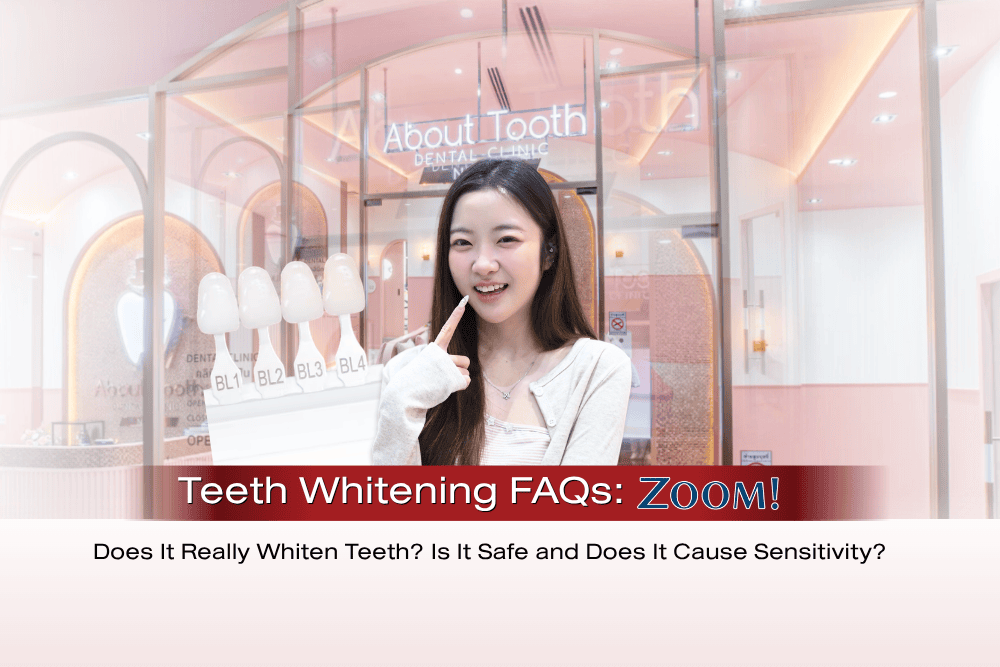
Teeth Whitening FAQs: Does It Really Whiten Teeth? Is It Safe and Does It Cause Sensitivity?

Teeth whitening can help make the natural color of your teeth appear brighter, but the results can vary from person to person. The outcome depends on your original tooth color, the cause of discoloration, and how your teeth respond to the whitening agent. Teeth whitening may also cause temporary tooth sensitivity or gum irritation, and it does not change the color of restorations such as veneers, crowns, or fillings. For this reason, it is recommended to have your oral health checked before choosing the most suitable whitening method.

Want a brighter smile but still wondering, “Is teeth whitening worth it? Will it make my teeth thinner? Will it cause a lot of sensitivity?” You may also be curious about how much whiter your teeth can become. These are some of the most common questions people have before deciding to whiten their teeth.

Teeth Whitening is a treatment designed to make the natural color of teeth appear brighter. It uses peroxide-based whitening agents to break down or alter pigments within the tooth structure. However, results vary because they depend on the starting tooth shade, the cause of discoloration, and each person’s dental and oral health condition.

Some types of tooth discoloration may respond well to whitening, while discoloration caused by certain medications, dental trauma, or restorations such as crowns and veneers may not change in the same way as natural teeth.

 Is Teeth Whitening Worth It? What Should You Know Before Treatment?

For people with dull or discolored teeth who want a brighter smile, teeth whitening is one option that can help lighten the natural color of the teeth without changing their shape.

However, “yellow teeth” can have many different causes.

Tooth color may change because of factors such as:

  • Natural tooth color
  • Aging
  • Stains from tea, coffee, food, or colored beverages
  • Smoking
  • Certain medications
  • Dental trauma
  • Non-vital teeth
  • Existing dental restorations

Different types of discoloration may respond differently to whitening, so another person’s result should not be used to predict exactly how much your own teeth will whiten.

If you want to know whether teeth whitening is suitable for you, the best starting point is to have your oral health examined and identify the cause of the discoloration before treatment.

Does Teeth Whitening Make Teeth Thinner or Damage Enamel?

One of the most common questions is, “Does teeth whitening make your teeth thinner?”

Teeth whitening does not work by grinding or removing tooth structure. Instead, whitening agents such as hydrogen peroxide or carbamide peroxide interact with pigments within the tooth structure, making the color appear lighter and brighter.

For this reason, teeth whitening is different from physically removing tooth enamel.

However, this does not mean that whitening products can be used in unlimited amounts or as frequently as desired. The concentration of the whitening agent, the length of time it remains in contact with the teeth, and the method of application can all affect comfort and safety.

Improper use of whitening products or the use of highly concentrated agents without appropriate supervision may increase the risk of tooth sensitivity and gum irritation.

The whitening method should therefore be selected according to your dental condition, and instructions from your dentist or the whitening product should be followed carefully.

Does Teeth Whitening Cause Sensitivity? How Long Does It Last?

Tooth sensitivity can occur after teeth whitening and is one of the more common side effects.

Sensitivity varies from person to person. Some people may experience almost no discomfort, while others may feel short, sharp sensations when exposed to cold drinks or cool air after whitening.

Factors that may influence sensitivity include:

  • The concentration of the whitening agent
  • How long the whitening agent remains in contact with the teeth
  • The whitening method used
  • Pre-existing tooth sensitivity
  • Gum recession or exposed tooth roots
  • Cracked or fractured teeth
  • Cavities or other existing dental problems

In many cases, whitening-related sensitivity is temporary and gradually improves after exposure to the whitening agent stops.

If you already have sensitive teeth, it is important to tell your dentist before whitening so they can assess whether whitening is appropriate or whether the cause of sensitivity should be treated first.

If you experience severe pain, persistent pain, or symptoms that do not improve after whitening, these should not automatically be considered normal. A dental examination is recommended to identify the cause.

H2: How Much Whiter Can Your Teeth Get After Whitening?

The answer is: it varies from person to person.

It is not possible to guarantee that everyone will become the same number of shades whiter because the result depends on factors such as:

  • Your starting tooth shade
  • The type of staining
  • The cause of discoloration
  • Age
  • Tooth structure
  • The whitening method used
  • How your teeth respond to the whitening agent

The main goal of teeth whitening is to make your natural tooth color appear brighter than before. It does not allow you to freely select a completely new tooth shade in the same way that ceramic veneers can.

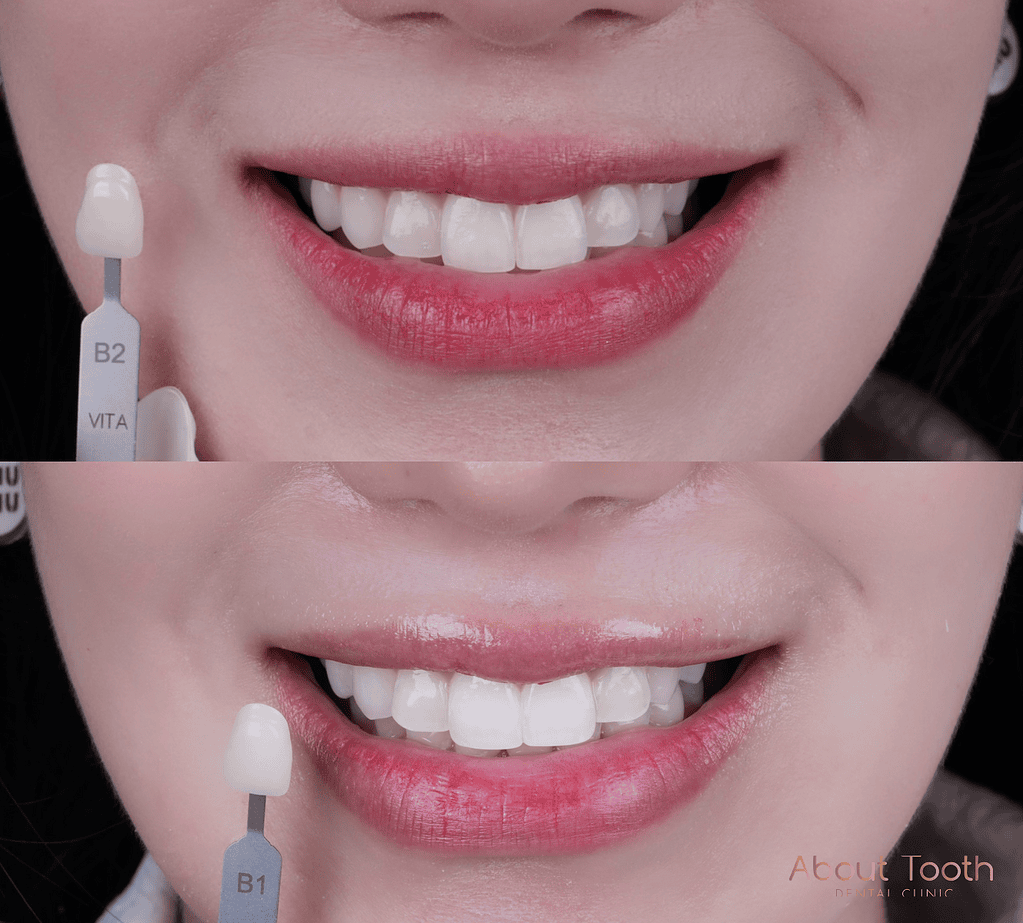
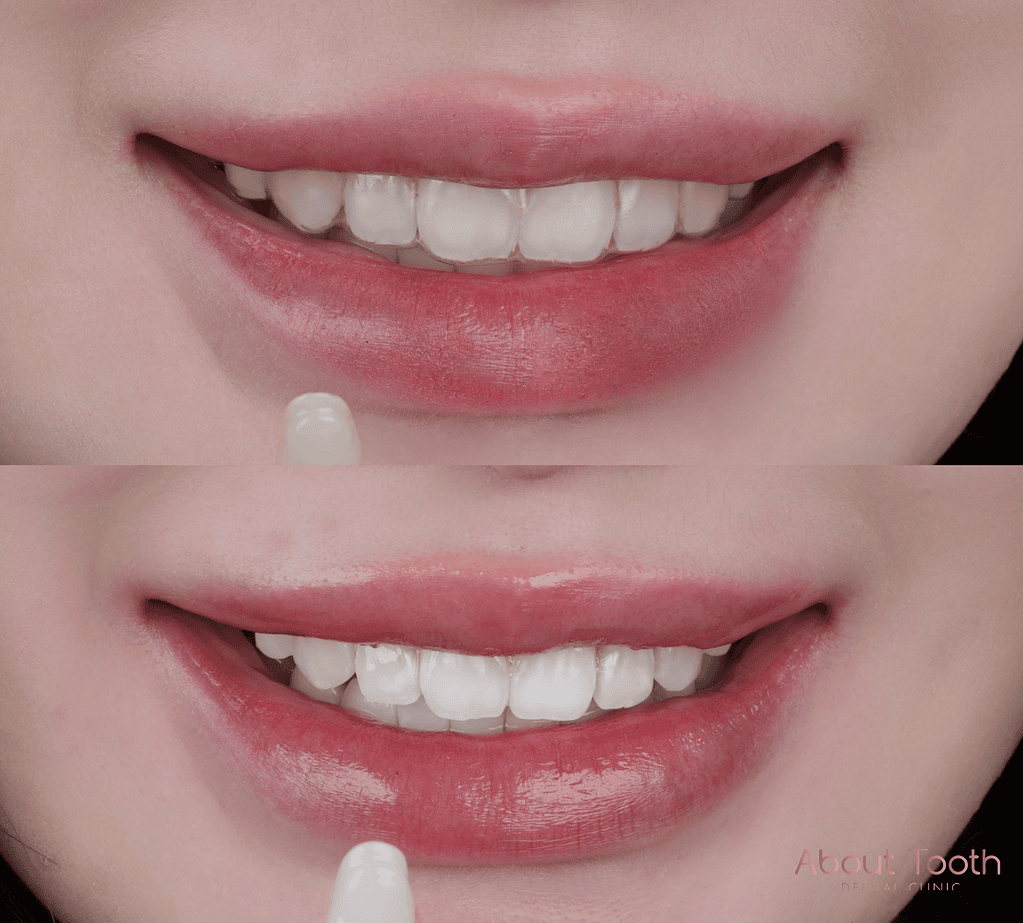
If you are still unsure how white you would like your teeth to look, About Tooth provides examples of teeth whitening cases that can be used as references before treatment. A dentist can also help assess what level of whitening may be appropriate for your individual teeth.

teeth whitening
teeth whitening

Can Everyone Whiten Their Teeth? Who Should Have a Dental Check-Up First?

Before teeth whitening, it is recommended to have your teeth and gums checked, especially if you already have oral health problems.

Examples include:

  • Tooth decay
  • Cracked or fractured teeth
  • Severe tooth sensitivity
  • Gum recession
  • Gingivitis or easily bleeding gums
  • Exposed tooth roots
  • Unexplained tooth pain
  • Crowns, veneers, or fillings on the front teeth

The purpose of a dental examination is not only to determine whether whitening is suitable, but also to identify why the teeth have changed color.

Some cases may not be best treated with conventional teeth whitening. For example, a single tooth that has become dark after trauma or root canal treatment may require a different treatment approach.

Can You Whiten Teeth If You Have Crowns, Veneers, or Fillings?

You can whiten your natural teeth, but there is one important point to understand:

Whitening agents do not change the color of crowns, veneers, or fillings in the same way they whiten natural teeth.

For example, if you have a crown on one front tooth and the surrounding natural teeth become whiter after treatment, the existing crown may appear darker than the neighboring teeth.

If you have any of the following, it is important to tell your dentist before whitening:

  • Ceramic veneers
  • Composite veneers
  • Crowns
  • Dental bridges
  • Composite fillings on the front teeth

This can help the dentist plan the treatment sequence and evaluate how the new tooth shade may blend with existing restorations.

In some cases, if new veneers or crowns are being planned, the natural teeth may be whitened first before the final shade of the new restorations is selected.

H2: In-Office vs. At-Home Teeth Whitening: What’s the Difference?

There are several types of teeth whitening, ranging from in-office teeth whitening performed under a dentist’s supervision to whitening systems designed for use at home.

The main differences include:

Teeth Whitening Method

Characteristics

In-Office Teeth Whitening

Uses whitening agents under professional supervision and is suitable for people who want to see a faster change in tooth color

Dentist-Supervised At-Home Whitening

Used consistently according to a recommended schedule, with results developing more gradually

Over-the-Counter Whitening Products

Available in different forms and concentrations; products should be selected carefully and used according to the instructions

In-office whitening systems can also vary. Examples include Zoom teeth whitening and Pola teeth whitening, which may differ in their whitening agents, application methods, and treatment protocols.

If you are still wondering which teeth whitening method is best, you can learn more about the differences between Pola, Zoom, and other teeth whitening methods before deciding which option may suit your needs.

How Long Does Teeth Whitening Last? Is It Permanent?

Teeth whitening does not make teeth permanently white.

After whitening, tooth color can gradually change over time depending on lifestyle habits and individual factors.

Factors that may cause teeth to become stained or darker again more quickly include:

  • Regular tea or coffee consumption
  • Foods and drinks that cause staining
  • Smoking
  • Oral hygiene habits
  • Natural tooth color and age
  • Individual lifestyle habits

For this reason, it is difficult to say that whitening results will last a specific number of “months” or “years” for everyone.

Some people may maintain a brighter tooth color for longer, while others may want a touch-up sooner depending on their habits and the whitening method used.

How to Keep Your Teeth Whiter After Teeth Whitening

After whitening, the most important steps are maintaining good oral hygiene and reducing factors that contribute to new stains.

You can help maintain the results by:

  • Brushing your teeth regularly
  • Cleaning between your teeth
  • Reducing the frequency of tea, coffee, and dark-colored drinks
  • Drinking water after consuming foods or drinks that may stain the teeth
  • Avoiding smoking
  • Having professional scaling and dental check-ups as appropriate
  • Having whitening touch-ups when recommended by your dentist

You do not need to worry that drinking coffee once will immediately make your teeth yellow again. However, repeated habits over time can affect both tooth color and surface staining.

hy Didn’t My Teeth Get as White as I Expected?

If your teeth do not become as white as expected, it does not necessarily mean that the whitening treatment “did not work.”

Some types of discoloration respond less strongly to whitening agents than others.

Possible reasons include:

Different Starting Tooth Shades

Different tooth shades may respond differently to whitening, so not everyone will achieve the same final shade.

Discoloration Caused by Medication or Specific Conditions

Some types of discoloration caused by medication during tooth development or abnormalities in tooth structure may respond differently from common surface staining.

A Single Dark Tooth Caused by Trauma or an Internal Dental Problem

If only one tooth is noticeably darker than the others, the underlying cause should be examined first.

Whitening the entire mouth may not be the appropriate way to treat a single discolored tooth without first identifying why the tooth has changed color.

The Visible Color Comes from a Dental Restoration

Crowns, veneers, and fillings do not respond to whitening agents in the same way as natural teeth.

Therefore, if there is noticeable discoloration or the whitening result is different from what you expected, identifying the cause can help determine a more suitable treatment rather than simply increasing the frequency of whitening.

How Often Should You Whiten Your Teeth?

There is no fixed rule that says “you should whiten your teeth every few months.”

How often whitening may be appropriate depends on factors such as:

  • Your tooth color after the previous whitening treatment
  • How much time has passed
  • Your food and drink habits
  • Tooth sensitivity
  • Gum health
  • The whitening method and concentration used

If you want to whiten your teeth again, you should not increase the frequency, concentration, or application time on your own simply to make your teeth whiten faster. Doing so may increase the risk of tooth sensitivity and gum irritation.

Your dental condition should be evaluated first, and whitening should be performed according to the recommended protocol for the system being used.

Is Teeth Whitening Worth It? Where Should You Start?

Teeth whitening is one option for people who want their natural teeth to look brighter and whiter without grinding down or changing the shape of the teeth.

However, results vary from person to person, and whitening cannot change the color of crowns, veneers, or fillings in the same way that it changes natural tooth color.

If you would like a brighter smile but are still unsure which teeth whitening method is right for you, or whether your teeth are suitable for whitening, you can consult a dentist at About Tooth Dental Clinic.

The dentist can evaluate your tooth shade, teeth and gum health, and recommend a whitening approach that is appropriate for your individual needs.

You can book an appointment with a dentist for consultation and an oral health assessment at About Tooth Dental Clinic. We are open at both our Siam and Punnawithi branches, conveniently located right next to the BTS stations at each location. For more information or to schedule an appointment in advance, please call 087-555-4665 or 080-481-5555, or add us on LINE Official Account at @abouttooth to chat with our team. 

booking

References

Whitening Accessed August 25, 2026. from: https://www.ada.org/resources/ada-library/oral-health-topics/whitening?utm_source=chatgpt.com 
 

Frequently Asked Questions About Teeth Whitening (FAQs)

Q: Does teeth whitening make your teeth thinner?

Teeth whitening does not work by removing or grinding away tooth structure. Instead, peroxide-based whitening agents help change pigments within the tooth structure. However, whitening products should be used at an appropriate concentration and for the recommended amount of time, as improper use may increase the risk of tooth sensitivity or gum irritation.

Q: Is tooth sensitivity after whitening normal?

Temporary tooth sensitivity can occur during or after teeth whitening, and the severity varies from person to person. If the pain is unusually severe or does not improve, you should have your teeth examined by a dentist.

Q: Does one teeth whitening treatment make teeth permanently white?

No. Teeth whitening results are not permanent. Tooth color can gradually change over time due to aging, food and drinks, smoking, and individual oral care habits.

Q: How many shades whiter can teeth become after whitening?

There is no fixed number of shades that applies to everyone. The result depends on your starting tooth color, the cause of discoloration, the whitening method used, and how your teeth respond to the whitening agent.

Q: Can I whiten my teeth if I have veneers?

You can whiten your natural teeth, but whitening agents do not change the color of veneers in the same way. This may result in a color difference between the veneers and the newly whitened natural teeth.

Q: Can dental crowns be whitened?

In general, whitening agents do not change the color of dental crowns. If the surrounding natural teeth become whiter after treatment while the crown remains the same shade, a dentist may need to evaluate the overall color match.

Q: What is the difference between Zoom and Pola teeth whitening?

Both are professional teeth whitening systems that can be used in a dental clinic, but their products and treatment protocols differ. For example, Philips Zoom WhiteSpeed uses hydrogen peroxide whitening gel together with a light system, while Pola Office+ uses hydrogen peroxide and does not require light activation. The most suitable option should be selected based on your dental condition, goals, and your dentist’s evaluation.

Q: Can I whiten my teeth if I already have sensitive teeth?

It is recommended to have the cause of your sensitivity checked before whitening. Tooth sensitivity may be related to gum recession, tooth decay, cracks, or other dental problems. Whitening may temporarily increase sensitivity in some people.

Q: Can all types of yellow teeth be whitened?

Not always. Discoloration caused by certain medications, dental trauma, or internal tooth conditions may respond differently from common tooth staining. A dental examination can help identify the cause before choosing a whitening treatment.

Q: How often should I whiten my teeth?

There is no single recommended interval for everyone. The appropriate frequency depends on the whitening method, your dental condition, previous results, tooth sensitivity, and lifestyle habits. If you want to whiten again, follow your dentist’s advice rather than increasing the frequency or concentration on your own.

Q: Do I need scaling before teeth whitening?

It depends on your oral health. If you have tartar buildup, significant plaque, or gum inflammation, your dentist may recommend treating these issues before whitening so your teeth and gums are in a suitable condition for treatment.

Q: Is in-office or at-home teeth whitening better?

There is no single method that is best for everyone. In-office whitening may be suitable for people who want professional supervision and a faster visible change, while dentist-supervised at-home whitening gradually lightens the teeth over a prescribed period. The best choice depends on your dental condition, lifestyle, and whitening goals.

Continue ReadingTeeth Whitening FAQs: Does It Really Whiten Teeth? Is It Safe and Does It Cause Sensitivity?

Smile Makeover Veneer

What are Dental Veneers?

Dental veneers are thin, custom-made shells of tooth colored materials designed to cover the front surface of teeth to improve your appearance. Those shells are bonded to the front of teeth changing their color, shape, size or length.

Type of Dental Veneers?

1. Composite Veneers
Composite veneers are often made from a tooth-colored resin, the same type of material used with a tooth filling. The advantage of composite veneer is a shorter application process. It can be finished in a few hours. The composite can also be bonded directly to the surface without the need for drilling or filling, meaning we can improve smiles without preparing teeth. The disadvantages of composite veneers can lead to decay on the roots of the tooth, or more often, and gum disease. Composite veneers will need to be replaced or repaired more frequently than porcelain veneers.

2. Ceramic Veneers
Ceramic veneers are thin porcelain shields that cover only the front surface of the teeth. They are permanently bonded to your teeth to change or improve the image of stained, chipped, broken, or unaesthetic teeth. Ceramic veneers are long-lasting (on average 10 to 15 years) and have great strength qualities.

The main purpose of dental veneers are the beauty and durability of the material. The patients who want to have permanent white teeth, lead to teeth discoloration by medications or unhappiness with your teeth. Dental veneers can fix any number of esthetic problems in your mouth. Ceramic veneers are much recommended by Prosthodontist. In fact, the highest quality solution available in terms of beauty, function, and longevity for conservatives. There are a variety of options for dental veneers depending on your needs, the type of look you want, and your budget. Prosthodontist will discuss your desires and preference and any limitation that you may have.

booking

Continue ReadingSmile Makeover Veneer

About Tooth Dental Clinic’s Invisalign Invisible Braces in Bangkok

Invisalign invisible braces are a popular teeth-straightening treatment available at About Tooth Dental Clinic. The desire for a stunning smile with perfectly aligned teeth is a strong motivation for individuals who seek corrective treatments such as braces. With Invisalign invisible braces, metal braces are no longer the only option for those seeking dental improvement.

In Bangkok, Invisalign is the preferred teeth straightening treatment, as the near-invisible retainers are virtually undetectable.

How Does Invisalign Work?

Unlike traditional metal braces, Invisalign uses a series of corrective acrylic aligners to straighten teeth. Every few weeks, our patients meet with About Tooth Dental’s expert dentists and receive a new set of aligners until the treatment is complete.

During the first visit, we will take a 3D scan of your mouth to create your Invisalign treatment plan. Before beginning, your dentist will explain the strategy they will implement to fix the alignment of your teeth. We will make the first set of Invisalign corrective aligners, which you will wear all day except when eating or cleaning your teeth.

Depending on the extent of correction your teeth need, the process may involve around 20 different sets of retainers and take up to one year to complete.

What can Invisalign Treat?

Invisalign is a suitable treatment for various dental issues, including overcrowding, crooked teeth, and gaps between teeth. However, it is important to note that while Invisalign is commonly preferred over metal braces, your dentist may recommend a different corrective treatment for your teeth if needed.

If you are interested to see if Invisalign invisible braces are the right teeth-straightening treatment for you, consult the dentists at About Tooth Dental Clinic. Contact our clinic for more information about the cost of Invisalign and find out more about our Invisalign packages.

Pros and Cons of Invisalign

Many people prefer Invisalign invisible braces because it is a more subtle way of correcting one’s teeth. Adults, in particular, may prefer not to wear metal braces as they may feel conscious about wearing them in professional or social settings.

Aside from aesthetic advantages, there are other benefits to wearing Invisalign clear aligners, including, but not limited to:

  • Better Dental Hygiene – Traditional metal braces affixed directly to the teeth make it harder to perform dental hygiene practices thoroughly. Invisalign aligners are easily removable, so you can maintain regular teeth cleaning and hygiene routines.
  • Daily Comfort – Invisalign aligners are more comfortable to wear than braces, which can irritate the gums and lips. Should there be any discomfort, you can easily remove Invisalign aligners for instant relief. In addition, because there is no danger of brackets getting detached, you do not need to avoid foods that could damage the metal brackets of traditional braces.
  • Streamlined Process – Invisalign invisible braces use 3D modeling to predict teeth movement, so there is a lower risk of error, making the process more efficient and effective.

However, the cost of Invisalign in Bangkok generally exceeds that of metal braces. Additionally, your Invisalign dental clinic may charge extra for lost and damaged clear aligners.

Visit About Tooth Dental Clinic Today

About Tooth Dental Clinic offers Invisalign teeth-straightening treatment at multiple branches in the Sukhumvit area of Bangkok.

If you are interested in straightening or correcting the alignment of your teeth, our experienced dentists and Invisalign experts will be happy to walk you through the process and lay out an effective treatment plan that will give you that perfect smile you desire.

booking

Continue ReadingAbout Tooth Dental Clinic’s Invisalign Invisible Braces in Bangkok

Types of Treatable Cases

           There are so many questions about Why you might need braces? About Tooth Dental Clinic will be explain what types of braces our orthodontics recommend

1. Overbite

           An overbite is when the top jaw and teeth overlop the lower jaw and teeth. Dentist and Orthodontist refer to overbite as a type malocculsion. It can often by hereditary with some people being born with a jaw that is too big or too small for the teeth resulting in crowding or large spaces and overbite. Overbite can lead to several factors such as thumb sucking, extended pacifier use or pushing on teeth with their tongue. Braces are effective for treating most overbite people. In case of severe issue, which lead to stop growing to correct the relationship between the upper and lower jaws be also treated by Orthodontic Surgery.

2. Underbite

          An underbite is a term for a dental condition characterized by lower teeth that extand outward further than the upper front teeth. This condition is also called prognathism. It can cause by genetically inherited. Teeth grow in such a way that upper teeth fit a little over the lower teeth. Other effects of an underbite including eating, chewing or teeth grinding. Underbite brace or clear aligners can also correct milder cases. Sometimes, surgery and clear aligners may be help together to repair and underbite. In extream cases underbite surgery is recommended. It reshapes and shortens the lower jaw.

3. Deep bite

          Deep bite occurs when there is an abnormal vertical overlap between the upper and lower teeth. It can causes other long term issue such as difficulty biting and chewing. However, a deep bite can sometimes be a esthetic concern as well. For treatment Braces and Clear aligners can correct many cases of deep bite.

4. Open bite

          An open bite is characterized by a vertical gab between the front upper and front lower teeth when biting down. Having an open bite can cause problem with speech as well as aesthetic issues, leading to lowself confident. However, It can also be caused by certain habits and behavior such as tongue trusting or sucking the thumb. Open bite may happen in patients who have a horizontal or hypodivergent growth pattern. The orthodontist will provide a diagnosis in person examination and may consider treatment with miniscrew tooth extraction or corrected the open bite with braces.

5. Spacing teeth

          Teeth spacing is a dental condition characterized by gaps between several teeth. It can result from an anatomical abnormality in jaw structure or from disparities between the upper and lower jaw during growth. It may also be caused by tooth migration after extraction. There are so many orthodontic option to fix teeth spacing including braces as well as clear aligners.

6. Crowding teeth

         Crowding teeth is when the teeth do not fit into the jaw properly because there is a lack of space. It can be because the bone is too small to accomodate all of the teeth or it has not grown the right amout. Tooth crowding can leave you more vulnerable to gum diseases because crowded teeth are more difficult to keep clean. They create deeper areas where food particles can become trapped and bacteria can accumulate.

booking

Continue ReadingTypes of Treatable Cases