Invisalign Pros and Cons

More and more people are choosing to have their teeth straightened as adults. They admire the perfect smiles of others who’ve had their teeth straightened, and want to enjoy that same level of confidence.

When they visit a dental clinic to learn more about tooth straightening, they find they have a choice of methods these days. They can either choose to wear traditional metal braces, or an Invisalign package. We’ll look at the pros and cons of traditional braces and the Invisalign system, so you can make an informed choice.

There’s also a price difference between Invisalign vs braces. We’ll explain why Invisalign may seem to be so expensive over the cost of traditional braces.

Concept of Tooth Straightening

The time it takes to straighten your teeth varies according to how out of alignment your teeth are. The further out of alignment, the longer it takes to align them and give you a perfect smile.

Invisalign systems slowly move your teeth into alignment. The reason for a system of multiple aligners is that as your teeth start to straighten, the aligner must be changed to fit properly and continue the straightening process. Invisalign changes the shape of the aligners throughout the course of treatment. For most people, treatment takes 6 months to 2 years to complete.

For many people, having their teeth straightened solves a lot more problems than just having a nicer smile. Many people face tooth decay problems with teeth that are overlapping. Food can get stuck in the areas that are overlapping and be difficult or impossible to keep clean. By straightening the teeth, orthodontists make it easier to practice good dental hygiene.

Badly misaligned teeth can also cause significant jaw and neck problems and nagging pain. Straightening the teeth can be like a breath of fresh air when constant headaches and pain gradually fade away as the teeth begin to be aligned and pressure is eased on the jaw and neck.

Wearing Braces

For many years, braces were the only way to consistently straighten teeth and orthodontia was mostly undertaken when the patient was young. Nowadays, with more adults having braces, having a mouthful of metal can detract from a professional image.

Braces certainly have their drawbacks. Having braces means that people have to be thorough about their dental hygiene to avoid any decay with food becoming stuck in between the teeth and braces. Many people find they have trouble eating certain types of food that stick to the braces. They find themselves adjusting their diet and foregoing some types of food they enjoy.

Braces also mean periodic trips to the orthodontist to have the braces adjusted or tightened. Once the braces are removed, patients generally have to wear retainers for 4 to 12 months to keep their teeth in alignment. For a young person, the experience of wearing braces can seem like it takes forever.

However, the DAMON system of speed braces can significantly shorten the braces wearing period by using sliding brackets and a memory wire. This alternative arrangement reduces the amount of pressure that patients experience during the course of their treatment. The brackets and slide are set to continuously move your teeth into alignment, instead of only moving them when the orthodontist tightens them. This system can effectively align teeth in as little as 6 to 8 months.

Invisalign offers more flexibility in when they are worn.

Investing in an Invisalign Package

Invisalign works a bit differently from traditional braces. The Invisalign price includes a series of aligners. These are clear, pliable polymer appliances that fit are custom-designed to fit over your teeth. Where braces wearers would have their braces adjusted periodically in the orthodontist’s office, the Invisalign wearer simply changes to the next aligner in their package.

The reason why Invisalign may seem more expensive than braces is that you’re paying upfront for the adjustments the orthodontist is charging you for every time you visit their office. Each Invisalign aligner represents a visit to the orthodontist that you don’t need to make because of the convenience of the Invisalign system.

Invisalign Price vs Braces

For many, the decision between braces or Invisalign comes down to convenience and image versus price. People who want the least expensive option, live near their orthodontist, and don’t mind the look, will likely choose braces as the best option for their needs.

However, some people love the flexibility that Invisalign represents. People who travel a lot, are in the public eye professionally, or simply may not want to wear the devices at all times, will invariably choose the Invisalign system over braces.

At About Tooth Dental Clinic, the price of braces and Invisalign will always depend on the amount of alignment you require. However, below is a general price comparison of both our braces and Invisalign services:

  • Metal braces cost THB 39,000-60,000
  • Speed braces (DAMON system) cost THB 69,000-99,000
  • Invisalign costs THB 69,000-250,000
  • Standard or clear retainers (for each arch) cost THB 3,000

Visit About Tooth Dental Clinic

If you’re considering having your teeth straightened but are still unsure which system is right for you, make an appointment with About Tooth Dental Clinic for an examination and consultation. Our dentists will be able to give you a clear picture of the benefits of each system and help you make the best choice for your circumstances.

Call or email About Tooth Dental Clinic for an appointment today!

booking

Dr. Papatsara Veerapol, D.D.S. is a dentist specializing in orthodontics, dental implants, and prosthodontics (veneers, dentures). She graduated with honors (Second Class) from the Faculty of Dentistry at Chulalongkorn University. She later earned a Master’s degree in Prosthodontics from Srinakharinwirot University. With extensive work experience, she holds an Advanced General Dentistry Certificate and is certified as a Platinum Provider of Invisalign for 2021 and achieved Zenyum Star Tier status in 2023.

Currently, she is the founder of About Tooth Dental Clinic, which was honored with the World Class Award 2021 in the category of The Best of International Healthy Business. She also serves as a member of the Thai Association of Dental Implants (TADI) and the Thai Prosthodontics Association.

Continue ReadingInvisalign Pros and Cons

Bad breath : What causes it and how to prevent it

Bad breath can be embarrassing, affecting our self-confidence and even our relationships. However, it’s important to remember that bad breath is a treatable condition, and understanding its causes and implementing proper oral care can help you achieve a fresh, healthy smile. In this article, we will explore the common causes of bad breath and provide practical tips to combat it effectively.

What are bad breath causes ? 

1.Dry Mouth:

Saliva plays a crucial role in maintaining oral health by washing away bacteria and food particles. Dry mouth, medically known as xerostomia, can contribute to bad breath as it allows bacteria to thrive. Stay hydrated by drinking plenty of water and consider using sugar-free chewing gum or lozenges to stimulate saliva production. If dry mouth persists, consult your dentist for appropriate treatment options.

Prevention 

Drink a lot of water all day to encourage salivation and lessen dry mouth.

2.Poor Oral Hygiene:

Bacteria can build up in the mouth from food particles that have become lodged or buried there. These food fragments can produce unpleasant odors and bad breath if ignored for a long time. People who have metal orthodontic appliances, small children who might not clean their mouths correctly, and the elderly who could have trouble maintaining good dental hygiene are among those who are more at risk.

Prevention 

After meals, brush your teeth and floss your teeth to get rid of food residue. After meals, brush your teeth and floss your teeth to get rid of food residue. Rinse your mouth with water or mouthwash to get rid of food particles and lessen foul breath if brushing isn’t an option.

3.Food Choices:

Certain foods, such as onions, garlic, and spices, can leave a lingering odor in the mouth. Additionally, crash diets and fasting can trigger ketosis, a metabolic state that can result in unpleasant breath. While it may not be practical to avoid these foods altogether, brushing, flossing, and using a mouthwash after meals can help minimize the odor. Drinking green tea and chewing on fresh parsley or mint leaves can also help freshen your breath naturally. Moreover, Smoking and alcohol consumption not only stain teeth but also contribute to chronic bad breath. These habits dry out the mouth and increase the growth of bacteria. 

Prevention 

After meals, brush your teeth, including your tongue, and use mouthwash to lessen the odor of food in your mouth.

4.Dental Issues:

Various dental problems such as tooth decay, gum disease, abscesses, and poorly fitted dental appliances can lead to chronic bad breath. Additionally, some systemic diseases may contribute to bad breath as the mouth is connected to the respiratory and digestive systems. For example, sinusitis or nasal congestion can cause post-nasal drip, leading to the accumulation of bacteria in the throat and mouth. This can result in persistent unpleasant breath.

Prevention 

Visit the dentist regularly for oral health examinations, and if you think there may be a medical issue causing your foul breath, consult a doctor.

booking

Article written by Dr.Nisara Tanarerkchai

In summary, bad breath can have multiple causes, including external and internal factors. To regain confidence, consider a comprehensive Tooth Spa Package that offers both beauty and cleanliness in one package. Choose a dental clinic that has a high reputation to high treatment standards. If you have any doubts or need additional information, consult a specialized dentist at About Tooth Dental Clinic. Our team of experienced dentists is available to provide advice and guidance on treatments such as airflow cleaning. For more details or to schedule an appointment, contact us at +66 (0)87-555-4665 (Siam Square Branch) or +66 (0)80-481-5555 (BTS Punnawithi Branch), or reach out to us on LINE@: @abouttooth.


Dr. Nisara Tanarerkchai, D.D.S. is a dentist specializing in dental implants, orthodontics, and veneers. She graduated from the Faculty of Dentistry at Thammasat University. With extensive professional experience, she holds multiple certificates in various dental fields, including Advanced General Dentistry, Dental Implants, Advanced Orthodontics, as well as certificates in the Veneer Bootcamp and the Veneer Masterclass. Additionally, she is certified as a Platinum Provider of Invisalign for 2021 and achieved Zenyum Star Tier status in 2023.

Currently, Dr. Thanaruksachai is the founder of About Tooth Dental Clinic, which received the World Class Award 2021 in the category of The Best of International Healthy Business. She is also serves as a member of the Thai Association of Dental Implants (TADI).

Continue ReadingBad breath : What causes it and how to prevent it

The Benefits of Airflow Technology for Gentle Teeth Cleaning

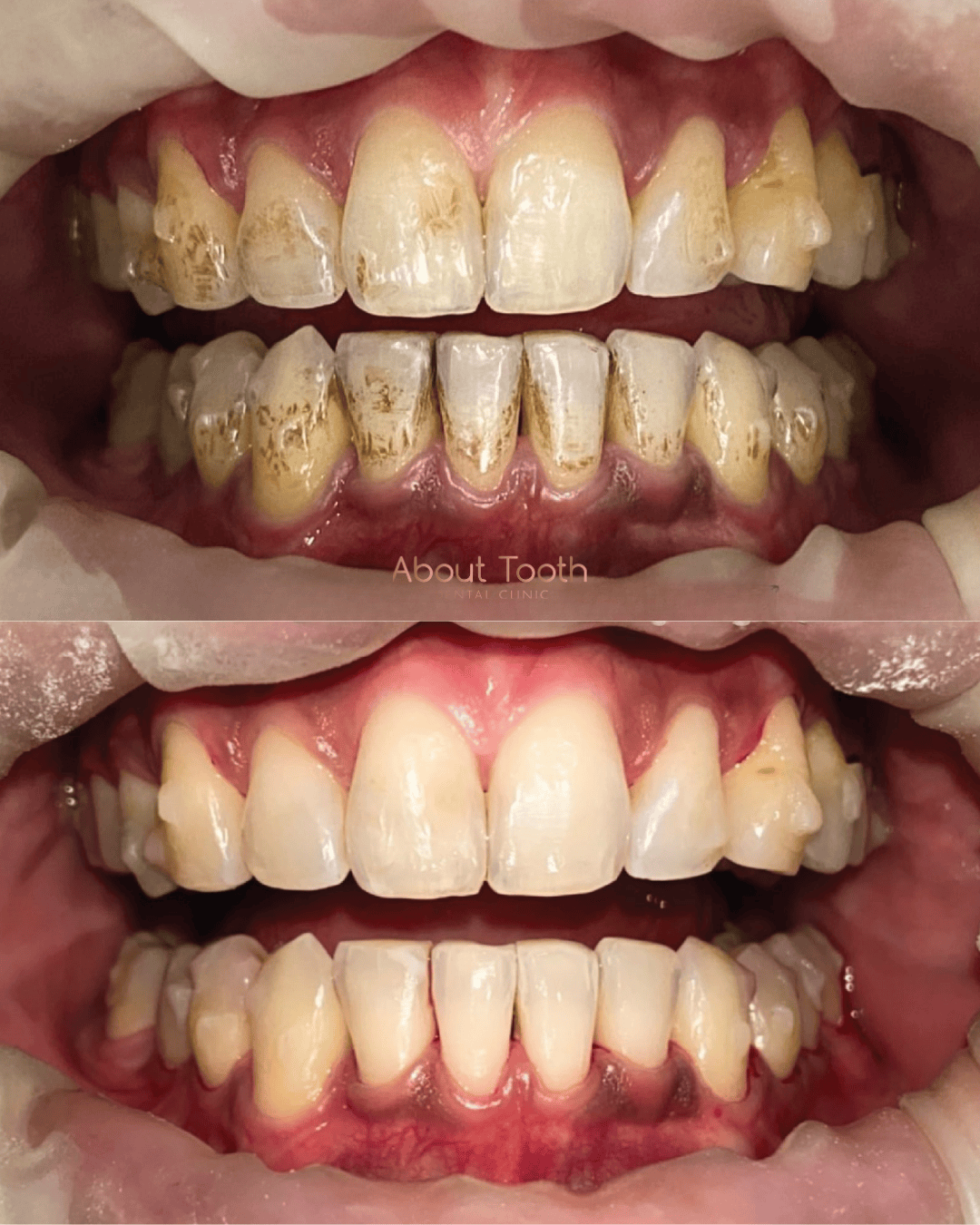
Airflow is a teeth‑cleaning technology that uses a controlled jet of air, water, and fine polishing powder directed onto the tooth surface and between the teeth to remove plaque and surface stains from tea, coffee, smoking, and certain foods quickly. It reduces the need for constant scraping with metal instruments on the tooth surface, so many patients find it feels smoother and more comfortable than traditional polishing methods.

Although Airflow can make teeth look cleaner and brighter, it is not the same as teeth whitening, so it should be combined with good home oral care and regular dental check‑ups to maintain the results over the long term.

What is Airflow ?

Airflow is a cutting-edge dental cleaning technology that combines air, water, and fine powder particles to gently and effectively remove plaque, stains, and tartar from your teeth. It offers a non-invasive, pain-free, and quick alternative to traditional cleaning methods.

Benefits of Airflow Technology

Thorough and Gentle Cleaning:

By utilizing a gentle stream of air, water, and powder particles, Airflow technology effectively removes build-up on your teeth without causing damage or discomfort. In contrast to traditional scraping methods, it ensures a thorough and gentle cleaning experience.

Speed and Efficiency:

Notably, Airflow technology offers significant advantages in terms of speed and efficiency compared to traditional cleaning methods. This results in reduced time spent in the dentist’s chair, making it the ideal choice for busy individuals seeking a quick and efficient dental cleaning.

Teeth Whitening Effect:

Moreover, Airflow technology goes beyond cleaning by providing a teeth whitening effect. By effectively eliminating surface stains, it leaves your teeth looking brighter and healthier.

Comfort for Sensitive Teeth:

Airflow technology is particularly beneficial for individuals with sensitive teeth who may experience pain during traditional cleaning methods. Its non-invasive nature ensures a comfortable experience, minimizing any discomfort that may arise.

Overall, Airflow technology is a game-changer in the world of dental hygiene. It’s a safe, effective, and pain-free method for cleaning your teeth, and it offers a range of benefits that traditional cleaning methods simply can’t match. If you’re looking for a more comfortable and efficient way to clean your teeth. About Tooth’s professional dentists will provide dental services and consultation for your oral health. Contact us for more information.


The importance of deep teeth cleaning with Airflow

  • Plaque and surface stains from tea, coffee, and smoking can build up on the tooth surface and between the teeth, making your smile look yellow and dull, causing bad breath, and increasing the risk of tooth decay and gum inflammation.
  • Airflow was developed to help clean areas that a toothbrush cannot easily reach and to remove surface stains that are difficult to polish away with conventional methods. It helps teeth look cleaner and brighter while being gentle on the enamel.

Airflow: What it is and how it works

  • Airflow is a teeth‑cleaning and polishing technology that uses a controlled mixture of air, water, and fine powder (such as sodium bicarbonate or glycine) sprayed under pressure onto the tooth surface.
  • The powder helps break up plaque and surface stains on the front, back, and in between the teeth, leaving the enamel feeling smoother and looking brighter, without needing to rely on coarse rubber cups and abrasive pastes all the time.
  • Most patients find the procedure gentler and more comfortable than traditional polishing, because it reduces the need for continuous scraping of the tooth surface with metal instruments.

How Airflow removes yellow stains and tea, coffee, and smoking stains

  • The Airflow system works by spraying a fine cleaning powder mixed with air and water onto the tooth surface, so the tiny particles gently impact and break up the colored deposits that stick to the enamel. This helps lift stains from tea, coffee, red wine, smoking, and strongly pigmented foods that regular brushing cannot remove effectively.
  • It is especially suitable for people who have a lot of surface staining from their lifestyle but whose underlying tooth structure is still healthy, making the teeth look cleaner, brighter, and the overall smile fresher after treatment. However, Airflow is a cleaning and stain‑removal procedure that works on the outer surface of the teeth, and it does not change the internal color of the enamel or dentin, so it is not considered a teeth‑whitening treatment.

How is Airflow different from scaling and teeth whitening? Compared with teeth whitening


Treatment

Main Purpose

What It Removes / Targets

Typical Sensation During Treatment

Visible Results

Scaling

To control oral diseases and prevent periodontal problems

Plaque and tartar around the teeth and along the gumline

May cause mild sensitivity or discomfort in some patients

Improved oral health and cleaner teeth

Airflow

To clean the tooth surface and improve the appearance of the smile

Plaque and external stains from coffee, tea, and smoking

A gentle spray of air and water; generally comfortable with minimal discomfort

Teeth look cleaner, smoother, and slightly brighter

Teeth Whitening

To lighten the internal color of the teeth

Intrinsic tooth discoloration and staining

Temporary tooth sensitivity may occur

Noticeably whiter and brighter teeth

airflow-2

Who is Airflow suitable for, and how often should you have it?

Who is a good candidate for Airflow?

  • People who regularly drink tea, coffee, red wine, or who smoke, and therefore tend to develop visible surface stains on their teeth easily.
  • People with braces, crowded or overlapping teeth, or other fixed dental appliances that make it difficult for a toothbrush to reach all areas. Airflow can help clean around brackets, wires, and tight spaces more effectively.
  • People who are nervous about pain or who dislike the sound and feel of traditional scaling instruments but still want a deep, thorough cleaning of their teeth.

Benefits, precautions, and aftercare for Airflow

Benefits

  • Teeth feel clean and smooth, surface stains are reduced, the procedure is quick, and it is generally less painful than traditional methods.
  • It is suitable for people with dental restorations, crowns, implants, or orthodontic appliances, because the fine powder can clean effectively around these areas.

Precautions and aftercare

  • Some people may experience slight, temporary tooth sensitivity after treatment, especially if they have exposed roots or are already prone to sensitivity.
  • After the procedure, it is recommended to avoid strongly colored foods and drinks (tea, coffee, dark soft drinks, red wine) for a short time to help the results last longer.
  • You should brush, floss, and clean your mouth regularly to prevent stains and plaque from building  up again quickly.

airflow-1

CTA : If your teeth are starting to look yellow or dull, or you can see tea, coffee, or smoking stains that make you hesitate to smile fully, you are welcome to consult us about deep cleaning with Airflow or other options that best suit your teeth at About Tooth Dental Clinic. Our dental team will examine your oral health, assess the amount of plaque and tartar, and recommend an appropriate treatment plan to help your teeth look clean and bright again so you can smile with confidence. 

You can book an appointment with a dentist for consultation and an oral health assessment at About Tooth Dental Clinic. We are open at both our Siam and Punnawithi branches, conveniently located right next to the BTS stations at each location. For more information or to schedule an appointment in advance, please call 087-555-4665 or 080-481-5555, or add us on LINE Official Account at @abouttooth to chat with our team.

References: 

  1. Revolutionizing Dental Cleanings: The Benefits of Airflow Technology . Accessed May 28, 2026. from: https://newyorkgeneraldentistry.com/revolutionizing-dental-cleanings-the-benefits-of-airflow-technology/ 

Book a consultation

Frequently asked questions about Airflow (FAQs)

Q: Does Airflow hurt?


A: Most people only feel the air and water spray against their teeth. Some may have slight sensitivity, especially around worn tooth necks or exposed roots, but overall it is usually more comfortable than traditional scaling.

Q: Does Airflow make teeth as white as whitening treatment?


A: Not as white as bleaching. Airflow focuses on removing surface stains from tea, coffee, smoking, and plaque, making teeth look cleaner and a bit brighter, but it does not change the internal tooth color like whitening does.

Q: Do I need scaling before having Airflow?


A: In most cases, dentists recommend scaling and cleaning the gums first, then using Airflow to refine the removal of surface stains and deposits around deep grooves or orthodontic appliances, so both the teeth and gums are thoroughly cleaned.

Q: How often should I have Airflow?
A: It is generally recommended every 6–12 months, depending on your habits. People who frequently drink tea or coffee, smoke, or build up stains easily may benefit from more frequent sessions. Your dentist can advise the best interval for you.

Q: How should I take care of my teeth after Airflow?


A: After treatment, dentists usually advise avoiding strongly colored foods and drinks for a short period. You should brush, floss, and clean your mouth regularly to reduce new stain buildup and help the results last longer.


Continue ReadingThe Benefits of Airflow Technology for Gentle Teeth Cleaning

Invisalign Vs. Braces: Learn About the Pros and Cons of Each

Orthodontic treatments are the only option if you want to correct your jaw and teeth alignment issues, improve your oral health, and achieve that perfect smile. Two of the most popular orthodontic treatments in Bangkok for straightening teeth are Invisalign and braces. The world of orthodontics is rapidly improving with each new treatment, so it’s crucial to understand the pros and cons of each orthodontic option to make an informed decision. Let’s take a look at Invisalign and braces as possible treatment options and make a comparison between the two.

What is Invisalign?

Invisalign is a relatively new technology that uses clear, removable aligners to shift your teeth into the desired positions gradually. The aligners are custom-made for each patient and appear virtually invisible, providing a more aesthetically pleasing appearance. It’s a more discreet and convenient option for those seeking to improve their smile as opposed to the appearance of traditional braces.

How Invisalign Works

A customized treatment plan is created using state-of-the-art 3D imaging technology. The patient receives a series of clear aligners worn for 20-22 hours daily, replacing each set every 10 days. Strong, medical-grade plastic material is used for the aligners, making them durable and comfortable for long periods. The treatment process will involve a series of appointments with your orthodontist to monitor your progress and make the necessary adjustments.

Who Are the Ideal Candidates?

This treatment option best suits patients with mild to moderate orthodontic issues, such as crowding, spacing, and mild overbites or underbites. It’s also ideal for adults and older teenagers who prefer a less noticeable treatment option. However, some patients with more severe or complex cases may not be suitable for Invisalign, leaving them with only the option of traditional braces.

What are Braces?

Get the perfect smile with an Invisalign package!

Braces use brackets, wires, and elastic bands to apply constant pressure on the teeth, gradually moving them into the desired position. This technology was the traditional option for decades before the advent of Invisalign technology due to its effectiveness in treating various orthodontic issues. It remains a very popular option with patients today.

Types of Braces

Traditional Metal Braces

This is the most common type and consists of metal brackets and wires which are very effective for treating a wide range of orthodontic issues. They are also typically the most affordable option.

Ceramic Braces

These are similar to metal braces but come with tooth-colored or clear brackets that are less noticeable. The downside is that they require diligent maintenance as they can stain easily.

Lingual Braces

They are similar in concept to metal braces, except that they are anchored to the back of the teeth, which makes them almost entirely invisible. However, this comes at the price of them being much more challenging to clean and maintain. There’s also an increased level of discomfort, especially during the initial adjustment period.

Who Are the Ideal Candidates?

The advantage of braces is their versatility in treating a broad range of orthodontic issues. This includes severe crowding, large gaps, and significant bite problems. They are also perfect for younger patients who may not possess the discipline required for Invisalign treatment. Braces can be made to accommodate individual preferences, with options for different bracket materials and colored bands.

Pros of Invisalign

Aesthetics

These clear aligners are almost completely invisible, offering a more discreet option for teeth alignment.

Removable

Unlike traditional braces, Invisalign is removable during eating, drinking, and cleaning, making it much more convenient. This feature allows for easier maintenance and a higher level of oral hygiene. With Invisalign, flossing and brushing become much simpler since the aligners can be removed at any time throughout the treatment.

Comfort

Invisalign offers greater comfort than traditional braces because it causes less irritation on the cheeks and gums. They lack the sharp edges and protrusion often associated with metal braces which can reduce the occurrence of mouth sores and injuries.

Cons of Invisalign

Cost

One of the prohibitive factors of Invisalign is its price. This is usually the most common pain point for patients considering this treatment option.

Limited Application

Invisalign is limited in its ability to correct severe orthodontic issues that require greater force and precision.

Need for Additional Treatments

Some patients may require additional treatments, such as attachments or refinements, which will increase the overall cost of the procedure. This will also end up extending the treatment duration.

Pros of Braces

Broad Range of Application

Unlike Invisalign, braces are suitable for treating a broad range of orthodontic issues, from mild to severe, making them more versatile.

Customizable Appearance

Patients have the option of choosing colored bands for metal braces, which allows them to add a personal touch to their treatment. For those more concerned about aesthetics, ceramics and lingual braces offer a more discreet appearance.

Lower Cost

Compared to Invisalign, braces are usually the more affordable option, which is a major factor in their popularity with patients.

Cons of Braces

Aesthetic Concerns

They are much more visible than Invisalign, which can be a major factor for patients more concerned with aesthetics, especially teenagers and adults.

Discomfort

Braces tend to cause more discomfort and irritation to the cheeks and gums. This is especially true during the initial adjustment period.

Difficulty with Oral Hygiene

Flossing and brushing can be challenging with metal braces, increasing the risk of dental issues like cavities and gum disease.

Dietary Restrictions

Patients with metal braces must restrict themselves from certain foods that can cause damage or dislodge the braces completely. These include hard, sticky, or chewy foods. Abstaining from certain foods can be more difficult for some patients during treatment.

Things to Consider When Choosing Between Invisalign and Braces

Severity of Orthodontic Issues

When choosing between the two treatment options, you must consider the severity of your orthodontic issues. Invisalign may be ideal for mild to moderate cases, while braces are more effective for patients that require more extensive treatment.

Aesthetics and Self-confidence

If the appearance of your orthodontic treatment is a significant concern, the Invisalign package would be the better option, given that it’s nearly invisible. However, you should also consider the discreet appearance offered by certain braces.

Cost

Cost is usually one of the main deciding factors for patients. It’s important to weigh the cost differences between Invisalign and braces, including the additional treatments and adjustments needed. Consider the long-term benefits and overall value of each treatment option before deciding.

Lifestyle and Discipline

Invisalign demands a higher commitment to consistently wear the aligners throughout treatment. On the other hand, braces may be a more suitable option for those who find it challenging to adhere to the Invisalign treatment plan, particularly younger patients who lack the necessary discipline to do so.

Treatment Duration

Treatment duration will vary between individual patients, but braces generally require a longer treatment time than Invisalign. Consider which treatment plan will be easier for you to commit to and how it will affect your daily routine.

If you’re considering starting an orthodontic treatment plan, contact About Tooth Dental Clinic for a detailed and professional assessment. We can provide thoughtful advice and answers on which orthodontic option will be best for you. Our team of expert and experienced dentists will be able to assess your condition and recommend a sound option for your case. Go with an experienced team of professionals to help you achieve the beautiful, healthy smile you desire.

booking

Dr. Nisara Tanarerkchai, D.D.S. is a dentist specializing in dental implants, orthodontics, and veneers. She graduated from the Faculty of Dentistry at Thammasat University. With extensive professional experience, she holds multiple certificates in various dental fields, including Advanced General Dentistry, Dental Implants, Advanced Orthodontics, as well as certificates in the Veneer Bootcamp and the Veneer Masterclass. Additionally, she is certified as a Platinum Provider of Invisalign for 2021 and achieved Zenyum Star Tier status in 2023.

Currently, Dr. Thanaruksachai is the founder of About Tooth Dental Clinic, which received the World Class Award 2021 in the category of The Best of International Healthy Business. She is also serves as a member of the Thai Association of Dental Implants (TADI).

Continue ReadingInvisalign Vs. Braces: Learn About the Pros and Cons of Each

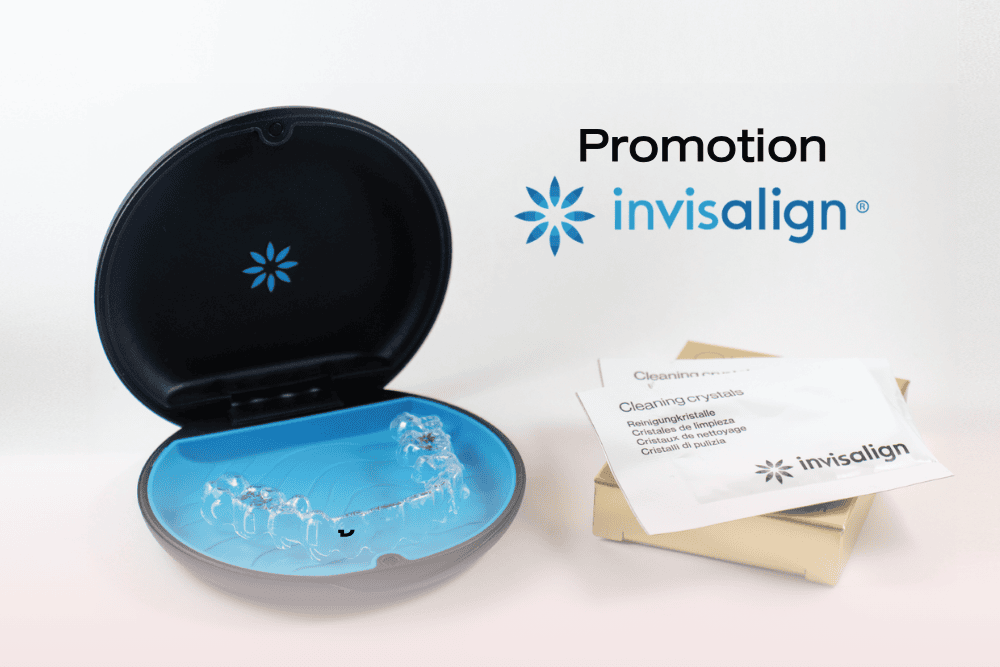
Invisalign Promotion

Invisalign is a clear, removable orthodontic option designed to gradually move teeth according to an individual treatment plan. The most suitable Invisalign package depends on factors such as tooth alignment, bite, treatment complexity, and the number of aligners required. A dental assessment is therefore recommended before choosing a package or promotion. 


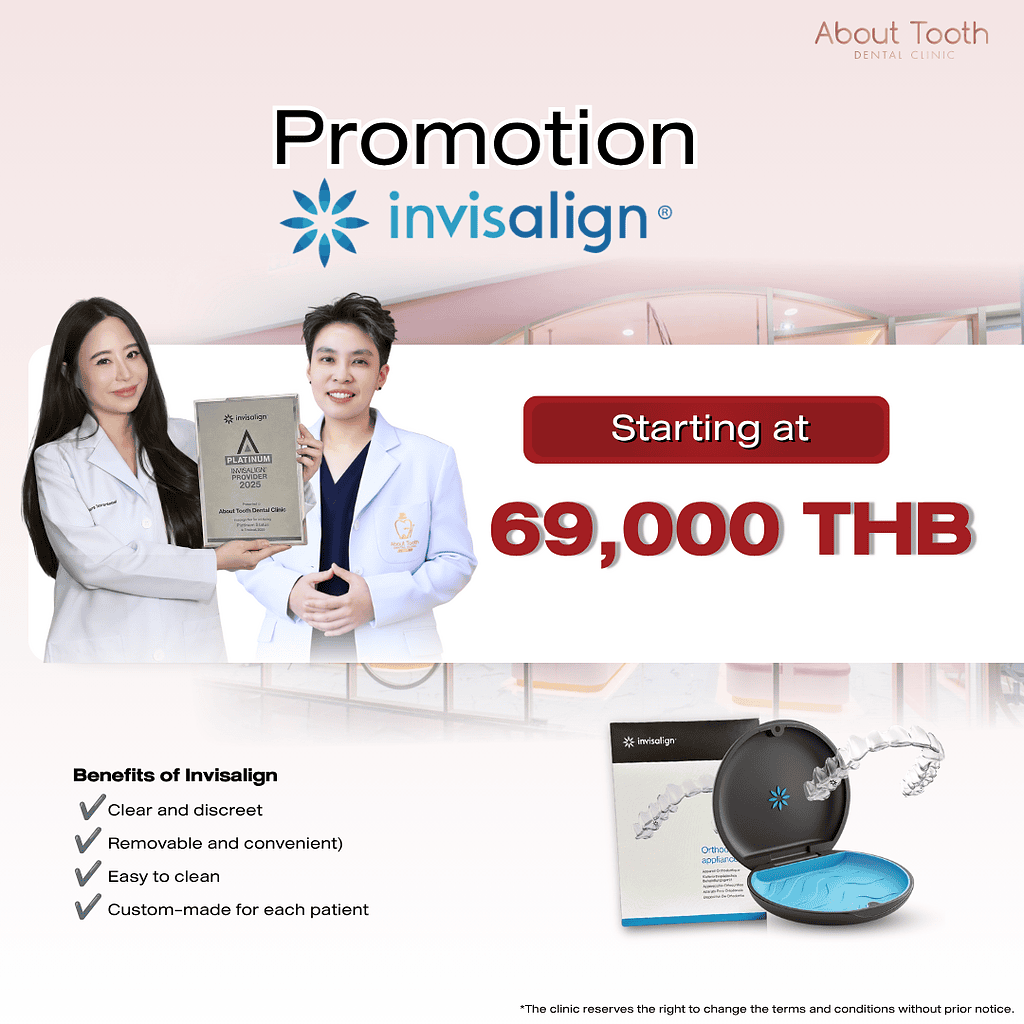
Invisalign Promotion: Clear Aligners Starting at 69,000 THB

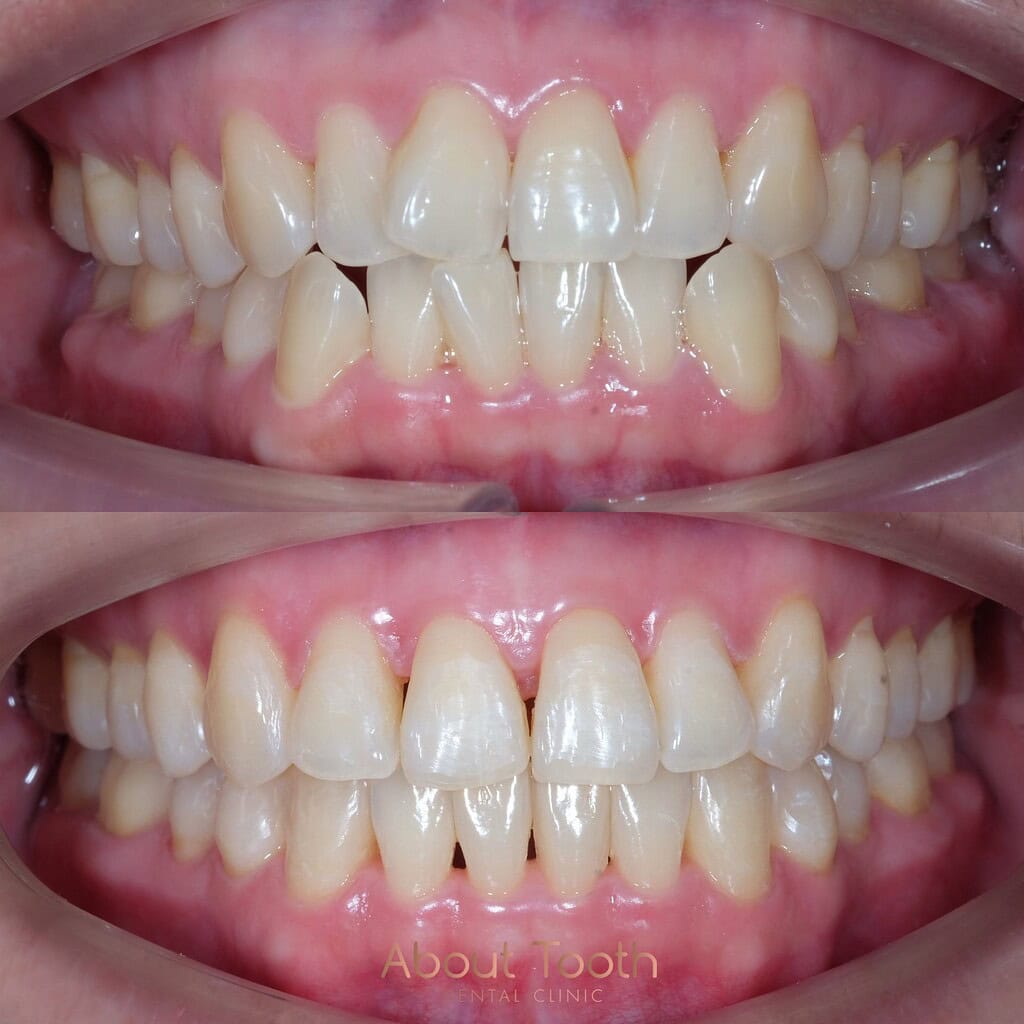
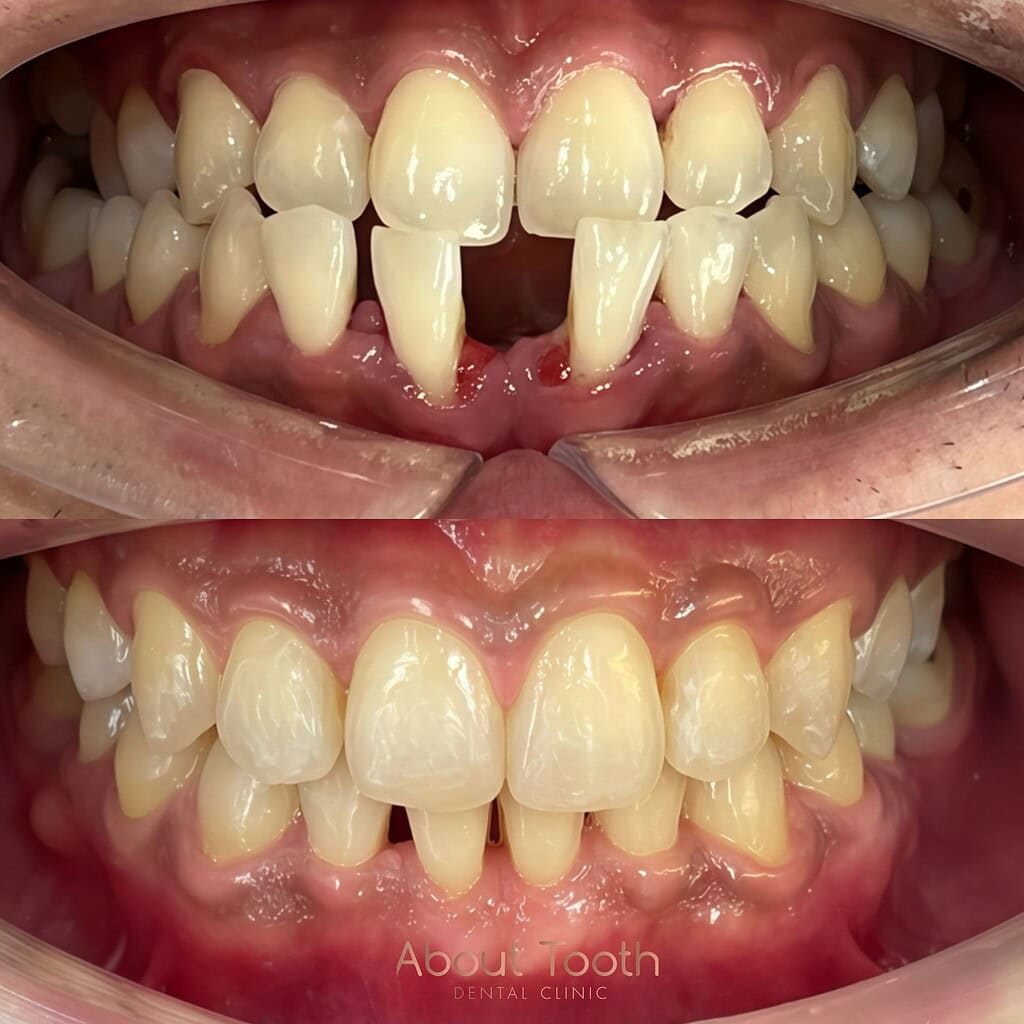
Looking for a discreet way to straighten crowded teeth, close gaps, or correct teeth that have shifted after previous orthodontic treatment?

About Tooth Dental Clinic offers Invisalign starting at 69,000 THB*, with a dental consultation to assess your tooth alignment and create a treatment plan tailored to your individual case.

Invisalign starting at 69,000 THB*
Clear, removable aligners that fit easily into your daily routine and can be removed for eating and oral care.

*Price and Invisalign package depend on the dentist’s assessment and promotional terms and conditions.

pro-invisalign

Who Is Invisalign Suitable For?

Invisalign may be an option for people with:

  • Crowded teeth
  • Gaps between teeth
  • Uneven tooth alignment
  • Teeth that have shifted after previous orthodontic treatment
  • Those who prefer a less noticeable orthodontic appliance
  • Those who want removable aligners for meals and oral hygiene

Suitability and the treatment plan will depend on an individual dental assessment.

Why Does Invisalign Cost Differ From Person to Person?

Every case requires a different level of tooth movement, so the total cost of Invisalign may vary depending on:

  • Number of aligners required
  • Amount of tooth movement needed
  • Bite-related concerns
  • Estimated treatment duration
  • Invisalign package recommended for your case

A dental assessment can help determine the most suitable treatment plan and estimated cost for you.

How Do You Start Invisalign at About Tooth?

Getting started is simple:

  1. Consult with a dentist and assess your tooth alignment
  2. Scan and collect digital records of your teeth
  3. Plan the required tooth movements
  4. Select the Invisalign package suitable for your case
  5. Start wearing your aligners and attend follow-up appointments
pro-invisalign
pro-invisalign

Invisalign Promotion at About Tooth Dental Clinic

Invisalign Starting at 69,000 THB*

Visit us for a consultation and find out which Invisalign package is suitable for your smile.

📍 Siam Branch — SIAMSCAPE, 8th Floor
📍 BTS Punnawithi Branch — True Digital Park, 2nd Floor

Ready to Start Your Invisalign Journey? Not sure whether your case qualifies for the 29,000 THB starting price? Book a consultation at About Tooth Dental Clinic to have your tooth alignment assessed and receive an Invisalign treatment plan tailored to your needs.

You can book an appointment with a dentist for consultation and an oral health assessment at About Tooth Dental Clinic. We are open at both our Siam and Punnawithi branches, conveniently located right next to the BTS stations at each location. For more information or to schedule an appointment in advance, please call 087-555-4665 or 080-481-5555, or add us on LINE Official Account at @abouttooth to chat with our team. 

booking

About Invisalign Promotions (FAQs)

Q: How much does Invisalign cost?

The cost of Invisalign depends on the complexity of your case, the number of aligners needed, and the treatment package suitable for you. A consultation is recommended to receive an estimate based on your treatment plan.

Q: What is included in an Invisalign promotion?

Inclusions vary by promotion. Before deciding, ask whether the package includes digital scans, X-rays, attachments, refinements, and retainers.

Q: How many hours a day should I wear Invisalign aligners?

Invisalign aligners should generally be worn for 20–22 hours per day, removing them for meals and oral hygiene.

Q: Can Invisalign treat crowded teeth or gaps?

Invisalign can treat various alignment issues, including crowding and gaps in many cases. Your dentist will assess the complexity of your case and your bite to determine whether it is suitable.

Q: Can I get Invisalign if my teeth have shifted after previous orthodontic treatment?

In many cases, Invisalign can help correct teeth that have shifted after previous orthodontic treatment. The appropriate package and number of aligners will depend on the extent of the movement.

Q: Can I remove Invisalign aligners to eat?

Yes. Remove your aligners when eating, and clean your teeth before putting them back in, following your dentist’s instructions.

Q: Do I need to wear retainers after Invisalign treatment?

Yes. Retainers are needed after treatment to help maintain your teeth’s positions, just as they are after other types of orthodontic treatment.


Dr. Nisara Tanarerkchai, D.D.S. is a dentist specializing in dental implants, orthodontics, and veneers. She graduated from the Faculty of Dentistry at Thammasat University. With extensive professional experience, she holds multiple certificates in various dental fields, including Advanced General Dentistry, Dental Implants, Advanced Orthodontics, as well as certificates in the Veneer Bootcamp and the Veneer Masterclass. Additionally, she is certified as a Platinum Provider of Invisalign for 2021 and achieved Zenyum Star Tier status in 2023.

Currently, Dr. Thanaruksachai is the founder of About Tooth Dental Clinic, which received the World Class Award 2021 in the category of The Best of International Healthy Business. She is also serves as a member of the Thai Association of Dental Implants (TADI).

Continue ReadingInvisalign Promotion

The Cost of Veneers: Understanding the Investment and Long-Term Benefits

Veneers are a popular option for people who want to improve the appearance of their teeth. They can correct a variety of dental issues, including stains, chips, gaps, and misshapen teeth. But like any dental procedure, veneers come with a cost. In this article, we’ll explore the cost of veneers and the long-term benefits they offer.

How Much Do Veneers Cost?

The cost of veneers varies depending on several factors, including the number of veneers you need, the material used to make the veneers, and the location of the dental practice. In general, porcelain veneers are more expensive than composite resin veneers. However, this price can go up significantly if additional procedures, such as orthodontics or gum lifting, are needed.

Investing in Your Smile

While the cost of veneers may seem high, it’s important to consider the long-term benefits they offer. Veneers can last for many years, and in some cases, they can last for decades. They’re also stain-resistant, so you won’t have to worry about discoloration over time. By investing in your smile with veneers, you’re making a long-term investment in your overall well-being.

Improved Self-Confidence

One of the biggest benefits of veneers is the boost in self-confidence they provide. When you’re happy with your smile, you’re more likely to smile and engage with others. This can lead to improved relationships and a higher quality of life. Veneers can also improve your professional prospects by making you appear more confident and self-assured.

Choosing the Specialized Dentist and Reputable Clinic

When considering veneers, it’s important to choose the specialized dentist. Look for a dentist who has experience with veneers and who can provide examples of their work. You should also ask about the materials they use and their overall approach to veneers. A reputable dental practice will be transparent about the costs involved and will work with you to find a payment plan that fits your budget.

In conclusion, the cost of veneers may seem high, but the long-term benefits they offer are well worth the investment. Veneers can improve your self-confidence, reduce dental expenses, and provide a long-lasting solution for a variety of dental issues. If you’re considering veneers, talk to your dentist about your options and the costs involved. About Tooth Dental Clinic has multiple branches in the Sukhumvit area offering Veneer service. Our expert and specialized dentists will be happy to walk you through the process and lay out a treatment plan that works for you.

booking


Continue ReadingThe Cost of Veneers: Understanding the Investment and Long-Term Benefits

All-on-4: A Revolutionary Dental Implant Technique

All-on-4 is a full-mouth dental implant treatment that uses just four dental implants to support a fixed full-arch prosthesis. It is designed for people who have lost most or all of their teeth in one jaw, providing a stable and functional replacement while using fewer implants than placing an implant for each missing tooth. In many cases, bone grafting may not be necessary.

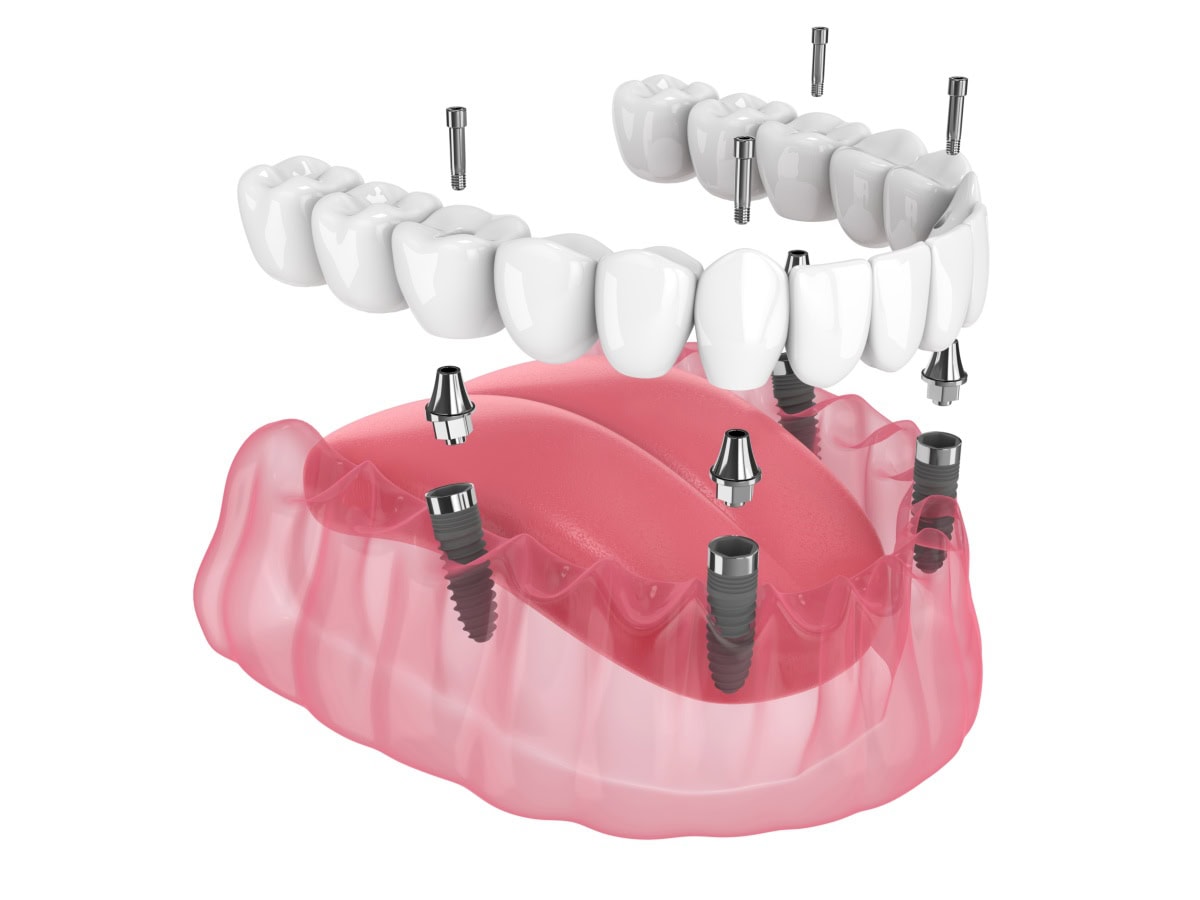
Typically, two implants are placed vertically in the front of the jaw, while the other two are inserted at an angle in the back. This approach takes advantage of the stronger bone in the front of the jaw and helps avoid important anatomical structures such as the maxillary sinuses or the inferior alveolar nerve. Angled implant placement also allows for the use of longer implants, improves support, and enables a fixed bridge to replace an entire arch of teeth.

For suitable candidates, a temporary fixed bridge can often be attached on the same day as implant surgery through a protocol known as immediate loading. This allows patients to regain their smile and chewing function much sooner. Clinical studies have reported high long-term survival rates for both the implants and the prosthesis typically ranging from 94% to 99% over several years—when treatment is carefully planned and appropriate maintenance is followed.

What is All-on-4?

All-on-4 is a dental implant technique that replaces a full arch of teeth using only four dental implants. These implants are strategically placed in the jawbone for maximum stability and support. This method is ideal for patients who have lost most or all of their teeth due to various reasons.

How does All-on-4 work?

The All-on-4 procedure involves surgically placing four dental implants into the jawbone. These implants are angled strategically to provide optimal support for a full arch of teeth. Once the implants are in place, a custom-made dental bridge is attached, resembling natural teeth and offering a permanent solution for tooth loss.

Benefits of All-on-4

All-on-4 offers several advantages. Firstly, it replaces a full arch of teeth with only four implants, surpassing traditional implant methods. Secondly, this technique is less invasive and requires fewer implants and surgeries. Lastly, All-on-4 provides a long-term solution, enhancing patients’ quality of life and self-confidence.

For people who have lost all or most of their teeth, or who have been wearing removable dentures for many years, All-on-4 dental implants can significantly improve quality of life. Compared with conventional removable dentures, All-on-4 provides a more stable and secure solution. Its key advantages include improved stability, better chewing function, and greater comfort and convenience in everyday life. 

Key Benefits of All-on-4 Dental Implants 

Uses Only Four Dental Implants to Support a Full Arch

  • All-on-4 uses just four dental implants to support a full arch of fixed replacement teeth. Compared with replacing each missing tooth individually which may require six to eight implants or more per jaw this approach reduces the number of implants needed.
  • Using fewer implants can also simplify the surgical procedure and may shorten the overall treatment time compared with placing multiple individual dental implants throughout the entire arch.

Fixed Teeth That Stay Secure 

  • The fixed bridge is securely attached to the dental implants, allowing patients to chew with greater confidence. Multiple clinical studies have shown that chewing performance and bite efficiency improve significantly with implant-supported full-arch restorations compared with conventional removable dentures.
  • Because the prosthesis remains firmly in place, there is no need to worry about the teeth slipping or becoming loose while speaking, laughing, or eating, helping patients feel more confident in their daily lives.

Helps Reduce Jawbone Loss

  • Dental implants transfer chewing forces directly to the jawbone, helping stimulate the bone in a way that is similar to natural tooth roots. Compared with removable dentures, which rest on the gums, implant-supported restorations may help reduce the rate of jawbone resorption over time.
  • By helping preserve the jawbone, All-on-4 treatment may also support facial structure and reduce the appearance of facial collapse associated with long-term tooth loss, contributing to a more youthful facial profile.

Temporary Teeth Can Often Be Placed Shortly After Surgery 

  • The All-on-4 concept was developed to support immediate loading, allowing a temporary fixed bridge to be placed on the same day as implant surgery or shortly afterward for suitable candidates. Eligibility depends on factors such as bone quality and achieving sufficient primary implant stability at the time of implant placement.
  • This approach enables many patients to regain their smile and return to their daily routines sooner, even while the dental implants continue to heal and integrate with the jawbone through the natural process of osseointegration.

Who Is a Good Candidate for All-on-4 Dental Implants? 

Overall, All-on-4 is best suited for patients who want a fixed full-arch solution and are experiencing multiple dental problems, including extensive tooth loss, difficulty chewing, and reduced confidence in their smile. 

Patients Who Are Often Good Candidates for All-on-4

  • People who have lost multiple teeth or most of their teeth in the upper jaw, lower jaw, or both.
  • Long-term removable denture wearers who experience loose dentures, difficulty chewing, or frequent sore spots caused by denture pressure.
  • Patients with advanced periodontal (gum) disease resulting in multiple loose teeth, where a dentist determines that the remaining teeth cannot be predictably preserved over the long term.
  • People seeking a long-term fixed solution that closely resembles natural teeth in both function and appearance, and who are willing to invest in improving their long-term oral health and quality of life.

An all-on-4 type of dental implant.

Is All-on-4 right for you?

All-on-4 is one of dental implant techniques, particularly suitable for individuals with extensive tooth loss. It provides a permanent solution that improves both quality of life and self-esteem. If you are interested in learning more about the All-on-4 method, please consult with our dentist to determine if this option is right for you. About Tooth Dental Clinic has multiple branches in the Sukhumvit area offering Dental implants and All-on-4 Method. Our team will guide you through the process and create a tailored treatment plan to suit your needs.

What Should Be Evaluated Before Choosing All-on-4?

Oral Examination and X-rays / CT Scan

  • A comprehensive oral examination, together with dental X-rays and a 3D CT scan, is essential to evaluate the quantity and quality of the jawbone, determine the optimal implant positions, and identify important anatomical structures such as the maxillary sinuses and the inferior alveolar nerve.

Medical Conditions and Current Medications

  • Certain medical conditions and medications may affect healing and the long-term success of dental implants. For example, poorly controlled diabetes, heavy smoking, and the use of certain medications may increase the risk of complications. These factors should be carefully assessed by the dental team and, when appropriate, in consultation with the patient’s physician.

Commitment to Long-Term Oral Care

  • Although All-on-4 provides a fixed full-arch restoration, it still requires good oral hygiene and regular professional maintenance. Keeping the areas around the implants and the fixed bridge clean is essential to help reduce the risk of gum inflammation and peri-implant disease, supporting the long-term success of the treatment.

At About Tooth, our dental team performs a comprehensive assessment using digital X-rays or 3D CT imaging, evaluates your overall oral health and medical history, and develops a personalized treatment plan tailored to your individual needs.

Comparing Full-Mouth Tooth Replacement Options 

Comparison

All-on-4 (Full-Mouth Dental Implants)

Full Removable Dentures

Individual / Multiple Dental Implants

Stability

Fixed securely to dental implants, providing excellent stability for chewing

May become loose over time, especially as the jawbone resorbs, limiting chewing efficiency

Highly stable, with each implant supporting an individual crown or a short-span bridge

Number of Implants

Typically 4 implants per arch (5–6 implants in some cases)

No dental implants; the denture rests on the gums and jawbone

Usually 6–8 implants or more for full-arch rehabilitation

Effect on Jawbone

Helps stimulate the jawbone through chewing forces, reducing bone loss

Does not stimulate the jawbone, allowing bone resorption to continue over time

Also helps preserve the jawbone, although additional bone grafting may be required in some cases

Time to Functional Teeth

Many patients can receive a temporary fixed bridge on the same day or shortly after surgery

Can usually be worn immediately after fabrication

Typically requires several months for the implants to integrate with the bone before the final restorations are placed

Chewing Performance

Close to natural teeth, allowing patients to enjoy a wider variety of foods

Chewing ability is more limited, particularly with hard or chewy foods

Provides chewing function closest to natural teeth, although treatment generally takes longer

Jawbone Preservation

Helps reduce jawbone resorption by transferring chewing forces to the bone

Does not help prevent bone loss

Helps preserve the jawbone in the same way as conventional dental implants

Overall Cost

Higher initial investment than removable dentures, but generally more cost-effective than replacing every missing tooth with individual implants

Lowest initial cost

Highest overall cost for full-mouth rehabilitation due to the greater number of implants and restorations

The All-on-4 Treatment Process at About Tooth

The treatment plan may vary depending on each patient’s oral condition and jawbone quality. However, the All-on-4 procedure generally follows these key steps, in line with internationally recognized treatment protocols.

1. Consultation and Treatment Planning with X-rays and 3D CT Scan

Your dentist will perform a comprehensive oral examination and take dental X-rays and a 3D CT scan to evaluate the quality and quantity of your jawbone, identify important anatomical structures, and determine the ideal implant positions. Digital impressions or an intraoral scan may also be taken to help plan the final tooth position and design your new smile.

2. Tooth Extraction (If Needed) and Oral Preparation

If any remaining teeth are unlikely to be preserved over the long term, your dentist may recommend extracting them during the same appointment as implant placement. Any existing gum disease or other oral health conditions will also be treated to ensure your mouth is well prepared before surgery.

3. Placement of Four Dental Implants

Four dental implants are placed following the All-on-4 concept, with two implants positioned vertically in the front of the jaw and two implants angled in the back. This approach maximizes the use of available bone while avoiding important anatomical structures.

The procedure is typically performed under local anesthesia. Depending on the complexity of the case and the patient’s needs, conscious sedation or general anesthesia in a hospital setting may also be considered.

4. Temporary Fixed Teeth for Suitable Candidates

If sufficient primary implant stability is achieved and the clinical conditions are appropriate, a temporary fixed bridge may be placed on the same day as surgery or shortly afterward.

This allows many patients to return to their normal daily activities with a fixed set of teeth while following a soft-food diet and other postoperative instructions during the healing period.

5. Healing and Osseointegration

Over the following months, the implants gradually fuse with the jawbone through a natural biological process known as osseointegration.

During this healing phase, regular follow-up visits are scheduled to monitor recovery, evaluate implant stability, and maintain good oral hygiene around the implants.

6. Final Fixed Bridge and Follow-Up Care

Once the implants have fully integrated with the jawbone, digital impressions or an intraoral scan are taken to fabricate a custom-made final fixed bridge designed to provide optimal function, aesthetics, and a comfortable bite.

After the final restoration is placed, regular follow-up appointments are recommended to monitor the implants, make any necessary bite adjustments, and professionally clean around the implants and beneath the fixed bridge to help ensure long-term success.

How Much Do All-on-4 Dental Implants Cost?

The cost of All-on-4 dental implants varies depending on each patient’s oral condition and treatment needs. Factors that may affect the overall cost include:

  • Whether treatment is required for the upper arch, lower arch, or both arches
  • The brand and type of dental implants and the materials used for the fixed bridge
  • Whether additional procedures, such as tooth extractions or other dental treatments, are required
  • The complexity of the case, including the amount of remaining jawbone and whether additional surgical procedures are needed

Compared with replacing every missing tooth with an individual dental implant, All-on-4 is often considered a more cost-effective solution for full-mouth rehabilitation. Because it requires fewer implants, and many patients may not need bone grafting, the overall treatment is generally less complex. However, All-on-4 is typically more expensive than removable dentures, as it involves implant surgery and a custom-made fixed prosthesis.

For a more accurate estimate of the cost of All-on-4 dental implants at About Tooth, we recommend sending us photos of your teeth along with your dental X-rays. Our dental team can then provide a preliminary assessment and a personalized treatment estimate based on your individual case.

Aftercare and Follow-Up for All-on-4 Dental Implants

Proper aftercare plays a vital role in the long-term success of All-on-4 dental implants and the fixed bridge. Although clinical studies have reported high long-term success rates, maintaining good oral hygiene and attending regular follow-up appointments are essential for preserving the health of the implants and surrounding tissues.

Aftercare Guidelines for All-on-4 Dental Implants 

The First Few Weeks After Surgery

  • During the initial healing period, patients are advised to eat soft foods and avoid hard, crunchy, or sticky foods to minimize excessive pressure on the newly placed implants.
  • If your dentist prescribes antibiotics or pain medication, be sure to take them exactly as instructed to support healing and reduce the risk of complications.

Daily Oral Hygiene

  • Good oral hygiene is essential for maintaining the long-term health of All-on-4 dental implants. Brush both the fixed bridge and the surrounding gums thoroughly using a soft-bristled toothbrush, and use an antimicrobial mouthwash if recommended by your dentist.
  • To clean beneath the bridge and around the implants, use implant floss (super floss) or a water flosser. These tools help remove plaque and food debris from hard-to-reach areas, reducing the buildup of plaque and tartar around the implants.

Regular Follow-Up Visits Every 6–12 Months

  • Regular check-ups are essential for maintaining the long-term health of All-on-4 dental implants. During these visits, your dentist will examine the gums, jawbone, and dental implants, assess your bite, and check the screws securing the fixed bridge to ensure everything remains stable.
  • Professional cleaning around the implants and beneath the fixed bridge, including the removal of plaque and tartar, helps reduce the risk of peri-implant inflammation and supports the long-term success of your implant treatment.

Restore Your Full Smile with All-on-4 at About Tooth If you have lost multiple teeth, have loose teeth caused by advanced gum disease, or no longer feel confident wearing removable dentures, All-on-4 dental implants may be the solution you’re looking for. This treatment can help restore a fixed, full-arch smile, allowing you to enjoy greater comfort when chewing and smile with confidence again. At About Tooth Dental Clinic, our experienced dental team at both our Siam branch (8th Floor, SIAMSCAPE) and Punnawithi branch (2nd Floor, True Digital Park, connected to BTS Punnawithi) is ready to create a personalized treatment plan designed to provide long-lasting function, comfort, and a natural-looking smile.

You can book an appointment with a dentist for consultation and an oral health assessment at About Tooth Dental Clinic. We are open at both our Siam and Punnawithi branches, conveniently located right next to the BTS stations at each location. For more information or to schedule an appointment in advance, please call 087-555-4665 or 080-481-5555, or add us on LINE Official Account at @abouttooth to chat with our team.

References:

  1. All-on-4. Accessed June 22, 2026. from: https://malocliniceducation.com/all-on-4-2/

booking

Frequently Asked Questions About All-on-4 (FAQs)

Q: How Long Do All-on-4 Dental Implants Last?

Clinical studies have reported implant survival rates of over 94%–99% for All-on-4 dental implants during follow-up periods of 3 to 10 years. Long-term success depends on factors such as treatment planning, prosthesis design, oral hygiene, and regular dental check-ups. With proper care and maintenance, All-on-4 is designed to provide a long-lasting solution for full-mouth tooth replacement.

Q: Is Full-Mouth Dental Implant Surgery Painful?

The procedure is typically performed under local anesthesia, and in some cases, conscious sedation may also be provided. Most patients experience little to no pain during surgery, although they may feel some pressure.

After the procedure, mild swelling, soreness, or discomfort is common during the first 2–3 days and can usually be managed with prescribed pain medication and cold compresses.

Q: Is All-on-4 Suitable for Everyone?

No. All-on-4 is not suitable for every patient. A comprehensive evaluation of the jawbone, oral health, and medical history is required before treatment.

Conditions such as poorly controlled diabetes, heavy smoking, or certain types of osteoporosis may require additional assessment and careful treatment planning.

Q: What Is the Difference Between All-on-4 and All-on-6?

Both All-on-4 and All-on-6 use multiple dental implants to support a fixed full-arch bridge. The main difference is the number of implants used: All-on-4 uses four implants per arch, while All-on-6 uses six.

The most appropriate option depends on factors such as bone quality, bone volume, and the planned prosthesis. Your dentist will recommend the treatment that best suits your individual needs.

Q: Do I Need to Remove All-on-4 Teeth for Cleaning?

No. All-on-4 is a fixed prosthesis, so it is not removed at home for cleaning.

Daily care includes brushing, using implant floss (super floss) or a water flosser, and cleaning around the implants as instructed by your dentist. Regular professional maintenance visits are also recommended to help keep the implants and surrounding tissues healthy over the long term.

Dr. Papatsara Veerapol, D.D.S. is a dentist specializing in orthodontics, dental implants, and prosthodontics (veneers, dentures). She graduated with honors (Second Class) from the Faculty of Dentistry at Chulalongkorn University. She later earned a Master’s degree in Prosthodontics from Srinakharinwirot University. With extensive work experience, she holds an Advanced General Dentistry Certificate and is certified as a Platinum Provider of Invisalign for 2021 and achieved Zenyum Star Tier status in 2023.

Currently, she is the founder of About Tooth Dental Clinic, which was honored with the World Class Award 2021 in the category of The Best of International Healthy Business. She also serves as a member of the Thai Association of Dental Implants (TADI) and the Thai Prosthodontics Association.

Continue ReadingAll-on-4: A Revolutionary Dental Implant Technique

Dental Veneers Aftercare Tips : Maintain your perfect smile

Dental Veneers Aftercare Tips

Oral hygiene is an important thing that needs to be taken care of regularly. But for anyone who wishes to have white, clean teeth that look healthy. So, Veneer is another method that can naturally whiten your teeth as you wish. So, About Tooth Dental clinic has tips about dental veneers aftercare. How to take care of it to maintain a long-lasting white and clean smile.

There are two kinds of Veneers.

  1. Composite Veneers

Composite veneers are often made from a tooth-colored resin, the same type of material used with a tooth filling. The advantage of composite veneer is a shorter application process. It can be finished in a few hours. The composite can also be bonded directly to the surface without the need for drilling or filling, meaning we can improve smiles without preparing teeth. The disadvantages of composite veneers can lead to decay on the roots of the tooth, or more often, gum disease. Composite veneers will need to be replaced or repaired more frequently than porcelain veneers.

  1. Ceramic Veneers

Ceramic veneers are thin porcelain shields that cover only the front surface of the teeth. They are permanently bonded to your teeth to change or improve the image of stained, chipped, broken, or unaesthetic teeth. Ceramic veneers are long-lasting (on average 10 to 15 years) and have great strength qualities.

Veneers aftercare tips 

Regularly brush your teeth for oral hygiene

For dental health, the most important thing is to maintain regular oral hygiene, which includes brushing and flossing at least twice daily and immediately following dinner. As a result of routine mouth washing will lessen issues with dental decay. periodontitis to additional dental issues. Must select a toothbrush with soft brushes that is the appropriate size. dental floss should be chosen as well, with the variety that is best for our situation.

Avoiding Foods and Beverages that make a stain on your teeth.

Foods and beverages that create tough stains on your teeth, such as soft drinks, tea, coffee, and other foods. That is one of the problems with veneers that should be careful. Especially the patients who do composite veneers. Because consuming these foods and beverages will cause your teeth to become more stained. To minimize these problems, it’s a good idea to brush your teeth as soon as you can after meals.

Avoiding smoking.

Additionally, smoking can make yellow stains on teeth. Smoking should be avoided by the patient who is getting veneers. so that the veneer color is white and long-lasting.

Using an occlusal splint to prevent veneer cracking

For patient who grinds your teeth (bruxism) cracking veneers is also possible. Dentists advise using a mouth guard to avoid cracked veneers or chipped teeth. Moreover, it is necessary to clean it well and regularly for preventing other oral health problems that may follow.

Visiting a dentist for a health check every six months. 

The most important thing about aftercare for veneers is to visit the dentist regularly for checkups every six months. The dentist can check your oral health and veneers to maintain veneers in good shape. Moreover, visiting the dentist will also help you to clean your veneers for making them last longer. And help you maintain good oral health.

booking

About Tooth’s professional dentists will provide dental services and consultation for your oral health. Contact us for more information.

Continue ReadingDental Veneers Aftercare Tips : Maintain your perfect smile

How to properly care your retainer ?

Retainers are crucial for maintaining tooth alignment after orthodontic treatment, but their care is often overlooked, leading to bacteria buildup, odors, and damage. Here are key tips for effective retainer care:

ทำความสะอาดรีเทนเนอร์เป็นประจำ

Clean your retainer daily:

Just like you brush your teeth every day, it’s important to clean your retainer daily. Rinse it under cool water to remove any debris or food particles, and then gently brush it with a soft-bristled toothbrush and a mild soap or denture cleaner. Avoid using hot water or abrasive cleaners, as they can damage the retainer. Make sure to clean all surfaces of the retainer, including the wire and any plastic components.


Soak your retainer regularly:

In addition to daily cleaning, it’s a good idea to soak your retainer in a cleaning solution once a week to remove any bacteria or buildup. There are several types of retainer cleaning solutions available, such as tablets or liquids. Follow the instructions on the product you choose, and avoid using homemade solutions, as they may be too harsh and can damage the retainer.


Store your retainer properly:

When you’re not wearing your retainer, it’s important to store it properly to prevent damage or bacteria buildup. Use a retainer case, and avoid leaving it out in the open or wrapping it in a tissue or napkin. Keep it away from heat and direct sunlight, and make sure to replace the case periodically, as it can also harbor bacteria over time.


Avoid eating or drinking with your retainer:

While it may be tempting to leave your retainer in while eating or drinking. Remove it during meals to prevent damage and food particle accumulation. Rinse it thoroughly with water if you must wear it while eating and clean it promptly.


Don’t adjust or bend your retainer:

If your retainer feels uncomfortable or doesn’t fit properly, don’t try to adjust or bend it yourself. This can cause damage to the retainer or even to your teeth. Instead, make an appointment with your orthodontist to have it adjusted or replaced if necessary.


By following these best practices for retainer care, you can ensure that your retainer stays clean, effective, and comfortable to wear. Remember to clean it daily, soak it regularly, store it properly, avoid eating or drinking with it, and seek professional help if you have any issues. With proper care, your retainer can help maintain the beautiful, healthy smile you worked so hard to achieve.

booking

Continue ReadingHow to properly care your retainer ?