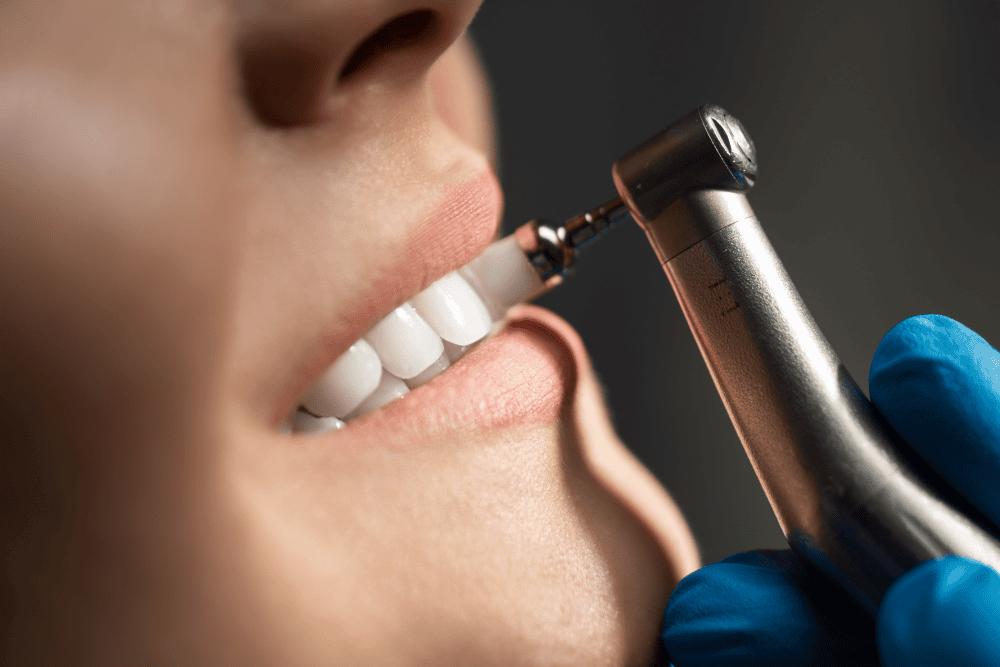
Teeth whitening: Which method is best, how long does it last, and how much does it cost?

Teeth whitening uses bleaching gels at an appropriate concentration to break down deep stains within the tooth structure, helping teeth look noticeably whiter again, especially when performed in a clinic under a dentist’s supervision. It is suitable for people whose teeth have become dull from tea, coffee, smoking, or age, but the degree of whitening varies depending on the original tooth shade and each person’s habits.

Because of this, you should always have your teeth and gums examined by a dentist before whitening, and maintain good oral hygiene while reducing stain‑causing factors to keep your teeth whiter for longer and ensure the treatment is as safe and effective as possible. 

What is teeth whitening, and which types of yellow teeth can it help with 

  • Teeth whitening is a procedure that uses bleaching agents (such as hydrogen peroxide or carbamide peroxide) to break down pigment molecules that have built up inside the tooth structure, making the teeth look whiter and brighter, not just by polishing away surface stains.
  • It usually works well for yellow or dull teeth caused by tea, coffee, red wine, smoking, aging, or certain medications. However, if the discoloration is due to a non‑vital (dead) tooth, crowns, veneers, or old tooth‑colored fillings, whitening typically does not change the shade of these materials, so additional or alternative treatments are often needed.

Teeth whitening: how many types are there? 

Whitening Method

Where It Is Done

Speed of Results

Longevity of Results

Estimated Cost

In-Office Teeth Whitening

Dental Clinic

Fast results, often visible after 1–2 sessions

Typically lasts around 6 months to 2 years with proper care

Higher cost among the three options

At-Home Whitening Kit (Dentist-Supervised)

At Home

Gradual whitening over several days to weeks

Can be maintained long-term with periodic touch-ups

Moderate cost, generally lower than in-office whitening

Over-the-Counter Whitening Products

At Home

Mild whitening effect, usually requires longer use

Results tend to fade more quickly and require frequent use

Most affordable option

How quickly does each teeth whitening method work, and how long do the results last? 

  • In‑clinic teeth whitening: You can usually see a noticeable difference immediately after treatment or within 1–2 sessions, and with good care and reduced tea, coffee, and smoking, the results can last around 6 months to 2 years.
  • At‑home whitening kits: These take several days to a few weeks to reach their full effect, but you can perform touch‑up treatments from time to time as advised, which helps you maintain the shade in the long term.
  • Over‑the‑counter products: They generally make teeth only slightly whiter, the results do not last very long, and you need to reuse them frequently if you want to maintain the whitening effect. 

Prices for in‑clinic whitening are usually higher because they use higher‑concentration materials, specialized equipment, and include the dentist’s professional fee, in exchange for faster and more noticeable results.

Costs vary depending on the whitening system brand (such as POLA or ZOOM), how many sessions are needed, and whether the package includes scaling, a dental check‑up, or a home touch‑up kit. At‑home whitening kits and ready‑made over‑the‑counter products are generally more affordable, but their effects build up more gradually.

In-Office Teeth Whitening: POLA and Philips Zoom 

1.Overview of in‑clinic teeth whitening

Both POLA and ZOOM are professional in‑clinic whitening systems that use high‑concentration bleaching gels under a dentist’s supervision to help teeth become whiter quickly and more safely than doing it on your own.

2.What is POLA and what are its main benefits?

POLA (such as Pola Office) uses a high‑concentration hydrogen peroxide gel that can whiten teeth within about 30–60 minutes per session. The formula contains desensitizing ingredients to help reduce post‑whitening sensitivity, making it suitable for people who are concerned about sensitive teeth, and it can be performed without necessarily needing an additional light source.

3.What is ZOOM and what are its main benefits?

ZOOM (Philips Zoom) is an in‑clinic whitening system that combines a bleaching gel with LED light to accelerate the reaction, allowing teeth to become several shades whiter in about 45–60 minutes. Many ZOOM packages also include custom home whitening trays for touch‑ups, which, when used as directed, help extend how long the whitening results last.

ฟอกสีฟัน-1

Comparing POLA vs ZOOM from a patient’s perspective 

  • Duration and speed: Both systems take around 30–60 minutes per in‑clinic session and produce visible results immediately afterwards. ZOOM is often remembered as “whitening with light that can make teeth noticeably whiter in a single visit,” while POLA focuses more on flexibility and comfort with reduced sensitivity.
  • Whitening level: The final shade depends on your original tooth color and how your teeth respond, but clinical data show that ZOOM can lighten teeth by several shades, while POLA also delivers clearly whiter teeth within a standard course of treatment.
  • Tooth sensitivity: Some sensitivity can occur after any whitening procedure, but many patients who choose Philips Zoom Whitening report less sensitivity than they expected and are able to return to their normal daily activities straight after treatment.

For how long do the results last? 

  • The results of both POLA and ZOOM typically last from several months up to around 1–2 years if you take good care of your teeth, cut down on tea, coffee, wine, and smoking, and maintain thorough daily oral hygiene.
  • Using a dentist‑supervised home whitening kit or doing periodic touch‑ups as recommended by your dentist can help keep your teeth whiter for longer with either system.

Which should I choose: POLA or ZOOM? 

  • If both systems use light to assist the whitening process, ZOOM uses a light that is specifically engineered to work optimally with its whitening gel, which can help make the bleaching reaction more efficient and enhance the overall result.
  • If you want a “light‑activated whitening with clearly visible results in a single visit,” and are happy to continue maintenance with a home touch‑up kit, ZOOM can be a very good fit.
  • Ultimately, it is best to have a dentist examine your teeth, review your history of sensitivity, and consider your lifestyle so they can recommend the whitening system that is safest, most suitable, and most cost‑effective for you.

If you are still unsure which type of teeth whitening is right for you, you are very welcome to visit About Tooth Dental Clinic for a consultation with our dentists. We will assess your teeth and your lifestyle, then recommend whether POLA or ZOOM is likely to be the best match for your smile. 

You can book an appointment with a dentist for consultation and an oral health assessment at About Tooth Dental Clinic. We are open at both our Siam and Punnawithi branches, conveniently located right next to the BTS stations at each location. For more information or to schedule an appointment in advance, please call 087-555-4665 or 080-481-5555, or add us on LINE Official Account at @abouttooth to chat with our team.

POLA vs ZOOM: A Patient-Focused Comparison

Treatment Time and Speed

  • Both treatments usually take around 30–60 minutes in the clinic, with visible results immediately after treatment.
  • ZOOM is commonly associated with in-office whitening using a specially designed light system, helping teeth appear noticeably whiter in a single session. POLA, meanwhile, is often chosen for its flexibility, comfort, and focus on reducing tooth sensitivity.

Whitening Results

  • The degree of whitening depends on the original tooth shade and how each person responds to treatment.
  • Several studies have reported that ZOOM can lighten teeth by several shades. POLA can also produce noticeable whitening results after treatment.

Tooth Sensitivity

Temporary tooth sensitivity may occur after any whitening treatment. However, many patients who choose Philips Zoom Whitening report experiencing less sensitivity than expected and are able to return to their normal daily activities after treatment.

How Long Do the Results Last?

  • The results of both POLA and ZOOM may last from several months to approximately 1–2 years, depending on individual habits and aftercare.
  • Reducing the consumption of tea, coffee, red wine, and tobacco, along with maintaining good oral hygiene, can help preserve the whitening results for longer.
  • Using an at-home whitening kit or having touch-up treatments as recommended by the dentist may also help maintain a brighter tooth shade with either system.

Should You Choose POLA or ZOOM?

Both systems may use light-assisted whitening. However, the ZOOM light is specifically designed to work together with its whitening gel, helping the treatment deliver effective and consistent results.

For patients looking for in-office whitening with noticeable results in a single visit, followed by optional at-home touch-ups, ZOOM may be a suitable choice.

The best option ultimately depends on the condition of the teeth, any history of tooth sensitivity, and individual lifestyle habits. A dental examination is recommended before treatment to ensure that the chosen whitening system is safe, suitable, and worthwhile for each patient.

For anyone who is still unsure which teeth whitening treatment is right for them, a consultation with a dentist at About Tooth Dental Clinic can help.

Our dentists can assess the condition of the teeth, discuss lifestyle habits, and recommend whether POLA or ZOOM is more suitable for the desired smile.

If you are still unsure which teeth whitening treatment is right for you, you can visit About Tooth Dental Clinic for a consultation with our dentists. We will assess the condition of your teeth and discuss your lifestyle before recommending whether POLA or ZOOM is the better option for your smile.

You can book an appointment with a dentist for consultation and an oral health assessment at About Tooth Dental Clinic. We are open at both our Siam and Punnawithi branches, conveniently located right next to the BTS stations at each location. For more information or to schedule an appointment in advance, please call 087-555-4665 or 080-481-5555, or add us on LINE Official Account at @abouttooth to chat with our team.

booking

References:

1..Teeth Whitening: How It Works and What to Expect. Accessed May 28, 2026. From https://www.webmd.com/oral-health/teeth-whitening-and-bleaching 

2.Enlighten Evo 4 vs Philips Zoom vs Polanight Teeth Whitening. Accessed May 28, 2026. From https://azuredentalclinic.co.uk/enlighten-evo4-vs-philips-zoom-vs-polanight-whitening-2026/ 
Frequently asked questions about teeth whitening (FAQs)

Q: Which teeth whitening method is better – in‑clinic or at home?


A: In‑clinic whitening uses higher‑concentration gels and gives noticeable results in one or a few sessions, making it suitable if you want fast results with close dentist supervision. At‑home whitening kits gradually lighten the teeth over several days to weeks, but are more convenient and usually more affordable. You should choose based on your budget, available time, and your dentist’s recommendation.

Q: How long do teeth whitening results last?


A: Professional whitening results typically last about 6 months to 2 years if you take good care of your teeth and avoid frequent tea, coffee, wine, and smoking. If you have habits that cause staining easily, the whiteness may fade more quickly and you may need periodic touch‑ups.

Q: Does teeth whitening hurt, and will my teeth become very sensitive?


A: The procedure itself is usually not painful, but you may experience temporary tooth sensitivity, especially in the first 24–48 hours. This sensitivity normally improves on its own, and dentists often recommend desensitizing toothpaste or gels on sensitive areas to make you more

Q: Is teeth whitening harmful? Will it make my teeth thinner?


A: When whitening is done with professional products under a dentist’s supervision, with the gel concentration and exposure time tailored to your teeth, it is considered safe and does not permanently thin the enamel. The main issue is usually temporary sensitivity. However, whitening on your own with very strong products or doing it too frequently can increase the risk of gum irritation and enamel damage.

Q: What is the difference between POLA and ZOOM, and which should I choose?


A: POLA is an in‑clinic whitening system with built‑in desensitizing ingredients and can be done without light activation, so it is a good option if you are worried about sensitivity or prefer a gentler approach. ZOOM combines whitening gel with LED light and can make teeth several shades whiter in a single session, making it ideal if you want a very noticeable result and can accept a slightly higher chance of temporary sensitivity. It is best to have your dentist assess your teeth and budget before choosing.

Q: How much does teeth whitening cost, and why are prices different at each clinic?


A: The overall cost depends on several factors, such as the whitening system brand (for example, POLA or ZOOM), whether it is done in‑clinic or as a home kit, how many sessions are needed, and whether the package includes scaling, a dental check‑up, or any touch‑up guarantee. These differences explain why prices vary between clinics, so it is wise to consider both the quality of materials and the dentist’s expertise when deciding.

Q: After whitening, can I still drink tea and coffee or smoke?


A: After whitening, it is usually recommended to avoid tea, coffee, red wine, dark soft drinks, and smoking for at least the first 24–48 hours, because your teeth can pick up stains more easily during this period. After that, you can consume them again, but try to cut down, drink water afterwards, and keep your teeth very clean to reduce re‑staining and help your whitening results last longer.


Continue ReadingTeeth whitening: Which method is best, how long does it last, and how much does it cost?

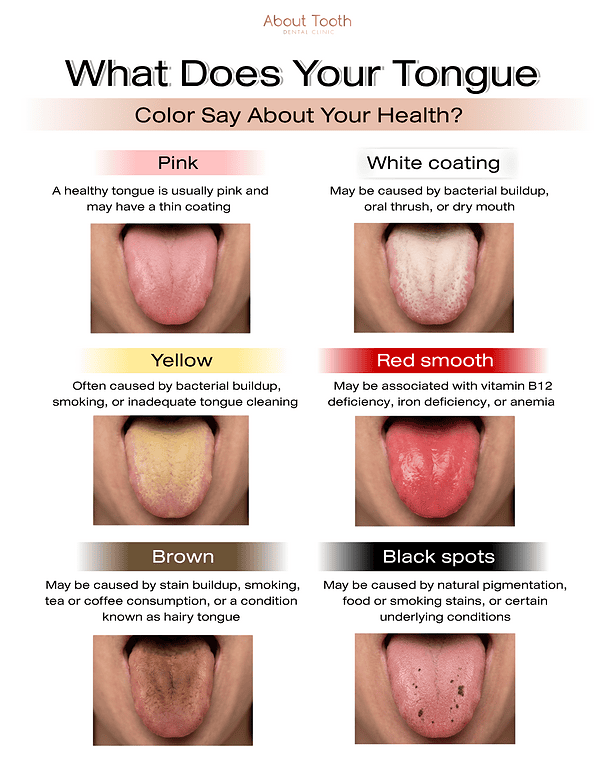
What does your tongue color say about your health?

The color and surface of your tongue can provide early signs of both your oral and overall health. A healthy tongue is usually pink, with a thin white coating and small bumps evenly covering the surface. When the tongue becomes thick white, bright red, black, yellow, purple, or bluish – especially if it is accompanied by pain, burning, sores, or difficulty swallowing – it may be related to infections, vitamin deficiencies, blood vessel problems, or other systemic conditions. In these cases, you should see a dentist or doctor for a proper examination. By regularly checking your tongue along with brushing your teeth, using dental floss, cleaning your tongue, and having routine dental check-ups, you can detect abnormalities earlier and take better care of your health.

What color should a healthy tongue be?

  • A healthy tongue is usually pink, moist, and covered with a thin, light white coating, which is made up of normal bacteria and shed skin cells.
  • The surface of the tongue should have small bumps (papillae) distributed across it, rather than appearing overly smooth or glossy. It should also be free from persistent sores, lumps, or unusual colored spots.

What tongue color can tell you about your health

Tongue color / appearancePossible causes
Pink with a thin coatingThis is generally considered a sign of a healthy tongue.
Thin white coatingIt may be caused by bacterial buildup, food debris, dry mouth, or smoking.
Thick, non‑removable white coatingIt may be associated with oral fungal infection (oral thrush) or other lesions of the oral mucosa.
YellowIt may be caused by bacterial buildup, smoking, tea or coffee stains, or certain gastrointestinal conditions.
Smooth redIt may be associated with vitamin B12 deficiency, iron deficiency, or anemia.

Brown / hairy tongue

It is often caused by buildup from smoking, tea, or coffee, or by elongated papillae that trap pigments on the tongue surface.
Small dark spotsThey may be natural pigmentation, small moles, or stains from food and smoking.

Pink

  • This is generally considered a healthy tongue color. A slight thin coating is normal and is usually not related to serious disease, but good oral hygiene is still important.

White coating

  • A thin white coating is often caused by bacteria, food debris, dry mouth, mouth breathing, or smoking, and usually improves with proper toothbrushing, tongue cleaning, and adequate water intake.
  • If the white coating is thick, does not come off, or is accompanied by pain, burning, or difficulty swallowing, it may be related to oral fungal infection (oral thrush), leukoplakia, or other oral mucosal conditions, and you should see a dentist or doctor.

Yellow

  • A yellow tongue is often caused by bacterial buildup, smoking, heavy tea or coffee consumption, or poor oral hygiene, and may sometimes be an early stage before the tongue turns brown or develops a black hairy appearance.
  • In some cases, a yellow tongue may be associated with gastrointestinal problems or liver disease. If you also notice yellow eyes, fatigue, or dark urine, you should consult a doctor.

Red smooth

  • A bright red tongue with a very smooth surface, where the papillae seem to disappear (atrophic glossitis), may be associated with vitamin B12 deficiency, iron deficiency, or certain types of anemia.
  • If the tongue is very red together with high fever or a typical rash, such as a “strawberry tongue,” it may be related to infections like scarlet fever or Kawasaki disease, and urgent medical attention is needed.

Brown

  • A brown tongue is often related to buildup from smoking, drinking tea or coffee, or a “hairy tongue” (black hairy tongue), where the papillae become elongated and trap more pigments. In most cases it is not serious and can improve with quitting smoking, brushing the tongue, and improving oral hygiene.

Black spots

  • Black spots on the tongue may be due to natural pigmentation, such as a melanotic macule, small moles, or stains from food, smoking, or medication.
  • Most of the time they are harmless, but if the dark spots grow, change shape or color, or are associated with sores, pain, or a firm lump, you should see a doctor to rule out precancerous lesions and oral cancer.

What tongue colors or changes should you see a dentist or doctor for?

  • If your tongue color changes noticeably – for example becoming thick white, deep yellow, brown‑black, very bright red, purple, or bluish – and does not improve within 1–2 weeks despite good oral hygiene, you should see a dentist or doctor for an examination.
  • If an abnormal tongue color is accompanied by pain or burning, chronic sores, difficulty swallowing, weight loss, fever, or a firm lump in the mouth, you should see a dentist or doctor promptly.

Simple daily tips for a healthy tongue and mouth

  • Brush your teeth at least twice a day, use dental floss or an interdental brush, and gently clean your tongue with a toothbrush or tongue scraper to reduce buildup and bacteria on its surface.
  • Drink enough water, cut down on smoking, and limit strongly colored drinks such as tea, coffee, and alcoholic beverages. Try to avoid food that is extremely hot or very spicy, as it can irritate the tongue.
  • Visit your dentist regularly for routine oral check‑ups, so they can monitor changes in your tongue, gums, and teeth that may indicate other health problems at an early stage.
 

If you’ve noticed that your tongue or the inside of your mouth looks different lately and you’re not sure whether it’s normal, you’re very welcome to visit any branch of About Tooth Dental Clinic for a check‑up and consultation. Our dental team is ready to carefully examine your oral health, explain the possible causes in simple terms, and recommend the most suitable care for you, so you can get back to your daily life with more comfort and peace of mind.

You can book an appointment with a dentist for consultation and an oral health assessment at About Tooth Dental Clinic. We are open at both our Siam and Punnawithi branches, conveniently located right next to the BTS stations at each location. For more information or to schedule an appointment in advance, please call 087-555-4665 or 080-481-5555, or add us on LINE Official Account at @abouttooth to chat with our team.

References:

  1. Tongue color: What is normal? Medical News Today. Accessed May 28, 2026. from: https://www.medicalnewstoday.com/articles/tongue-color#color-meanings

Book a consultation

Frequently asked questions about tongue health (FAQs)

Q: What tongue color is considered normal?


A: A healthy tongue is usually pink, moist, with a thin white coating and small bumps (papillae) across the surface. It should not have persistent sores, lumps, or unusual colored spots.

Q: Should I be worried if I have a thick white coating on my tongue that does not come off?


A: If the white coating is thick, does not come off, or is accompanied by pain, burning, or difficulty swallowing, it may be related to oral thrush, leukoplakia, or other mucosal diseases. You should see a dentist or doctor for proper evaluation.

Q: Are black spots on the tongue dangerous?

A: Some small black spots may be due to natural pigmentation or stains from food or smoking. However, if a spot becomes larger, changes color or shape, or is associated with sores, pain, or bleeding, you should see a doctor to rule out any serious lesions.


Dr. Papatsara Veerapol, D.D.S. is a dentist specializing in orthodontics, dental implants, and prosthodontics (veneers, dentures). She graduated with honors (Second Class) from the Faculty of Dentistry at Chulalongkorn University. She later earned a Master’s degree in Prosthodontics from Srinakharinwirot University. With extensive work experience, she holds an Advanced General Dentistry Certificate and is certified as a Platinum Provider of Invisalign for 2021 and achieved Zenyum Star Tier status in 2023.

Currently, she is the founder of About Tooth Dental Clinic, which was honored with the World Class Award 2021 in the category of The Best of International Healthy Business. She also serves as a member of the Thai Association of Dental Implants (TADI) and the Thai Prosthodontics Association.

Continue ReadingWhat does your tongue color say about your health?

Getting to Know the Differences of Veneers vs Braces

Key Takeaways

Veneers and braces both transform smiles, but they solve different problems. Braces physically move teeth over months or years to correct alignment, bite, crowding, and spacing, while veneers are thin shells bonded to the front of teeth to refine color, shape, and surface appearance without changing tooth position. The right choice depends on whether your concerns are structural, cosmetic, or a mix of both. In some cases, the two treatments work best in sequence, with braces first and veneers afterward to refine the final result.

Getting a better-looking smile often boils down to veneers or braces for most people, but which is better is not always clear. Between veneers vs braces, both can transform the way your teeth look, but they work in completely different ways and solve very different problems, even if they might be smile-related.

Before you commit to a treatment plan, here’s what you should know about the key differences, cost ranges in Bangkok, when each option makes sense, and how to know which one fits your case.

What’s the Difference Between Veneers and Braces?

In essence, braces are structural, while veneers are cosmetic. Braces are orthodontic devices that physically move teeth over months or years, correcting alignment, bite issues, crowding, and spacing. Veneers are thin shells, usually porcelain or composite resin, bonded to the front surface of teeth to improve their shape, color, or appearance without changing the underlying tooth position.

That core distinction changes everything. If your concern is the position of your teeth in your jaw, only orthodontic treatment can address the underlying issue. If your concern is purely how your teeth look from the front, veneers can deliver fast cosmetic results without months of treatment. Depending on your condition, you may even opt for both.

What to Expect for Veneers vs Braces Prices

When it comes to veneers vs braces prices, both treatments span a wide cost range depending on the type and case complexity. There’s no single universal figure.

In Bangkok, veneers are priced per tooth, with composite ones typically ranging from THB 6,000 to 9,000 each, while porcelain or ceramic options such as E-max and zirconia sit on the higher end. As for braces, these can range from THB 35,000 to 95,000 for a full course of treatment, with ceramic braces and clear aligners like Invisalign costing more.

TreatmentTypical Bangkok Price RangeTreatment DurationLongevity
Composite VeneersTHB 6,000 – 9,000 per tooth1 – 2 visits5 – 7 years
Porcelain VeneersTHB 12,000 – 25,000 per tooth2 – 3 visits10 – 15 years
Metal BracesTHB 35,000 – 65,000 (full course)12 – 24 monthsLifetime with retainer
Self-ligating braces (Damon)THB 60,000 – 95,00012 – 24 monthsLifetime with retainer
Clear Aligners (Invisalign)THB 100,000 – 200,000+6 – 24 monthsLifetime with retainer

For a full smile makeover involving the upper front six to eight teeth, a full set of porcelain veneers often costs more than a full course of braces. That said, braces tend to be a one-time investment that lasts for life with retainer use, while veneers generally need replacement every 10 to 15 years.

Moreover, dental insurance occasionally covers braces when they’re deemed medically necessary, but rarely covers veneers since they’re classified as cosmetic.

Can I Get Veneers Instead of Braces?

Sometimes, yes. If your concerns are minor cosmetic irregularities, slight gaps, mildly uneven tooth shape, or stubborn discoloration, going for veneers instead of braces can be a reasonable cosmetic shortcut. Veneers won’t move your teeth, but they can mask small imperfections in a way that creates the appearance of a straighter, more uniform smile within a few weeks.

However, veneers are not a substitute for orthodontic treatment if you have moderate-to-severe crowding, spacing issues, or bite problems such as overbite, underbite, or crossbite. Veneers won’t fix the underlying, unbalanced bite forces on misaligned teeth, and placing them can lead to uneven wear, bonding failures, and premature breakage. Worse, the irreversible enamel removal required for veneers means there’s no easy way to undo the decision later.

Can I Get Veneers After Braces?

Yes, and this combination is fairly common. Where braces move teeth into the correct position, veneers can then refine the final aesthetic details that orthodontics can’t address, such as discoloration, white spots from old braces, minor chips, slight shape variations, and surface texture issues.

Even so, the timing matters here. Most dentists recommend waiting until your teeth have fully stabilized after braces come off, usually after a period of consistent retainer wear. Placing veneers too early risks the teeth shifting underneath, which can compromise the fit and seal of the veneer over time.

When sequenced correctly, the two treatments complement each other well, giving patients both a healthy bite and a refined cosmetic finish.

Should I Get Veneers or Braces? A Simple Decision Guide

A dentist shows a patient what her smile would look like with veneers.

If you’re considering braces versus veneers, the answer comes down to whether your concern is in how your teeth function or how they look.

  • Choose veneers if: your teeth are already well-aligned and your goals are cosmetic, such as improving color, shape, or minor surface imperfections.
  • Choose braces if: you’re dealing with crowding, spacing, bite misalignment, or any structural issue affecting long-term oral health.
  • Consider both, in sequence, if: you have a mix of structural and cosmetic concerns.

Helpful questions to ask at your consultation include:

  • Do I have any bite issues that might cause long-term problems?
  • Will veneers wear unevenly on my current tooth alignment?
  • What’s the realistic lifespan of each option in my case?
  • Is there a combination treatment plan that would serve me better than either option alone?

Pros and Cons of Veneers and Braces at a Glance

Veneers

Pros

  • Fast cosmetic transformation in two to three visits
  • Able to mask multiple aesthetic concerns at once
  • Offers a high level of color and shape control

Cons

  • Irreversibility due to enamel removal
  • Eventual need for replacement every 10 to 15 years
  • Vulnerability to chipping under heavy bite force
  • Unable to address true alignment problems

Braces

Pros

  • Corrects bite function
  • Treats the source of misalignment
  • Delivers lifelong structural results with retainer use
  • Non-invasive to tooth enamel

Cons

  • Longer treatment time (often 12 to 24 months)
  • Visible hardware with traditional metal braces
  • Period of adjustment for eating and oral hygiene

Find the Right Smile Treatment in Bangkok

While veneers and braces both help create a perfect smile, they do so in different ways and serve different purposes. The right choice depends on whether your goals are cosmetic, structural, or a mix of both, and a proper assessment from a qualified dentist will tell you which path fits your case.

That’s where we come in. About Tooth Dental Clinic is a trusted dental clinic in Bangkok offering both orthodontic and cosmetic services under one roof. Our specialist dentists assess each case individually and develop a treatment plan tailored to your alignment, bite, and aesthetic goals, helping you find the best option between veneers and braces.

Book a consultation at About Tooth Dental Clinic today to find the right option for your smile, whether that’s veneers for teeth, braces, or a combination of both. We have two convenient branches near Punnawithi and Siam BTS stations, so you can easily reach us.

booking

References

  1. Veneers vs. Braces: Which Is Right for You? Retrieved on 18 May, 2026

Frequently Asked Questions About Veneers vs Braces

Q: Are veneers cheaper than braces?

A: For a single tooth or two, veneers can be cheaper upfront than a full course of braces. However, a full set of porcelain veneers covering the upper front six to eight teeth often costs more than orthodontic treatment, and veneers need replacing every 10 to 15 years. Braces are usually the better long-term value if both options can address your case.

Q: Can veneers fix crooked teeth without braces?

A: Veneers can mask minor crookedness or slight gaps, but they don’t actually move teeth. For moderate to severe misalignment, crowding, or bite issues, braces or clear aligners are necessary to correct the underlying structure. Using veneers to cover serious misalignment can lead to uneven wear and premature failure.

Q: How long after braces can I get veneers?

A: Most dentists recommend waiting until your teeth have stabilized after braces, typically after consistent retainer wear for several months. This prevents tooth movement underneath the veneer, which could compromise the bond or fit. Your dentist will confirm when your bite is settled enough to proceed.

Q: Do braces or veneers last longer?

A: The results of braces last a lifetime as long as you wear your retainer as instructed, since the teeth have been physically repositioned. Veneers typically last 10 to 15 years for porcelain and around 5 to 7 years for composite before they need replacement. Braces offer better long-term value, while veneers offer faster cosmetic results.

Dr. Nisara Tanarerkchai, D.D.S. is a dentist specializing in dental implants, orthodontics, and veneers. She graduated from the Faculty of Dentistry at Thammasat University. With extensive professional experience, she holds multiple certificates in various dental fields, including Advanced General Dentistry, Dental Implants, Advanced Orthodontics, as well as certificates in the Veneer Bootcamp and the Veneer Masterclass. Additionally, she is certified as a Platinum Provider of Invisalign for 2021 and achieved Zenyum Star Tier status in 2023.

Currently, Dr. Thanaruksachai is the founder of About Tooth Dental Clinic, which received the World Class Award 2021 in the category of The Best of International Healthy Business. She is also serves as a member of the Thai Association of Dental Implants (TADI).

Continue ReadingGetting to Know the Differences of Veneers vs Braces

Does tartar really make your teeth loose? How are tooth gaps and bone loss related?

Tartar does not directly push your teeth loose, but it acts as a reservoir for bacteria that cause gum inflammation and can progress to periodontitis, where the bone and ligaments around the tooth roots are gradually destroyed. As this support is lost over time, the teeth can start to feel loose or develop gaps if the condition is left untreated. Regular scaling and gum treatment at an early stage, together with proper toothbrushing, daily flossing, and routine dental check‑ups, help reduce tartar buildup, slow down bone loss, and significantly lower the risk of your teeth becoming loose in the future.

What is tartar and how is it different from plaque?

  • Plaque is a soft, sticky film of bacteria that forms on the tooth surface. If you do not remove it thoroughly with toothbrushing and flossing, it can absorb minerals from your saliva and harden into calculus or tartar, which cannot be removed by brushing at home.
  • Tartar commonly builds up along and underneath the gumline, making those areas rough and easier for new plaque to stick to again. Over time, this becomes a chronic reservoir of bacteria that constantly irritates the gums and promotes ongoing inflammation.

How tartar buildup on the gums leads to loose and gapped teeth

  • Tartar itself does not physically push your teeth loose, but the bacteria and toxins in the plaque that sticks to tartar irritate the gums and cause gingivitis, making them red, swollen, and prone to bleeding. If the tartar is not removed and the gums are not treated, this inflammation can progress to periodontitis, a deeper infection that affects the supporting tissues around the teeth.
  • As periodontitis advances, the bone and ligaments that support the tooth roots are gradually destroyed, and the gums recede. When this structural support is lost, the teeth can begin to loosen, shift position, or develop wider gaps because the framework that once held them firmly in place is no longer intact.

Warning signs of early gum and bone problems (before teeth become very loose)

  • Red, swollen gums that bleed easily when you brush your teeth, use dental floss, or bite on hard foods, together with persistent bad breath and clearly visible tartar deposits around the necks of the teeth, are important early warning signs.
  • If your teeth start to feel less firm than before, with widening spaces between them and food getting stuck more easily – especially if the front teeth begin to spread apart or tilt slightly – this suggests that the supporting tissues (gums, bone, and periodontal ligaments) are being damaged. At this stage, you should see a dentist promptly for an examination and treatment before the teeth become so loose that they are much more difficult to save.

How scaling and root planing help, and how often you should have them

  • Scaling and root planing is a deep cleaning procedure that removes tartar and plaque from both above and below the gumline and smooths the root surfaces to reduce bacterial buildup. It is considered the standard treatment for gum disease and periodontitis because it targets the main cause of ongoing inflammation around the teeth.
  • Once deep tartar and plaque are removed, gum inflammation usually decreases, bleeding is reduced, and the gums can reattach and tighten around the teeth to some extent. This can improve the mobility of several teeth, especially when treatment is carried out while there is still enough bone support remaining.
  • In general, most people need scaling every 6–12 months, depending on how quickly tartar builds up, whether they smoke, their medical conditions such as diabetes, and how well they maintain their oral hygiene at home.

 tartar

How can loose teeth caused by tartar be treated?

  • The first step in almost every case is scaling and root planing to remove tartar and plaque and stop the ongoing inflammation and bacterial infection. If this is done early, when there is only gingivitis or mild periodontitis, many slightly loose teeth can become firmer again as the gums heal and reattach.
  • If the teeth are moderately to severely loose, additional treatment may be needed, such as periodontal or gum surgery to clean deep deposits, splinting the teeth together to stabilize them, or regenerative procedures to help restore lost bone in selected cases. 
  • When the bone and supporting ligaments have been severely destroyed and the tooth remains very loose or repeatedly infected despite treatment, extraction may be necessary, followed by a replacement plan such as a denture, bridge, or dental implant to restore function and avoid overloading the remaining teeth.

How to prevent tartar from building up again

  • Brush your teeth at least twice a day and use dental floss or interdental brushes every day to remove plaque before it hardens into tartar, and make fluoride toothpaste part of your routine.
  • Avoid smoking, keep blood sugar well controlled if you have diabetes, and visit your dentist regularly for oral check‑ups and professional scaling. These habits help lower the risk of periodontitis, loose teeth, and tooth gaps caused by long‑standing tartar buildup.

 If you feel that tartar has built up heavily, your gums are becoming red or swollen, they bleed easily, or your teeth no longer feel as firm as before, do not leave it untreated for too long. You can visit About Tooth Dental Clinic for a gum health check and professional scaling. Our team will assess the severity of your gum condition, recommend the most appropriate treatment, and create a care plan to help keep your teeth strong and comfortable for as long as possible.

You can book an appointment with a dentist for consultation and an oral health assessment at About Tooth Dental Clinic. We are open at both our Siam and Punnawithi branches, conveniently located right next to the BTS stations at each location. For more information or to schedule an appointment in advance, please call 087-555-4665 or 080-481-5555, or add us on LINE Official Account at @abouttooth to chat with our team.

booking

References:

1. What is tartar and how is it different from plaque?. Accessed May 28, 2026. from: https://calistogadentalgroup.com/understanding-tartar-silent-threat-to-dental-health/


Frequently asked questions about tartar and loose teeth (FAQs)

Q: Does tartar really make teeth loose?

A: Tartar itself does not directly push the teeth to become loose, but it is a surface for plaque and bacteria to accumulate, which causes gum inflammation and progressive periodontal disease. When the bone and ligament around the tooth roots are severely destroyed, the teeth can start to loosen, become mobile, or develop gaps.

Q: Can loose teeth from tartar be treated to become firm again?

A: If there is still a reasonable amount of bone and ligament remaining around the roots, scaling, root planing, and early periodontal treatment can help reduce inflammation and allow the gums to tighten around the teeth again. The mobility of many teeth can be reduced, but if a lot of bone has been lost and the teeth are very loose, splinting, periodontal surgery, or even extraction may be necessary in some cases.

Q: Are increasing gaps between teeth related to tartar and gum disease?

A: Sudden spacing between teeth, especially in people who originally had tight teeth but suddenly develop gaps and get food stuck easily, is often related to periodontal disease caused by tartar and plaque buildup that leads to gum and bone recession. As a result, the teeth have more space to move apart, so you should see a dentist promptly for examination and treatment before the teeth become even more mobile.

Dr. Nisara Tanarerkchai, D.D.S. is a dentist specializing in dental implants, orthodontics, and veneers. She graduated from the Faculty of Dentistry at Thammasat University. With extensive professional experience, she holds multiple certificates in various dental fields, including Advanced General Dentistry, Dental Implants, Advanced Orthodontics, as well as certificates in the Veneer Bootcamp and the Veneer Masterclass. Additionally, she is certified as a Platinum Provider of Invisalign for 2021 and achieved Zenyum Star Tier status in 2023.

Currently, Dr. Thanaruksachai is the founder of About Tooth Dental Clinic, which received the World Class Award 2021 in the category of The Best of International Healthy Business. She is also serves as a member of the Thai Association of Dental Implants (TADI).

Continue ReadingDoes tartar really make your teeth loose? How are tooth gaps and bone loss related?